
The 10-Year Yield Is Holding Firm. That Tells You Something.
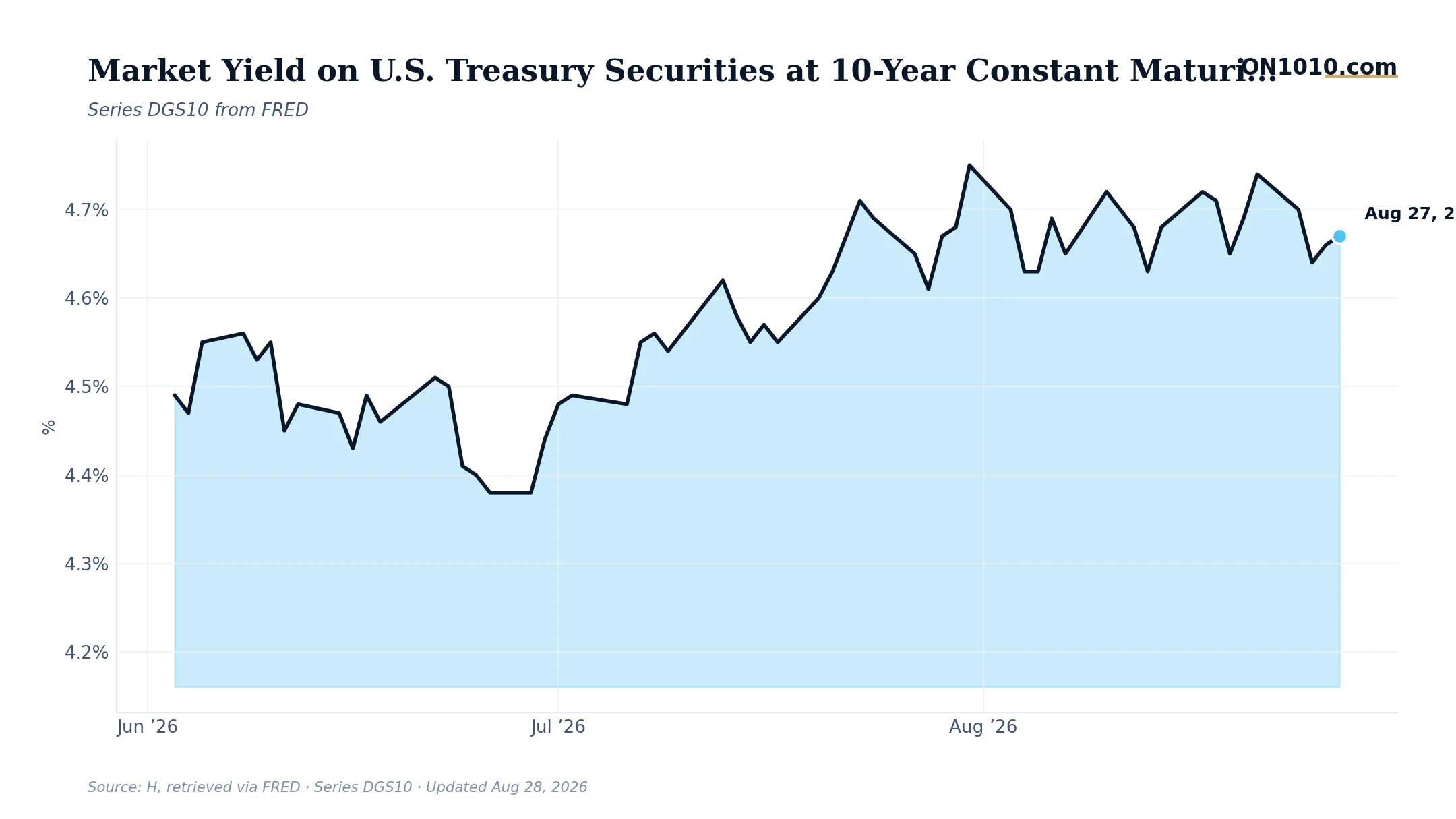
The 10-year Treasury yield ticked up to 4.67% on August 27, a small move on the surface. But zoom out one week and a clear pattern emerges: after touching 4.74% on August 21, yields pulled back and have been consolidating in a tight range rather than falling further. The bond market had a chance to rally. It mostly passed.
That hesitation matters. Long-term rates sit high relative to most of the past several decades, and core inflation is running hotter than roughly nine of every ten months on record. The bond market appears to be pricing in a world where the Fed’s job is not finished. When yields stay elevated even as short-term economic data softens, bond investors are effectively saying they need more compensation to lend money over a decade. That is a statement about inflation expectations as much as anything else.
Here is the mechanism worth understanding: the 10-year yield is the discount rate the economy runs on. Corporate borrowing costs, mortgage rates, and the math behind every long-duration investment are all anchored to this number. When it stays elevated, businesses face a higher hurdle rate on new projects, and the cost of refinancing existing debt climbs. Historically, periods when long-term rates held above their own historical norms coincided with more selective capital allocation and slower growth in rate-sensitive sectors. From similar readings in the historical record, a new recession followed within 12 months roughly 19% of the time. That is not a prediction, but it is the base rate worth knowing.
The interesting counterweight right now: credit spreads are near their tightest levels in history, meaning corporate bond markets are calm. VIX is low. The market is stretched well above its own long-term trend. Technology is the only major offensive sector outpacing the broad market. The equity market is telling a growth story, while the bond market is still demanding an inflation premium.
Bottom Line: Two big markets are not fully agreeing with each other right now. Bonds are pricing in persistent inflation; equities are pricing in durable growth. Historically, one of them has been more right. The question worth sitting with is: which one is seeing something the other is missing?
Source: Federal Reserve Economic Data (FRED)
ON1010 Research is an independent publisher of economic education and is not a registered investment adviser, broker-dealer, or investment company. This content is for educational and informational purposes only and is not investment advice or a recommendation to buy, sell, or hold any security. Published under the publisher exemption recognized by Section 202(a)(11)(D) of the Investment Advisers Act of 1940 (Lowe v. SEC). Always consult a qualified financial professional before making any financial decision.
Free Research
The economy moves fast. We make sure you move faster.
Economic data, policy shifts, and market signals — delivered to your inbox.
Subscribe Free