
Warsh at Jackson Hole Just Made the Fed’s Job a Lot More Complicated
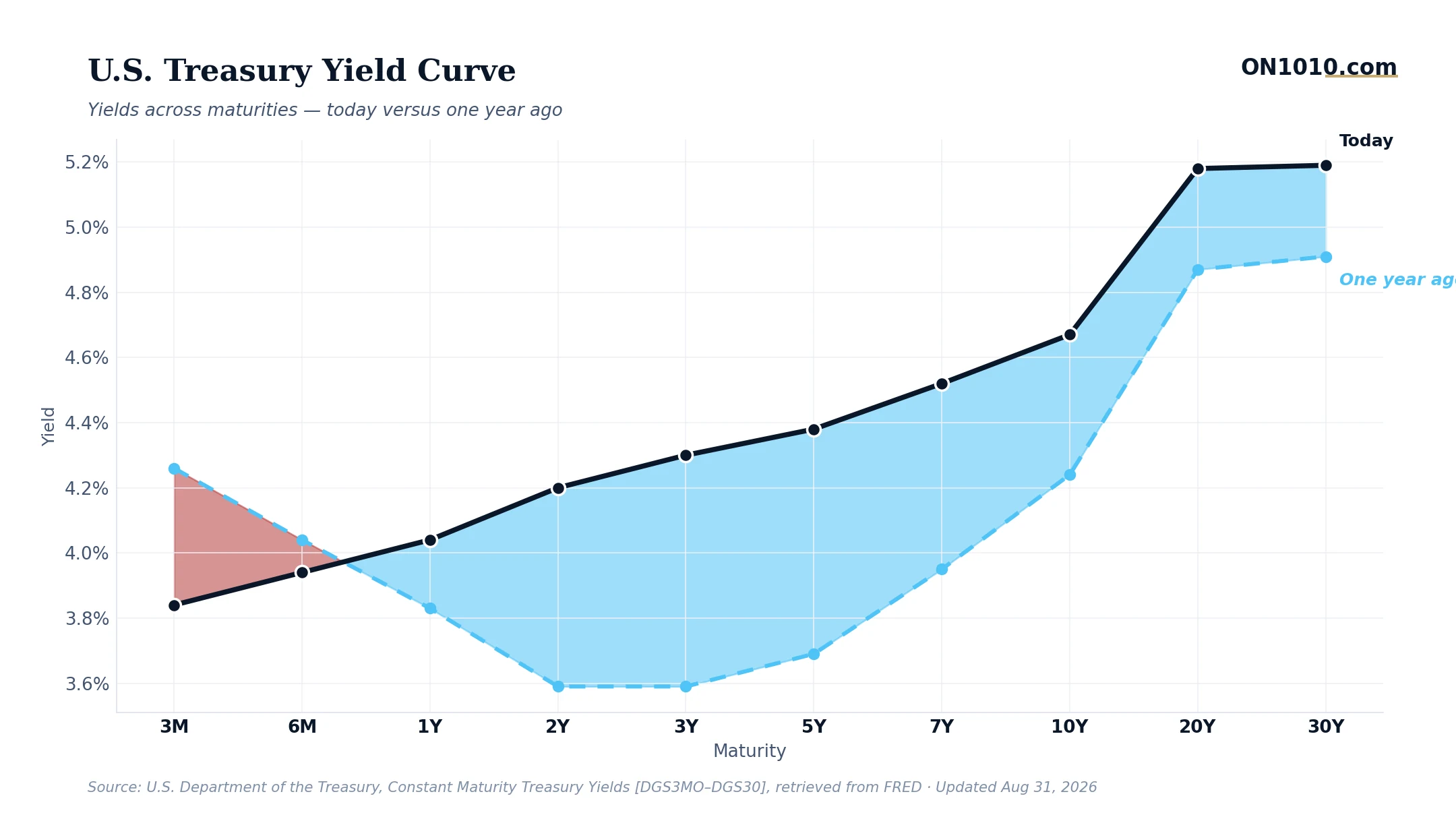
Kevin Warsh came to Jackson Hole and said the quiet part loud: rate hikes may still be on the table. Markets heard it. The detail most commentators are glossing over is that a more hawkish Fed path puts the central bank in direct tension with the Treasury’s refinancing calendar, and that is a much bigger deal than one speech.
What moved. The 10-year Treasury yield sits at 4.67%, with the 2-year at 4.20%, keeping the spread at just 39 basis points. That is a curve that is barely breathing. The 10-year breakeven inflation rate is 2.31%, meaning bond investors expect inflation to stay modestly above the Fed’s 2% target for the long haul. Crude oil jumped $3.02 to $86.42 a barrel, adding its own inflation friction. Small caps took the hardest equity hit, with the Russell 2000 sliding 1.39%.
On deck today. It is a quiet data morning, but watch any follow-up Fed commentary. Jackson Hole ripples tend to travel through bond markets for days, and the 10-year will tell you in real time whether traders are repricing the hike probability Warsh raised.
Why it matters. When the Fed and Treasury are pulling in opposite directions on rate expectations, the cost of carrying U.S. debt rises fast. That friction eventually lands on corporate borrowing costs and capital allocation decisions across the economy.
The deeper read on what Warsh’s speech could mean for the rate cycle lands Sunday in The Long View. It is free, and it is worth your time.
ON1010 Research is an independent publisher of economic education and is not a registered investment adviser, broker-dealer, or investment company. This content is for educational and informational purposes only and is not investment advice or a recommendation to buy, sell, or hold any security. Published under the publisher exemption recognized by Section 202(a)(11)(D) of the Investment Advisers Act of 1940 (Lowe v. SEC). Always consult a qualified financial professional before making any financial decision.
Free Research
The economy moves fast. We make sure you move faster.
Economic data, policy shifts, and market signals — delivered to your inbox.
Subscribe Free