
The Strait of Hormuz Is the World’s Most Dangerous Chokepoint. It Just Got More Dangerous.
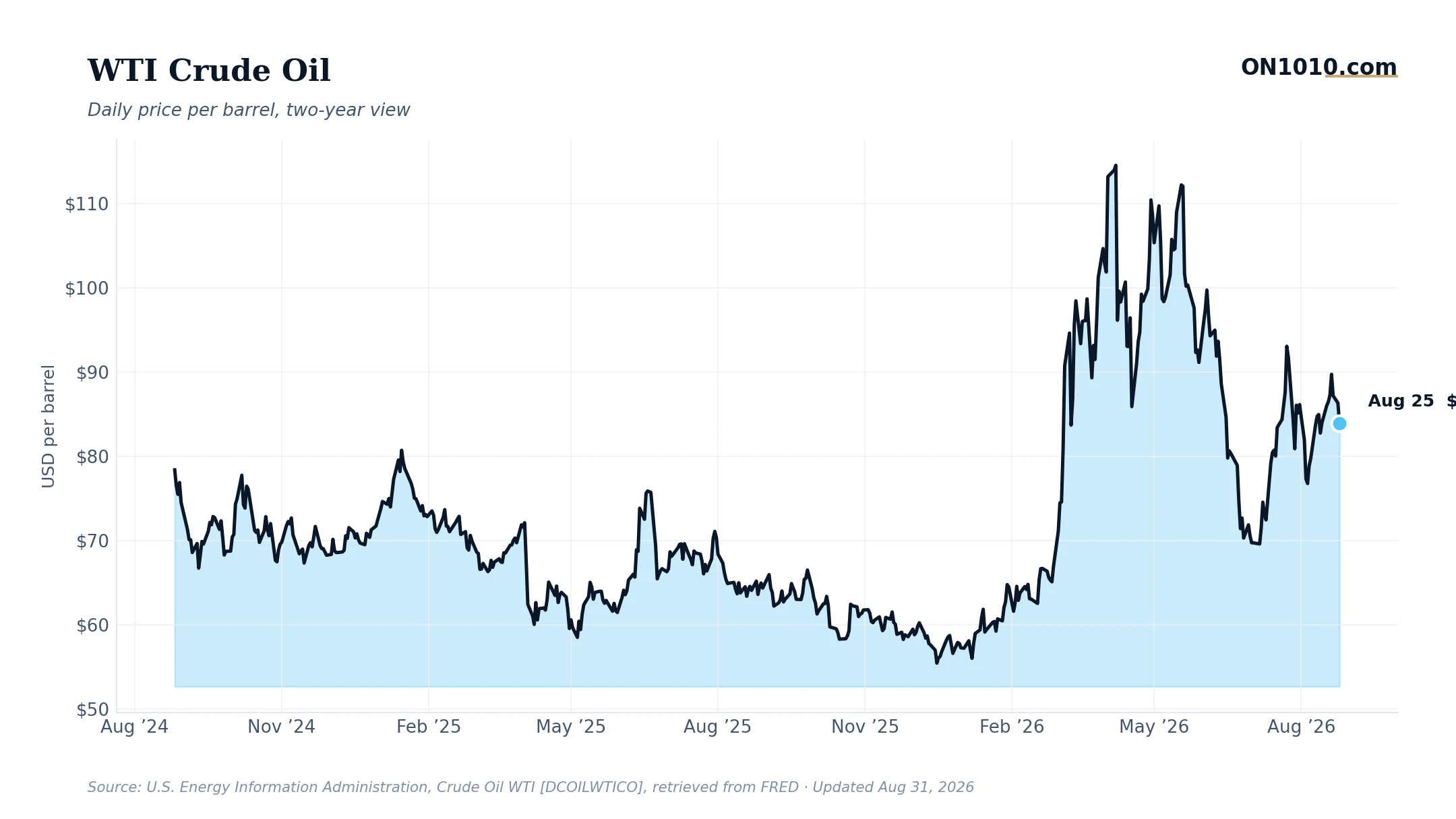
According to CNBC, the U.S. and Iran exchanged direct military strikes for the first time since July, with oil prices climbing above $90 a barrel as energy markets repriced the risk of a genuine supply disruption near the Strait of Hormuz. The headline number is notable. The mechanism behind it is what actually matters.
Roughly 20% of the world’s oil supply passes through the Strait of Hormuz every single day. That makes it less a shipping lane and more a pressure valve: when it functions, global energy costs stay manageable; when it doesn’t, the entire cost structure of the global economy shifts. With core inflation already running hotter than roughly nine of every ten months in the historical record, a sustained oil shock landing on top of an already elevated price level is the kind of compound problem that central banks genuinely dread. The Fed can raise rates to cool demand-driven inflation. It has far fewer tools to fight supply-driven inflation that originates in a military conflict halfway around the world.
The broader economic backdrop makes the timing uncomfortable. Long-term interest rates are already running above their historical norm. Credit spreads are tight, meaning the credit market is calm. But consumer sentiment remains unusually weak, a disconnect from equity markets that bears watching. An oil spike above $90, if sustained, would hit lower-income households hardest since energy costs consume a larger share of their budgets, putting further pressure on a consumer who is already feeling stretched.
Historically, investors and capital allocators have treated Hormuz escalations as high-severity but short-duration risks, reasoning that neither side has a long-term interest in permanently closing the strait. The question worth sitting with now is whether that historical pattern holds when strikes are becoming more frequent, not less. Frequency changes the calculus on duration.
Bottom Line: An oil price above $90 on top of already-hot inflation is the economic equivalent of throwing a wrench into machinery that is already running warm. How long the wrench stays there is the only question that matters.
Read more: CNBC Top News
ON1010 Research is an independent publisher of economic education and is not a registered investment adviser, broker-dealer, or investment company. This content is for educational and informational purposes only and is not investment advice or a recommendation to buy, sell, or hold any security. Published under the publisher exemption recognized by Section 202(a)(11)(D) of the Investment Advisers Act of 1940 (Lowe v. SEC). Always consult a qualified financial professional before making any financial decision.
Free Research
The economy moves fast. We make sure you move faster.
Economic data, policy shifts, and market signals — delivered to your inbox.
Subscribe Free