
When Oil Becomes a Foreign Policy Variable
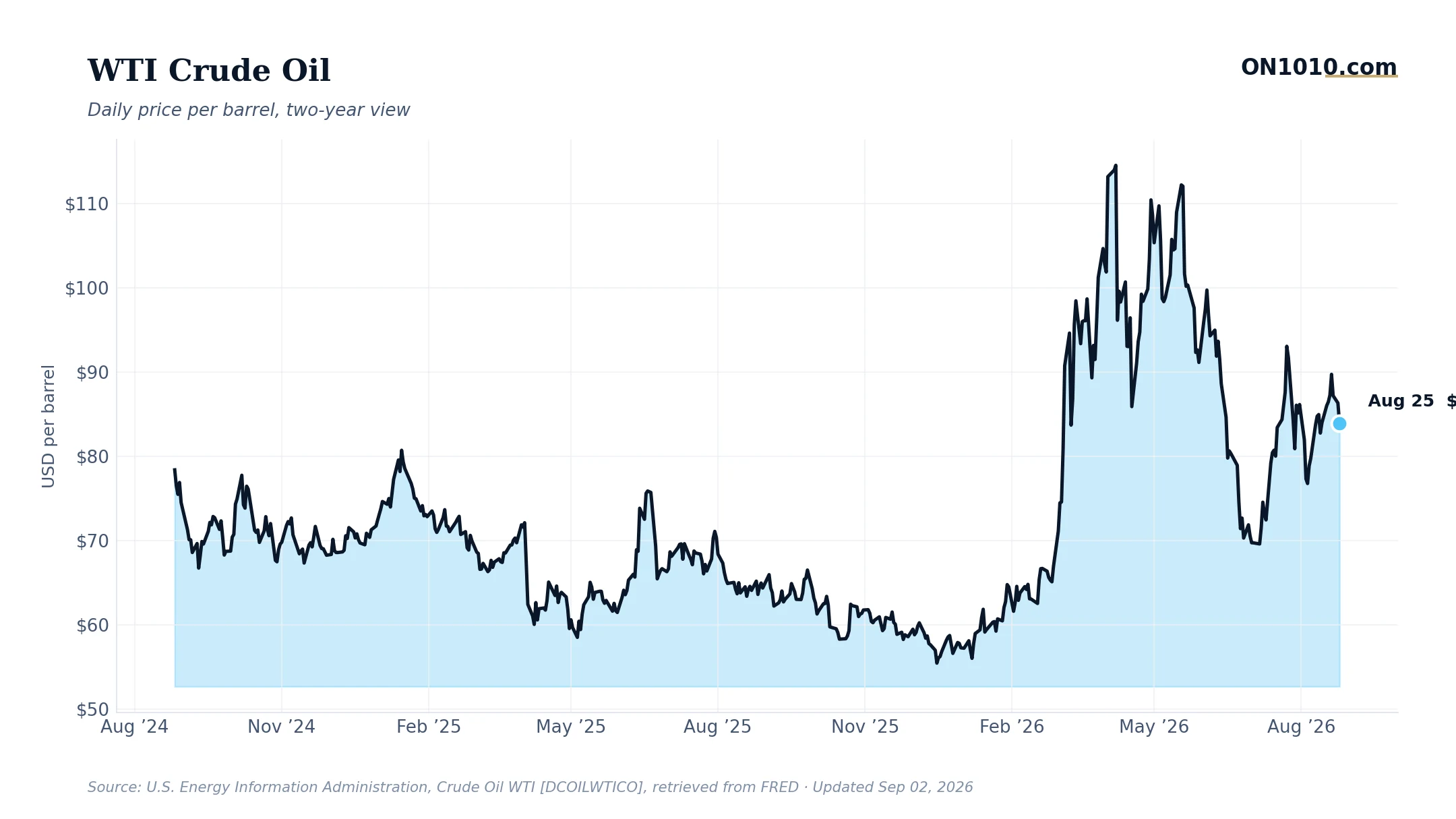
According to CNBC, U.S. crude topped $90 a barrel Wednesday after Iran struck U.S. allies Kuwait, Jordan, and Bahrain in apparent retaliation for an American military attack on Iran. The headline number is alarming. The more important question is whether this is a price spike or a price regime.
There is a meaningful difference between the two. Spikes, think the Gulf War or the brief 2019 Aramco drone strike, tend to reverse within weeks once markets realize the disruption is contained. Regimes are different. When a military conflict reshapes how oil physically moves, who insures tankers, and which chokepoints stay open, energy prices can reset to a structurally higher floor for months or years. Iran’s strikes on three U.S. allies signals this conflict has broadened beyond a bilateral exchange. That raises the probability we are looking at a regime, not a spike.
The economic backdrop makes this moment particularly uncomfortable. Core inflation is already running hotter than nine out of every ten months in the historical record. Energy is one of the most direct channels through which a foreign conflict becomes a domestic price problem. Sustained oil above $90 would flow through to gasoline, freight, and manufacturing input costs within weeks, hitting the exact inflation gauge the Fed is already watching with concern. Long-term interest rates were already elevated going into this week, meaning the rate relief that historically cushioned prior energy shocks is not obviously available here.
Historically, investors and corporate planners have treated sustained energy price increases as a margin compression event first and a growth event second. Companies that pass costs through quickly protect margins; those that cannot absorb or pass costs see earnings pressure accumulate. The question worth sitting with is how much of this energy shock is already priced, and whether the conflict’s geographic spread suggests more disruption ahead or represents the peak of escalation. Credit spreads remain historically tight, suggesting the bond market has not yet priced a severe scenario. That gap between equity market calm and geopolitical reality is worth monitoring carefully.
Bottom Line: Oil crossing $90 during an active, widening military conflict is a margin and inflation story as much as an energy story. The difference between a spike and a regime change is the question that matters most right now.
Read more: CNBC Top News
ON1010 Research is an independent publisher of economic education and is not a registered investment adviser, broker-dealer, or investment company. This content is for educational and informational purposes only and is not investment advice or a recommendation to buy, sell, or hold any security. Published under the publisher exemption recognized by Section 202(a)(11)(D) of the Investment Advisers Act of 1940 (Lowe v. SEC). Always consult a qualified financial professional before making any financial decision.
Free Research
The economy moves fast. We make sure you move faster.
Economic data, policy shifts, and market signals — delivered to your inbox.
Subscribe Free