
The Bond Selloff Isn’t the Crisis. The Complacency Around It Might Be.
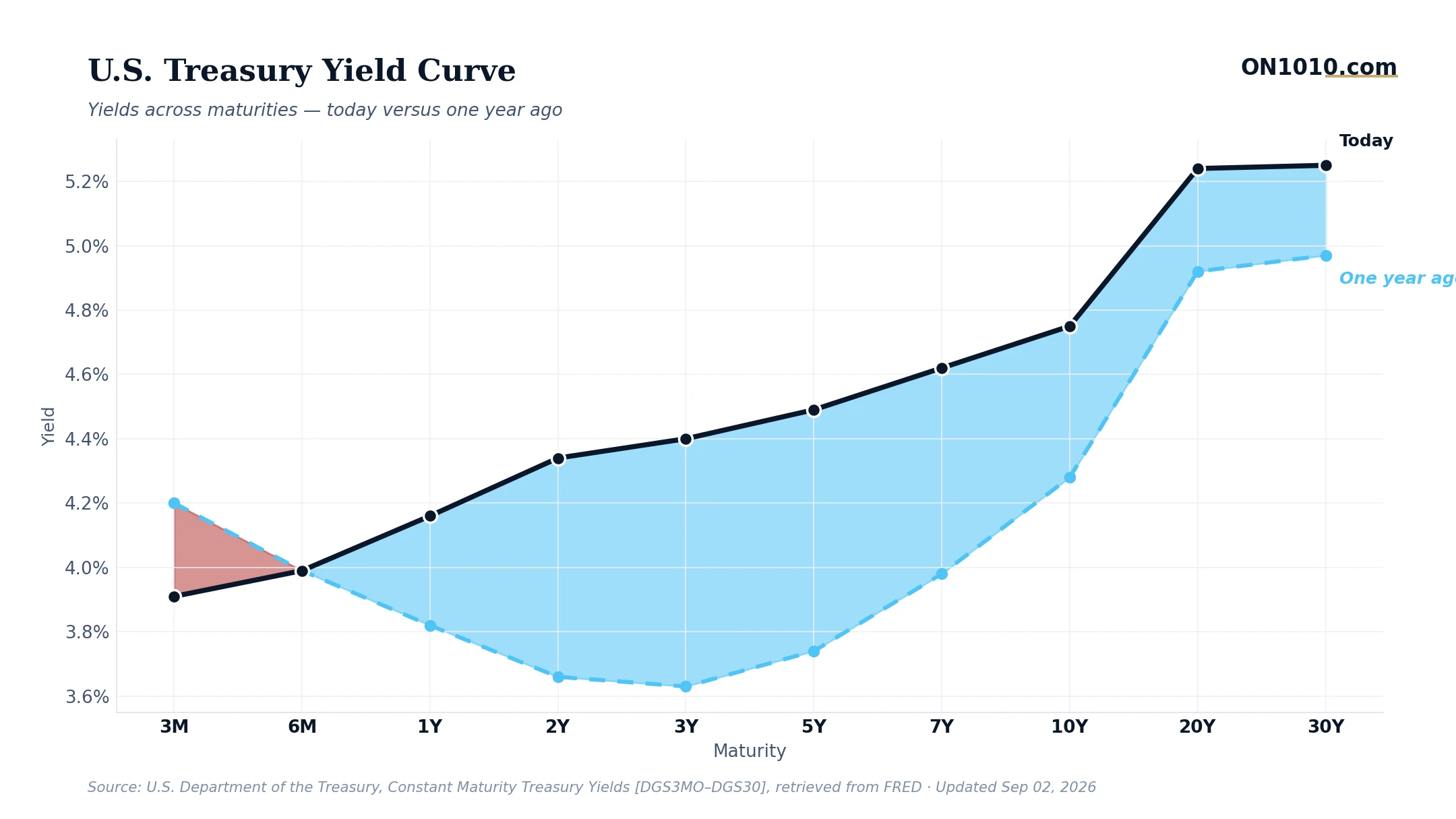
According to CNBC, the bond market is in the middle of a meaningful selloff, with rising government debt and deficits pushing yields higher while inflation keeps investors on edge. The headline frames it as a problem to “protect against.” That framing misses the more interesting question: why are credit spreads still near historic lows while long-term Treasury yields are sitting above their historical average and climbing?
That combination is genuinely unusual. When government borrowing costs rise because of deficit concerns and sticky inflation, you’d typically expect corporate bond spreads to widen in sympathy. Right now, they haven’t. Credit markets are pricing near-perfect calm even as the Treasury market is flashing something more uncomfortable. Either the credit market knows something the Treasury market doesn’t, or one of them is wrong. History suggests these gaps don’t last.
The inflation context makes this harder, not easier. Core inflation is running hotter than roughly nine out of every ten months on record. That’s not a rounding error; that’s a structural problem for fixed-income pricing. When inflation runs persistently above what markets expected when bonds were issued, the real return on those bonds quietly erodes. The nominal yield looks fine on paper. The purchasing power it delivers is another story. Always do the math: a 4.5% yield means something very different in a 3% inflation world than in a 1% one.
Historically, investors navigating rising-rate environments with high inflation have thought carefully about duration, the sensitivity of bond prices to interest rate changes. Longer-duration bonds take more pain when yields rise. The question worth sitting with isn’t how to panic-proof a portfolio; it’s whether the income a bond offers adequately compensates for the inflation risk embedded in holding it to maturity. That calculation looks different today than it did three years ago, and any decisions about fixed-income allocation belong in a conversation with a qualified financial professional who knows your specific situation.
Bottom Line: The bond market is telling a story about deficits and inflation that credit markets haven’t yet accepted. When two markets read the same economy this differently, one of them is about to get a lesson.
Read more: CNBC Top News
ON1010 Research is an independent publisher of economic education and is not a registered investment adviser, broker-dealer, or investment company. This content is for educational and informational purposes only and is not investment advice or a recommendation to buy, sell, or hold any security. Published under the publisher exemption recognized by Section 202(a)(11)(D) of the Investment Advisers Act of 1940 (Lowe v. SEC). Always consult a qualified financial professional before making any financial decision.
Free Research
The economy moves fast. We make sure you move faster.
Economic data, policy shifts, and market signals — delivered to your inbox.
Subscribe Free