
When Oil Spikes, the Real Threat Isn’t the Price at the Pump
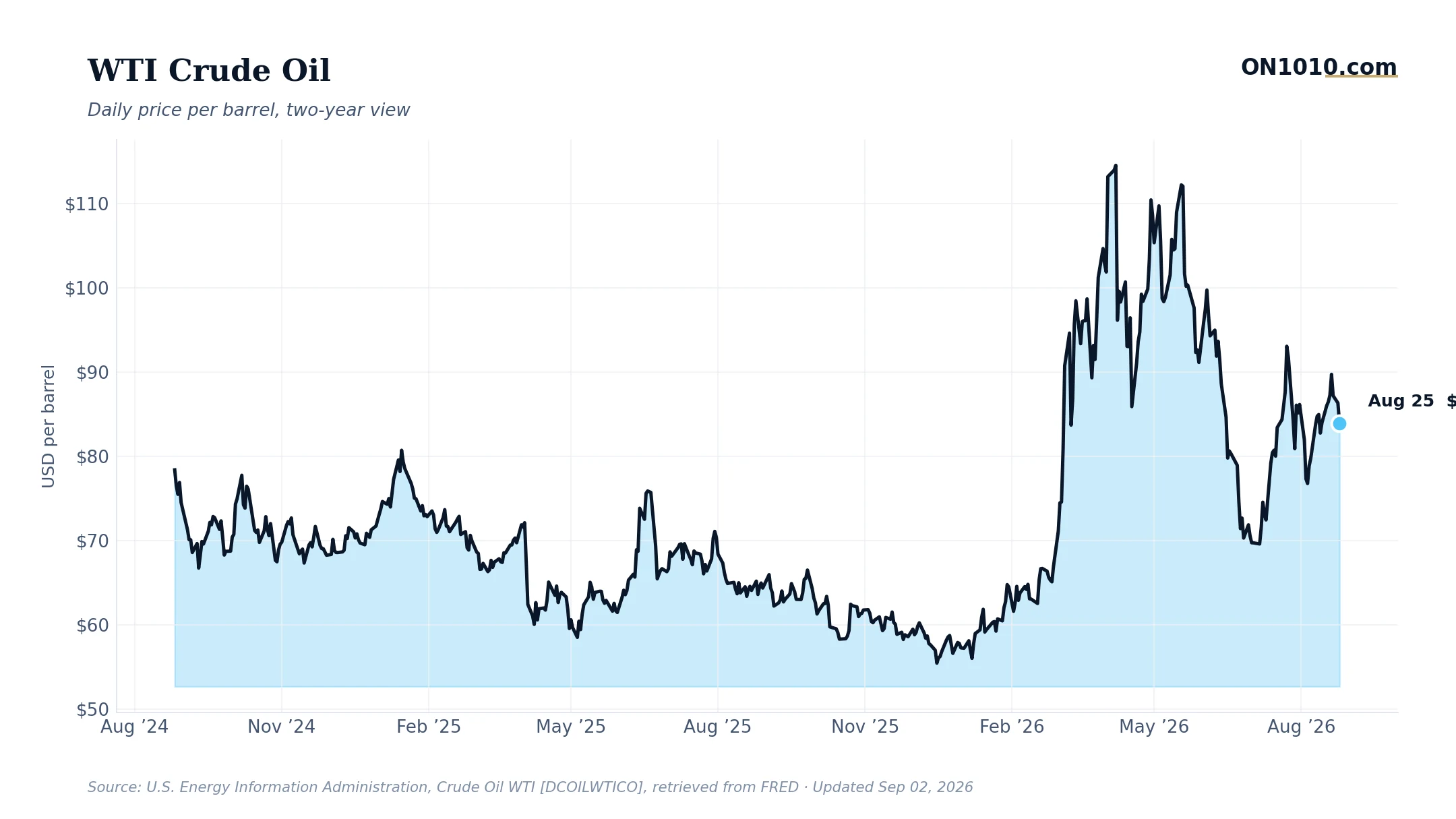
According to CNBC, U.S. crude oil crossed $90 a barrel Wednesday after Iran struck U.S. allies Kuwait, Jordan, and Bahrain in retaliation for a U.S. attack on Iran. The headline number is striking. The more important question is what a sustained move above $90 does to the machinery underneath an already-strained economy.
Here is the mechanism worth understanding. Energy is an input cost that touches almost everything: manufacturing, logistics, agriculture, retail. When oil spikes, profit margins compress before prices fully adjust. Companies can’t always pass higher input costs to customers immediately, especially when consumer sentiment is already historically weak. That squeeze on margins is where the real economic damage tends to show up, and it tends to show up quietly, weeks before any headline data confirms it.
The backdrop makes this moment particularly worth watching. Core inflation is already running hot relative to its own historical record, and long-term interest rates are elevated. That combination means the Fed has very little room to absorb an oil-driven inflation shock without having to respond in ways that tighten conditions further. Higher energy prices at this point don’t just pinch margins. They complicate the policy calculus considerably.
One counterweight: credit spreads remain historically tight, which tells you the bond market isn’t yet pricing a systemic credit event. VIX, at 16.8, sits in normal territory. The broader market trend, however, is showing signs of deterioration in participation, a signal worth watching even when day-to-day volatility looks calm. Historically, investors have treated sustained oil spikes above $90 as margin compression events first and inflation events second, tracking how quickly companies in energy-intensive industries can reprice or restructure costs before earnings revisions follow.
The question worth sitting with: if this conflict escalates further and $90 becomes the floor rather than the ceiling, which sectors can absorb the input shock and which can’t?
Bottom Line: An oil spike into a high-inflation, high-rate environment is a margin problem before it is a growth problem. Watch corporate cost structures, not just the price at the pump.
Read more: CNBC Top News
ON1010 Research is an independent publisher of economic education and is not a registered investment adviser, broker-dealer, or investment company. This content is for educational and informational purposes only and is not investment advice or a recommendation to buy, sell, or hold any security. Published under the publisher exemption recognized by Section 202(a)(11)(D) of the Investment Advisers Act of 1940 (Lowe v. SEC). Always consult a qualified financial professional before making any financial decision.
Free Research
The economy moves fast. We make sure you move faster.
Economic data, policy shifts, and market signals — delivered to your inbox.
Subscribe Free