
The Fed’s Rate Has Been on Cruise Control. Here’s What That Tells You.
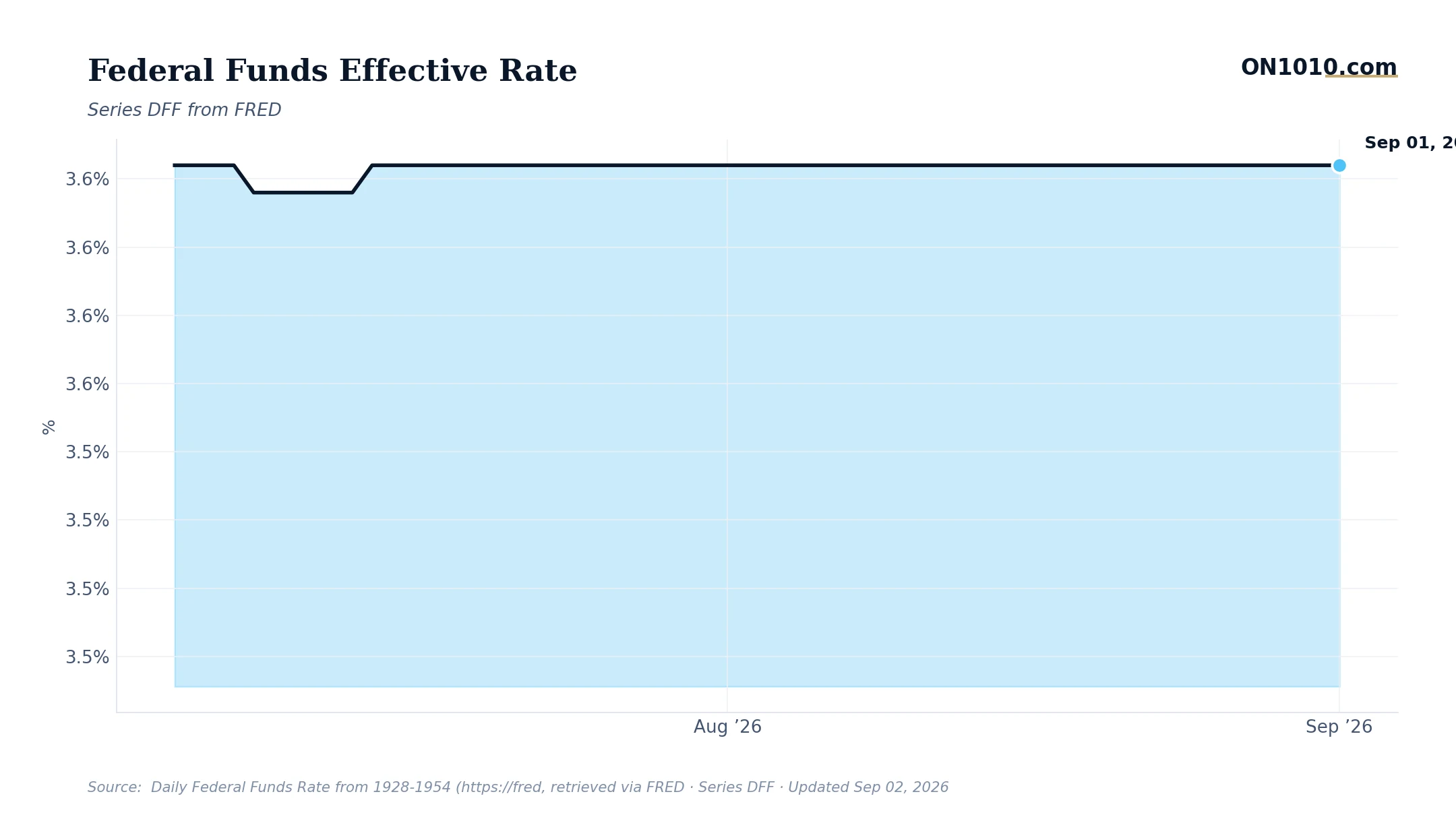
The effective federal funds rate has held at 3.63% for six straight days, and that consistency is the entire story. When the overnight rate sits this steady, it means the Fed’s target and actual market conditions are perfectly in sync. Banks are borrowing from each other at exactly the rate the Fed intends. No surprises, no slippage.
That precision matters more than it sounds. The effective fed funds rate is essentially the economy’s heartbeat monitor. When it drifts from the Fed’s target, it signals stress in the banking system or unexpected demand for short-term cash. A flat, stable reading like this one says the plumbing is working.
Here’s the tension worth watching, though. Monetary policy sits near its historical midpoint, suggesting the Fed is neither pressing the gas nor the brake. Meanwhile, core inflation is running hotter than roughly nine out of every ten months on record. Long-term interest rates are elevated by historical standards, and they’ve been rising. That combination, a middle-of-the-road overnight rate sitting against sticky inflation and rising long rates, is the classic setup where the bond market starts doing the Fed’s work for it. Higher long rates tighten credit conditions regardless of what the Fed does with the overnight rate.
In past cycles, when the overnight rate was stable but long-term rates were climbing, the transmission of monetary policy shifted. Mortgage rates, corporate borrowing costs, and capital project hurdle rates all moved higher even without a Fed action. Business investment decisions got repriced in boardrooms without any press conference required. Historically, this kind of environment has prompted operators and allocators to look hard at whether their financing assumptions still hold at current rates, not the rate they locked in two years ago.
Bottom Line: The Fed’s overnight rate looks like a still pond right now, but the river of long-term rates is running fast. The question worth sitting with is whether the calm at the short end is masking real tightening pressure further out on the curve.
Source: Federal Reserve Economic Data (FRED)
ON1010 Research is an independent publisher of economic education and is not a registered investment adviser, broker-dealer, or investment company. This content is for educational and informational purposes only and is not investment advice or a recommendation to buy, sell, or hold any security. Published under the publisher exemption recognized by Section 202(a)(11)(D) of the Investment Advisers Act of 1940 (Lowe v. SEC). Always consult a qualified financial professional before making any financial decision.
Free Research
The economy moves fast. We make sure you move faster.
Economic data, policy shifts, and market signals — delivered to your inbox.
Subscribe Free