
Core Inflation Just Hit Its Slowest Pace in Years. The Fed Is Watching.
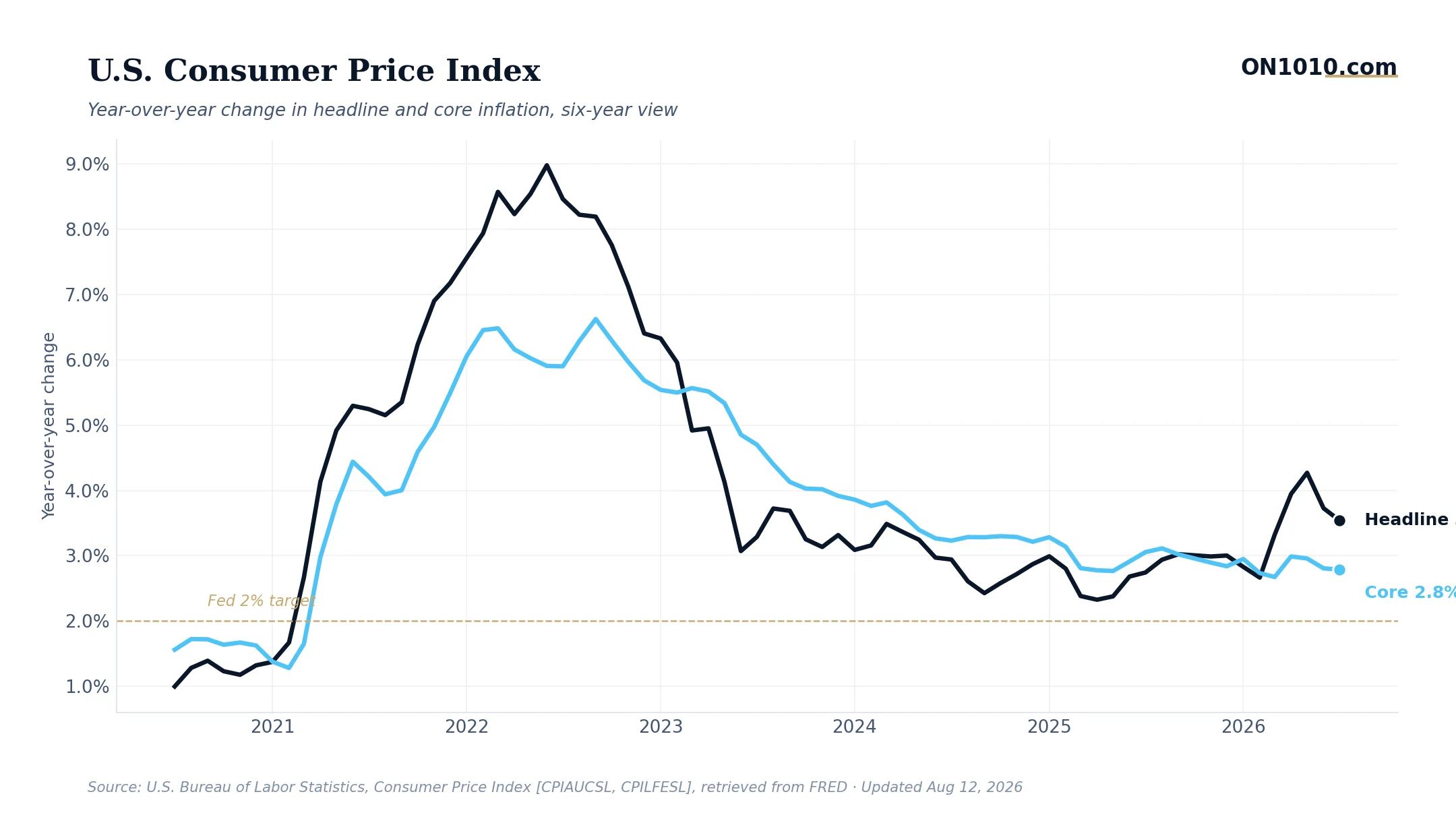
Core CPI rose just 0.22% in July, pushing the year-over-year rate down to 1.93%. That’s the first time annual core inflation has printed below 2% in this cycle, and it landed well under the Fed’s 2% target.
That number deserves a second look.
The Bigger Picture
The trend here is real, and it’s been building. Month-over-month core CPI has averaged roughly 0.2% over the past three months, a meaningful deceleration from the stickier readings earlier in the cycle. This is happening even as long-term interest rates remain historically elevated and the economy’s growth gauge sits near its historical midpoint. In other words, inflation is cooling without the economy visibly cracking. That combination is rarer than it sounds.
Credit spreads are tight, VIX is calm, and equities are trading well above their long-term trend line. The market is pricing a soft landing with some conviction. Whether the data earns that confidence is the question worth sitting with.
Why It Matters
Historically, when core inflation drops durably below the Fed’s 2% target, the policy conversation shifts from “how long do we hold” to “when do we move.” In past cycles, that repricing has had real consequences for the cost of capital across the economy, from floating-rate business debt to mortgage rates to the hurdle rate companies use to evaluate new projects. For business operators and capital allocators, the key question becomes how quickly a sustained below-2% print changes the financing environment they plan around. Past performance tells us the direction of travel; the speed and timing are always the hard part.
Bottom Line: Core inflation cooling below 2% is a genuine milestone in this cycle. The puzzle now is whether the Fed reads it as a signal to act or a reason to wait and confirm. What happens to long-term rates from here may tell you more about the answer than anything the Fed says out loud.
Source: Federal Reserve Economic Data (FRED)
ON1010 Research is an independent publisher of economic education and is not a registered investment adviser, broker-dealer, or investment company. This content is for educational and informational purposes only and is not investment advice or a recommendation to buy, sell, or hold any security. Published under the publisher exemption recognized by Section 202(a)(11)(D) of the Investment Advisers Act of 1940 (Lowe v. SEC). Always consult a qualified financial professional before making any financial decision.
Free Research
The economy moves fast. We make sure you move faster.
Economic data, policy shifts, and market signals — delivered to your inbox.
Subscribe Free