
Economic Wire: Hormuz closure squeezes global economy as oil demand destruc
When Less Oil Demand Is the Alarm, Not the Relief
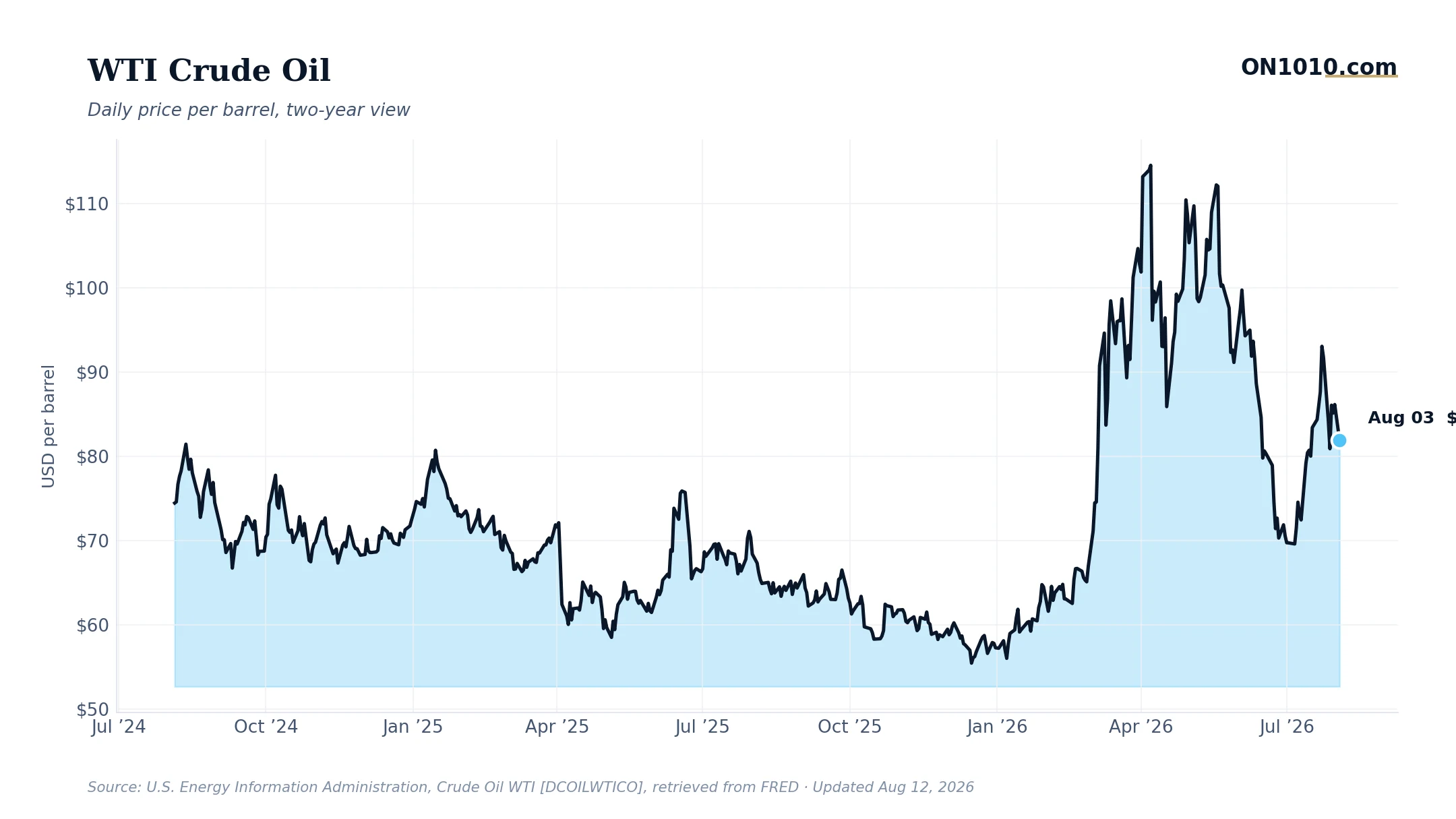
According to CNBC, the International Energy Agency now expects global oil demand to drop by 1.6 million barrels a day in 2026, citing high fuel prices and disruptions to shipping through the Strait of Hormuz. At first glance, falling demand sounds like it takes pressure off prices. It doesn’t. Demand destruction at this scale is the economy telling you it can’t afford the product anymore.
That distinction matters. There’s a healthy version of falling oil demand: electric vehicles gaining share, efficiency gains, structural energy transition. This isn’t that. When the IEA flags “demand destruction” alongside a chokepoint disruption, what they’re describing is households and businesses cutting consumption because prices got too high to absorb. That’s a margin story dressed up as an energy story. Every dollar more a company spends on fuel and logistics is a dollar that doesn’t flow to wages, investment, or profit. At economy-wide scale, that’s a meaningful headwind.
The Hormuz disruption is the pinch point that turns a manageable energy shock into something more serious. Roughly 20% of global oil supply moves through that strait. Even partial or intermittent disruptions force rerouting, push up insurance costs, and introduce delivery uncertainty that businesses price into their decisions conservatively. Supply chains that spent years optimizing for cost are now optimizing for resilience, and resilience is always more expensive.
Zoom out and the macro picture gets more complicated. Core inflation is running well above its historical norm, long-term interest rates are elevated, and consumer sentiment is near historic lows. Historically, when energy shocks hit an economy already carrying high inflation and stretched consumer budgets, the transmission to corporate margins tends to be faster and deeper than the headline GDP numbers suggest. Credit spreads remain unusually tight, which tells you the credit market isn’t pricing in serious stress yet. That’s either reassuring or a lag worth watching closely.
Bottom Line: Demand destruction isn’t a cure for high energy prices. It’s the receipt. When businesses and households stop buying because they can’t afford to, the economic cost has already been paid.
Read more: CNBC Top News
ON1010 Research is an independent publisher of economic education and is not a registered investment adviser, broker-dealer, or investment company. This content is for educational and informational purposes only and is not investment advice or a recommendation to buy, sell, or hold any security. Published under the publisher exemption recognized by Section 202(a)(11)(D) of the Investment Advisers Act of 1940 (Lowe v. SEC). Always consult a qualified financial professional before making any financial decision.
Free Research
The economy moves fast. We make sure you move faster.
Economic data, policy shifts, and market signals — delivered to your inbox.
Subscribe Free