
Economic Wire: Oil prices jump 4% as Rubio says U.S. will ‘continue to prot
When “Protecting Shipping” Becomes Its Own Market Signal
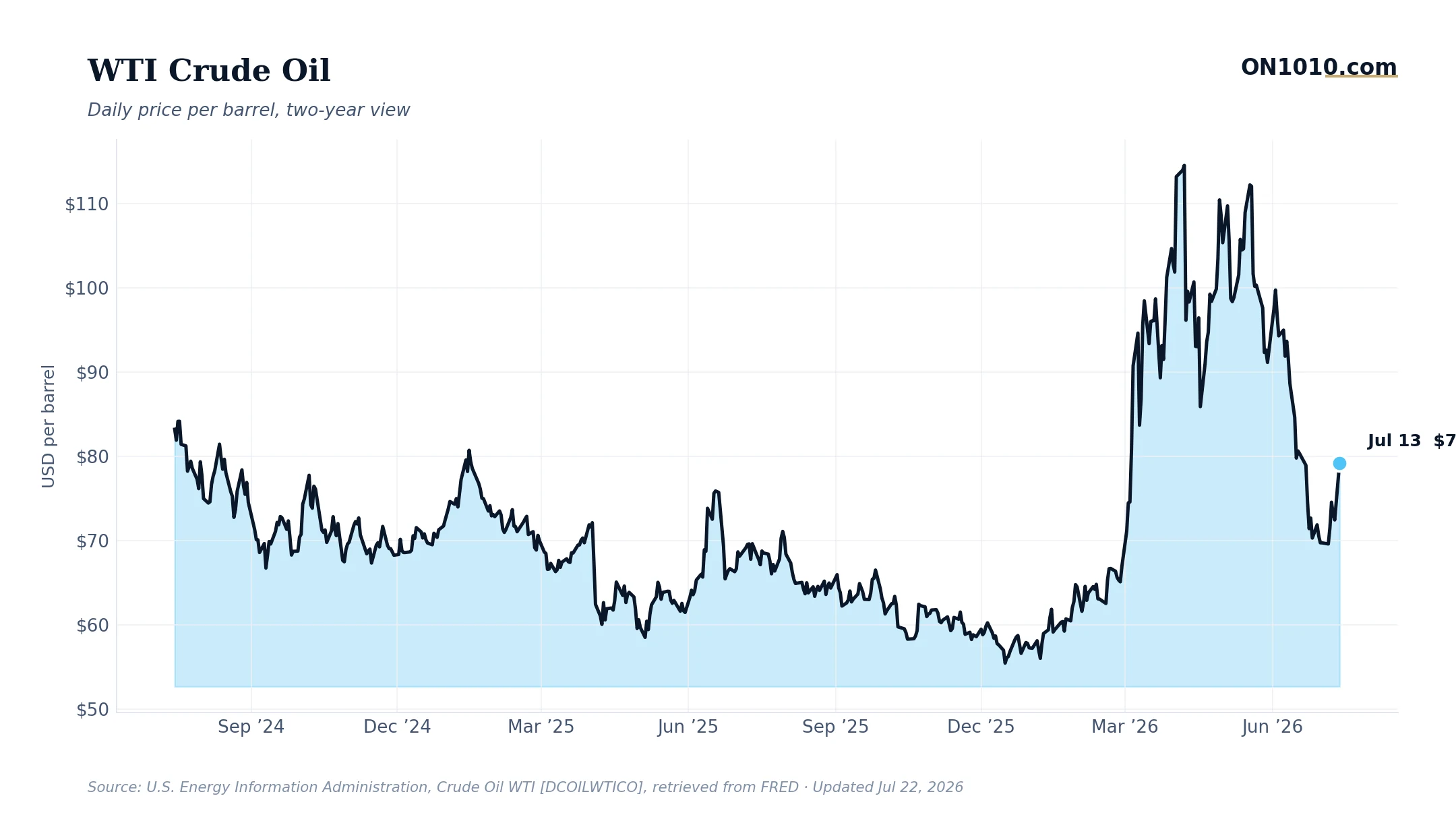
According to CNBC, U.S. forces have struck Iran for 11 consecutive days, with Secretary Rubio framing the campaign around degrading Iran’s ability to threaten commercial shipping. Oil prices jumped 4% on the news. That number matters, but the phrase “continue to protect shipping” might matter more.
Here is the tension: this is no longer a one-night strike. Eleven consecutive days of military action represents a sustained operational commitment, and Rubio’s language signals the U.S. intends to keep forces engaged for as long as it takes. For energy markets, the distinction between a single strike and an open-ended campaign is enormous. A one-off event creates a price spike that fades. An ongoing operation creates a persistent risk premium that gets priced into contracts, shipping rates, and insurance costs across the entire global supply chain.
The Strait of Hormuz handles roughly 20% of the world’s oil supply. Even if physical flows aren’t yet disrupted, the credible threat to them changes the math for every business that buys or moves energy. Profit margins in transportation, manufacturing, and consumer goods are all sensitive to sustained energy price pressure. And the sector rotation data says institutional investors are already moving. Health care is outperforming SPY by 7.5% over the past month, technology is lagging by 5.7%, and all four defensive sectors are beating the market. The money is telling a story the headlines haven’t fully caught up to yet.
Historically, investors and operators have used geopolitical oil shocks to stress-test assumptions about input costs, supply chain resilience, and the real versus nominal growth trajectory. The question worth sitting with here is not whether this week’s 4% move holds, but whether an extended U.S. military presence in the region structurally reprices energy risk for months to come.
Bottom Line: A 4% oil spike is a headline. Eleven days of consecutive strikes with open-ended language from the Secretary of State is a repricing event. The market’s defensive rotation suggests institutional money already knows the difference.
Read more: CNBC Top News
ON1010 Research is an independent publisher of economic education and is not a registered investment adviser, broker-dealer, or investment company. This content is for educational and informational purposes only and is not investment advice or a recommendation to buy, sell, or hold any security. Published under the publisher exemption recognized by Section 202(a)(11)(D) of the Investment Advisers Act of 1940 (Lowe v. SEC). Always consult a qualified financial professional before making any financial decision.
Free Research
The economy moves fast. We make sure you move faster.
Economic data, policy shifts, and market signals — delivered to your inbox.
Subscribe Free