
Economic Wire: Trump says U.S. growth could hit 20%. It’s happened only onc
The 20% Growth Claim Is a Distraction. The Fed Argument Underneath It Is What Matters.
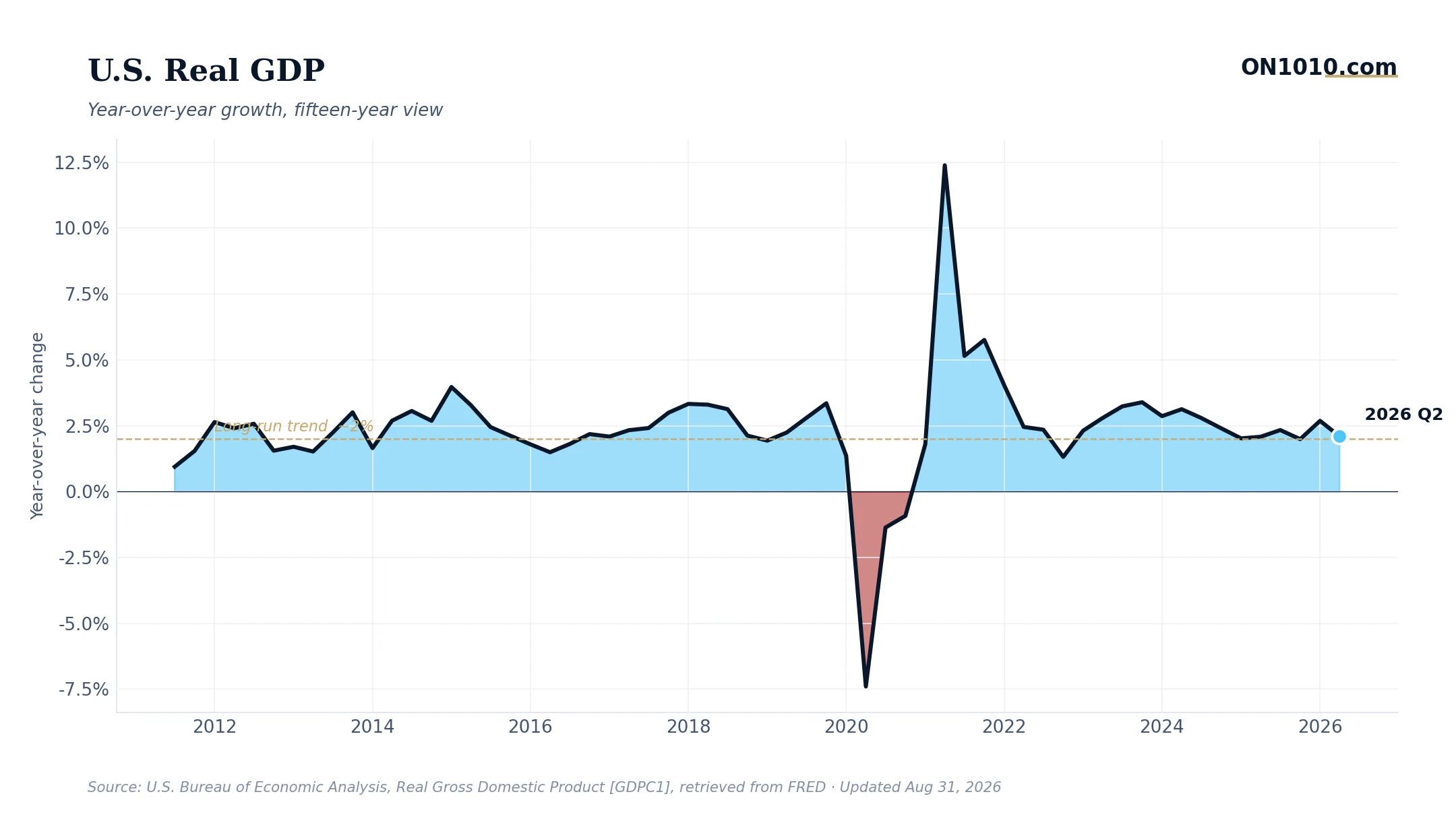
According to CNBC, President Trump argued that U.S. GDP growth could reach 20%, and that rapid growth should not prompt the Federal Reserve to raise interest rates, even as inflation remains above the Fed’s 2% target. The growth number will grab the headlines. The monetary policy argument deserves the closer read.
On the 20% claim: it has happened exactly once since World War II, driven by the post-war industrial reconversion of the late 1940s, a structural event with no modern analog. Today’s economy sits at roughly its historical midpoint on growth measures, which is solid but unremarkable. Getting from “solid” to 20% would require a productivity miracle of a scale that AI enthusiasts dream about but no data currently supports. That gap between aspiration and arithmetic is worth naming clearly.
The more substantive debate is the one about the Fed. The argument being made is that strong growth justifies keeping rates low, because the growth itself is non-inflationary. That logic works, but only if the growth is productivity-driven. If businesses are producing more output per hour worked, they can raise wages and profits simultaneously without pushing prices higher. Productivity growth is the magic variable that makes the math work. But core inflation is currently running well above the Fed’s 2% target, sitting at levels higher than roughly nine of every ten months in the historical record. At a policy rate of 3.50%-3.75%, monetary policy is not historically tight. The Fed’s dilemma is real: growth narratives and sticky inflation are pulling in opposite directions.
Historically, investors have paid close attention to whether growth claims are backed by productivity data or simply by nominal spending, because the distinction determines whether strong GDP prints are genuinely good news or inflationary noise in disguise. Credit spreads are calm, VIX is low, and offensive sectors are leading the market, all of which reflects confidence. But consumer sentiment remains historically weak, and the bond market’s read on long-term rates still reflects conditions tighter than average. Those two facts living side by side are worth sitting with.
Bottom Line: 20% growth is a headline. The real question is whether any growth the U.S. achieves is productivity-led or price-led, because the Fed responds to one and not the other.
Read more: CNBC Top News
ON1010 Research is an independent publisher of economic education and is not a registered investment adviser, broker-dealer, or investment company. This content is for educational and informational purposes only and is not investment advice or a recommendation to buy, sell, or hold any security. Published under the publisher exemption recognized by Section 202(a)(11)(D) of the Investment Advisers Act of 1940 (Lowe v. SEC). Always consult a qualified financial professional before making any financial decision.
Free Research
The economy moves fast. We make sure you move faster.
Economic data, policy shifts, and market signals — delivered to your inbox.
Subscribe Free