
Factory America Quietly Picks Up Speed
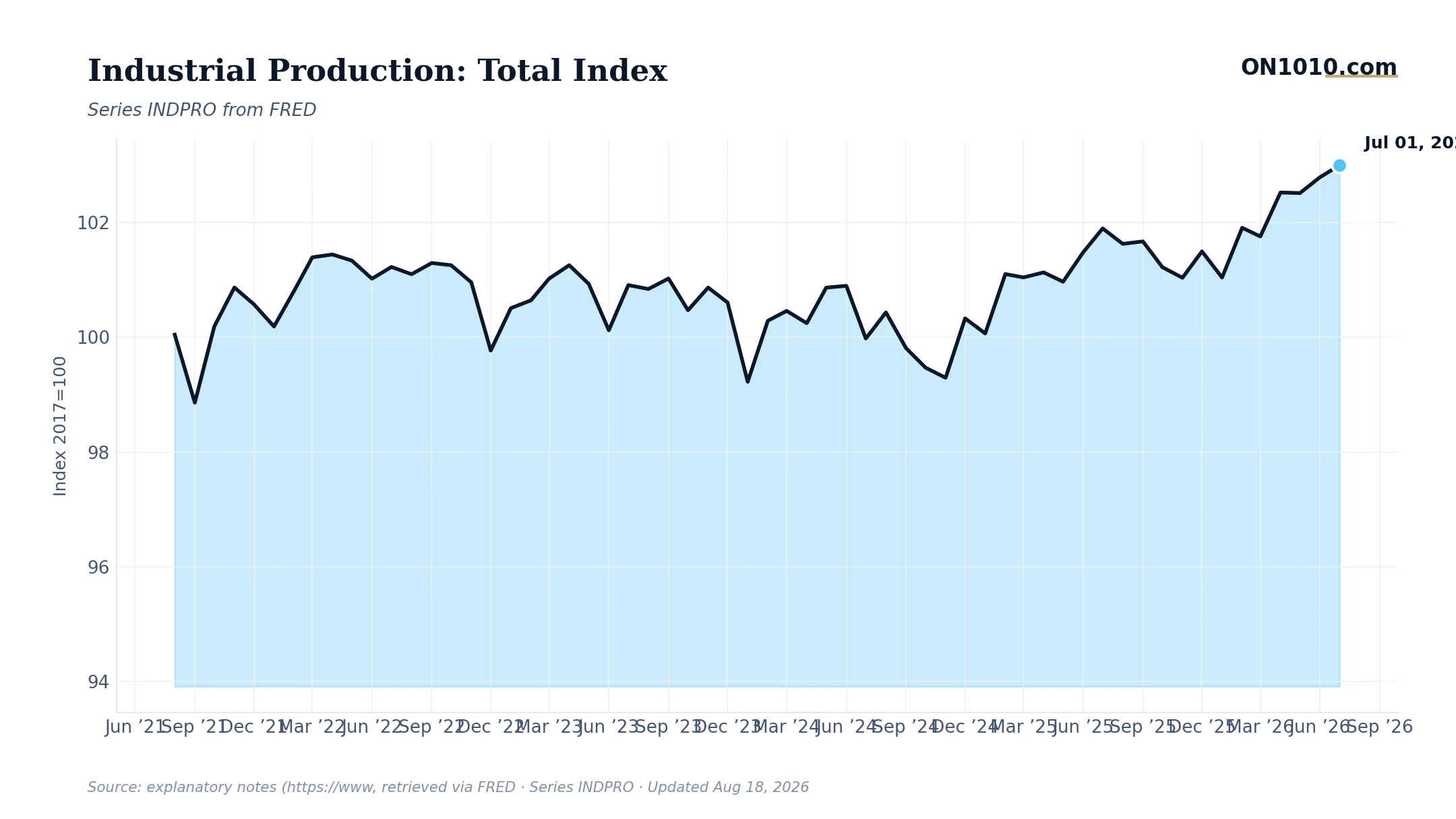
Industrial production rose 0.2% in July to an index reading of 102.99, extending a run of gains that has now pushed output up 1.3% over the past year. The headline number looks modest. The trend underneath it is more interesting.
The Bigger Picture
Look at the last five months: 101.75, 101.91, 102.52, 102.52, 102.79, 103.00. That is a staircase, not a spike. Factory output has been grinding higher in small, steady increments rather than lurching on any single month’s sugar rush. Steady climbs like this tend to reflect genuine demand and capacity use, not one-off restocking or seasonal quirks. It also lines up with what the broader economy is doing: growth is running near its historical midpoint, credit spreads are tight, and market volatility is calm. The physical economy and the financial economy are, for once, telling similar stories.
The context worth keeping in mind is that this expansion is happening with inflation still running hot by historical standards. That combination, rising output alongside elevated prices, is exactly the environment where the distinction between nominal growth and real growth matters most. A plant producing more units is genuinely expanding. A plant whose revenue is up but whose unit count is flat is just repricing.
Why It Matters
Historically, sustained industrial production growth has been associated with expanding business margins in the manufacturing and industrial sectors, because spreading fixed costs over more output is one of the cleanest ways a factory improves profitability. In past cycles, operators and capital allocators have watched whether that output growth eventually translates into pricing power, labor demand, and equipment investment. The question the trend raises is whether this slow grind higher has enough momentum behind it to pull capital spending along with it, or whether elevated long-term interest rates, which remain above their historical midpoint, act as a ceiling on new investment commitments.
Bottom Line: The factory sector is doing something rare: growing steadily without drama. The question worth sitting with is whether the ceiling comes from demand or from the cost of capital required to expand it.
Source: Federal Reserve Economic Data (FRED)
ON1010 Research is an independent publisher of economic education and is not a registered investment adviser, broker-dealer, or investment company. This content is for educational and informational purposes only and is not investment advice or a recommendation to buy, sell, or hold any security. Published under the publisher exemption recognized by Section 202(a)(11)(D) of the Investment Advisers Act of 1940 (Lowe v. SEC). Always consult a qualified financial professional before making any financial decision.
Free Research
The economy moves fast. We make sure you move faster.
Economic data, policy shifts, and market signals — delivered to your inbox.
Subscribe Free