
Mortgage Rates Are Creeping Back Up. Here’s What That Climb Is Actually Telling Us.
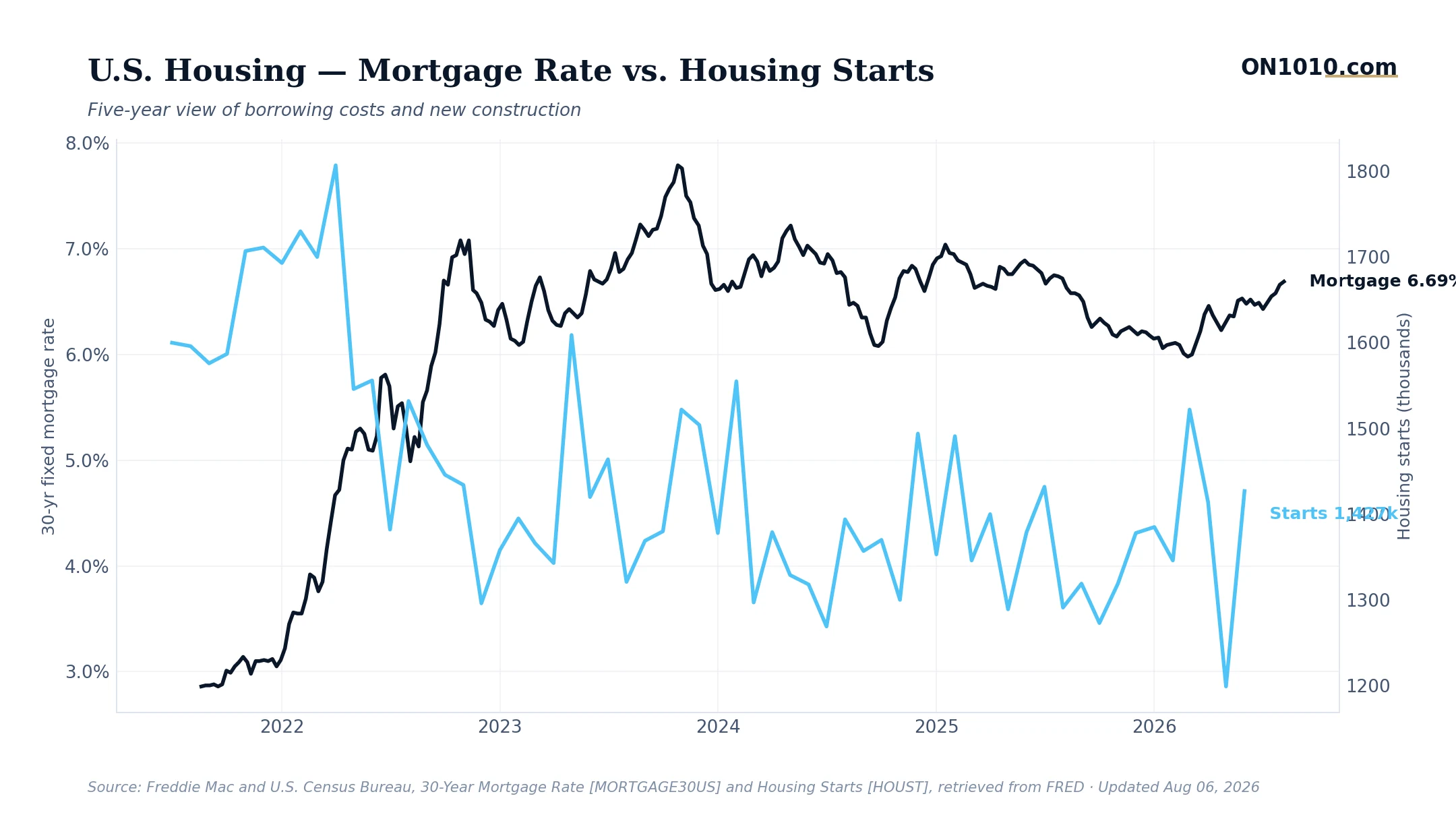
The 30-year fixed mortgage rate edged up to 6.69% this week, its fourth straight weekly increase and the highest reading since early June. That might sound like a rounding error, but zoom out: rates have risen 0.26 percentage points in just five weeks, reversing what looked like a promising summer drift lower.
The bigger story here is the context. Inflation is still running hot by historical standards, and long-term interest rates remain elevated compared to most of the past two decades. The bond market sets the floor for mortgage rates, and right now that floor is high. When the 10-year Treasury yield stays elevated, mortgage rates follow, and that mechanic doesn’t bend just because the housing market wants it to.
What makes this moment interesting is the disconnect showing up across our gauges. Credit spreads are unusually tight (meaning lenders aren’t demanding extra compensation for risk), and equity markets are calm and constructive. Yet consumer sentiment is near historic lows, and housing affordability is still squeezed. Those two realities can coexist for a while, but they rarely coexist forever. The balance sheet math is simple: a $400,000 loan at 6.69% costs roughly $370 more per month than the same loan at 3%. That’s real money taken out of household spending capacity.
Historically, when mortgage rates have stayed persistently above 6.5% while consumer sentiment was this depressed, housing starts and existing home sales tended to stagnate for extended periods. The question worth sitting with is whether falling rates, when they eventually arrive, will unlock a wave of pent-up demand, or whether affordability has deteriorated so much that even a 50-basis-point drop won’t meaningfully move the market.
Bottom Line: Mortgage rates moving in the wrong direction during what’s supposed to be peak homebuying season is a signal worth watching. The mechanism connecting Fed policy, Treasury yields, and your monthly payment is the story here, and it isn’t resolving quickly.
Source: Federal Reserve Economic Data (FRED)
ON1010 Research is an independent publisher of economic education and is not a registered investment adviser, broker-dealer, or investment company. This content is for educational and informational purposes only and is not investment advice or a recommendation to buy, sell, or hold any security. Published under the publisher exemption recognized by Section 202(a)(11)(D) of the Investment Advisers Act of 1940 (Lowe v. SEC). Always consult a qualified financial professional before making any financial decision.
Free Research
The economy moves fast. We make sure you move faster.
Economic data, policy shifts, and market signals — delivered to your inbox.
Subscribe Free