
The 10-Year Yield Ticks Back Up. Here’s Why That’s Worth Watching.
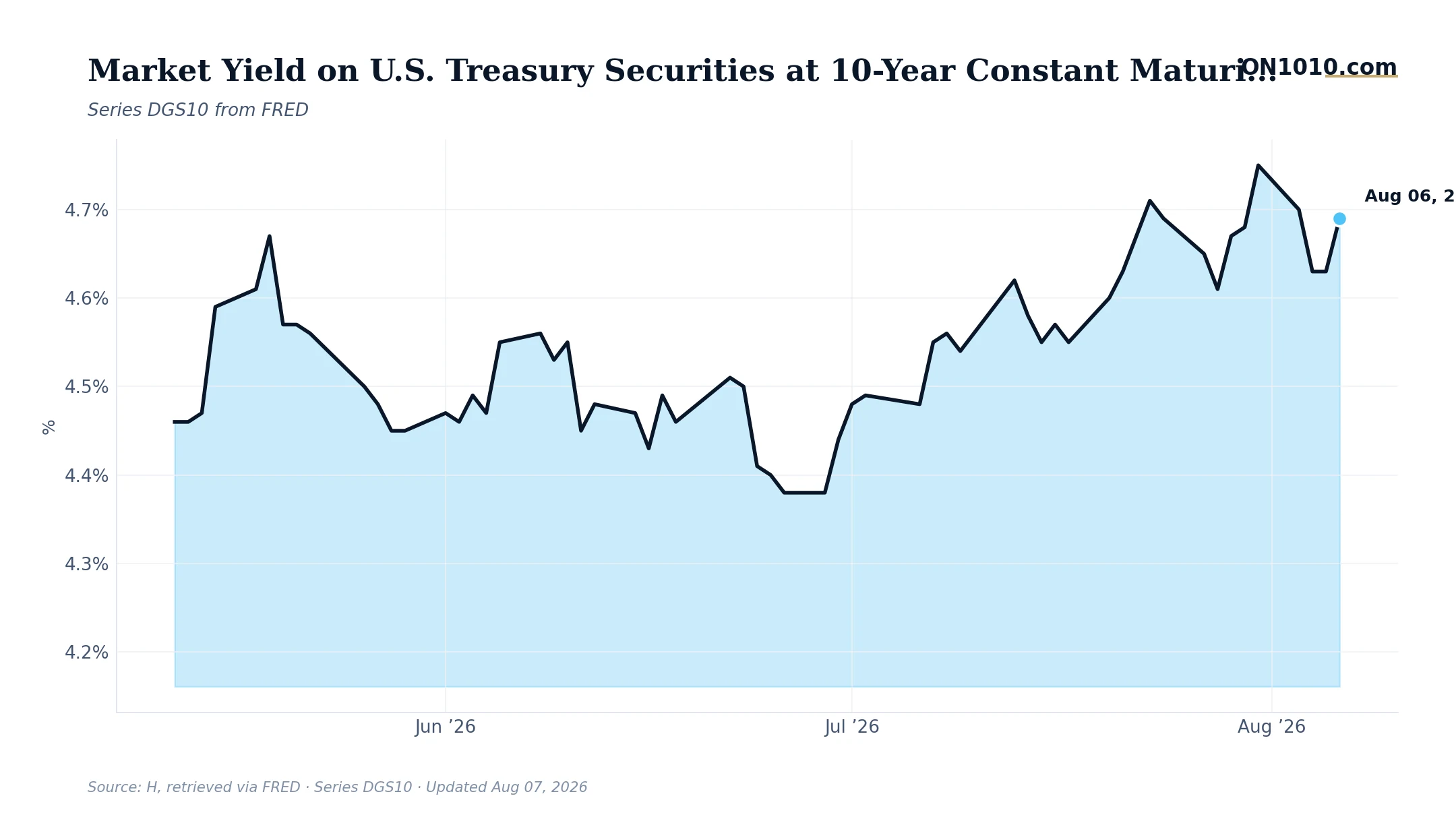
The 10-year Treasury yield rose to 4.69% on August 6, up from 4.63% the day before, and it hasn’t strayed far from the 4.63%-4.75% range all week. That kind of tight-range hovering might look like nothing. It rarely is.
Long-term rates this high sit well above where they’ve spent most of the past two decades. And right now, they’re holding stubbornly elevated despite inflation data that has started to edge in the right direction. When rates refuse to fall even as the inflation story improves, bond investors are usually telling you something: they want more compensation for holding long-duration debt, either because they’re skeptical inflation stays contained, or because the sheer volume of Treasury supply keeps pressure on prices. Probably some of both.
The broader context makes this more interesting, not less. Credit spreads are historically tight, suggesting corporate bond markets are calm. Equities are sitting above both their 50-day and 200-day moving averages. Yet core inflation is still running hotter than at roughly nine out of ten historical readings, and the 10-year yield remains in territory that, historically, has preceded a recession within 12 months about 19% of the time. One in five is not a forecast. It’s a base rate worth knowing.
Historically, sustained elevated long-term yields work through the economy with a lag. Mortgage rates stay elevated, slowing housing. Corporate refinancing costs climb. Capital-intensive projects get harder to justify on paper. In past cycles, business operators and capital allocators have watched the spread between long-term borrowing costs and their own return-on-investment hurdles closely, because that spread is ultimately what decides whether a project gets funded.
The question worth sitting with: if yields stay in this range through year-end while inflation drifts lower, does that mean real borrowing costs quietly tighten further, even without the Fed doing anything at all?
Bottom Line: The 10-year yield isn’t making dramatic moves right now. The drama is in what it’s refusing to do. Four months of range-bound rates near 4.7% while inflation softens is its own kind of signal, and the bond market has a habit of being right before the rest of us catch on.
Source: Federal Reserve Economic Data (FRED)
ON1010 Research is an independent publisher of economic education and is not a registered investment adviser, broker-dealer, or investment company. This content is for educational and informational purposes only and is not investment advice or a recommendation to buy, sell, or hold any security. Published under the publisher exemption recognized by Section 202(a)(11)(D) of the Investment Advisers Act of 1940 (Lowe v. SEC). Always consult a qualified financial professional before making any financial decision.
Free Research
The economy moves fast. We make sure you move faster.
Economic data, policy shifts, and market signals — delivered to your inbox.
Subscribe Free