
The 10-Year Yield Won’t Budge. That’s the Story.
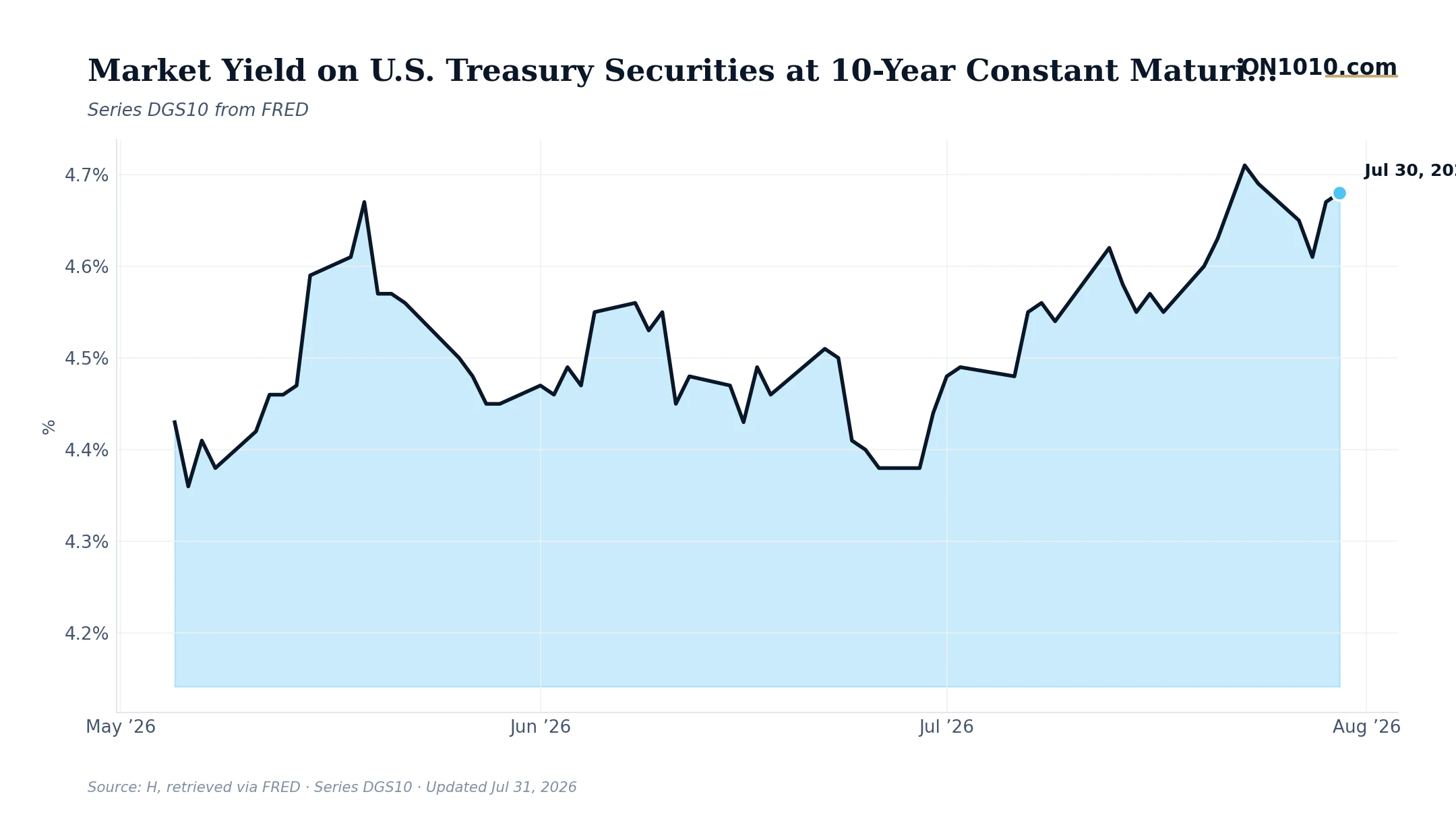
The 10-year Treasury yield ticked up to 4.68% on July 30, barely moving from 4.67% the day before. But zoom out one week and you see the real picture: yields have been pinned between 4.61% and 4.71% for seven straight trading days. The market keeps trying to push this rate around, and it keeps snapping back to the same place.
That kind of stubborn range is a signal. The bond market is caught between two powerful forces. On one side, inflation is sitting at the 91st percentile of its historical range, which means bond investors still demand a real premium for lending money long-term. On the other side, growth is neutral, consumer sentiment is at its weakest reading in the historical record, and defensive sectors have outperformed offensive ones by 3.2 percentage points over the past month, suggesting at least some large investors are hedging against slower conditions ahead. The 10-year yield is the tug-of-war score.
At the 73rd historical percentile, these are elevated rates by most modern standards. The economy is running with tighter long-term financing conditions than about 73% of the months on record. Historically, readings in this zone have been followed by a new recession within 12 months about 19% of the time. That is not a forecast. It is the base rate, and it is worth knowing.
What makes this moment unusual is the contradiction sitting right next to these yields: credit spreads are tight, sitting near the 31st percentile of their historical range, meaning corporate bond markets are calm and largely unconcerned about default risk. Elevated Treasury yields plus calm credit spreads usually means the market believes the economy is solid enough, but that the Fed has more work to do. That combination has historically made capital allocation decisions harder, not easier. Long-duration projects get expensive to finance while short-term opportunities still look viable.
Bottom Line: The 10-year yield is not moving, but the forces holding it in place are very much in motion. The question worth sitting with is whether credit markets are right to stay calm, or whether they are simply the last to get the memo.
Source: Federal Reserve Economic Data (FRED)
ON1010 Research is an independent publisher of economic education and is not a registered investment adviser, broker-dealer, or investment company. This content is for educational and informational purposes only and is not investment advice or a recommendation to buy, sell, or hold any security. Published under the publisher exemption recognized by Section 202(a)(11)(D) of the Investment Advisers Act of 1940 (Lowe v. SEC). Always consult a qualified financial professional before making any financial decision.
Free Research
The economy moves fast. We make sure you move faster.
Economic data, policy shifts, and market signals — delivered to your inbox.
Subscribe Free