
The $80 Oil Story Isn’t Really About Oil
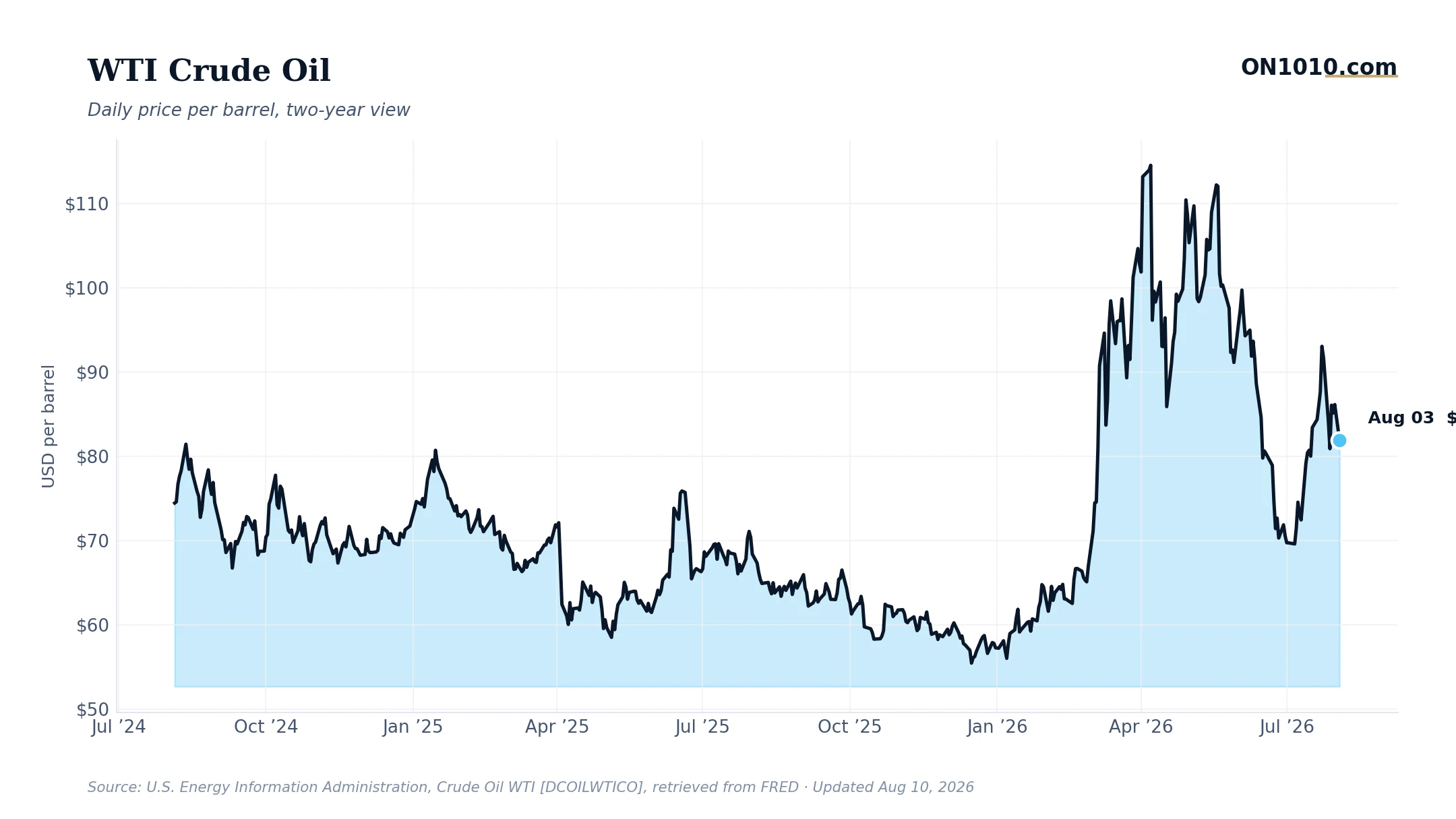
According to CNBC, U.S. crude has climbed back to $80 as traders grow skeptical that Washington and Tehran will reach a deal to reopen the Strait of Hormuz anytime soon. The headline reads like an energy story. The real story is about what a stuck diplomatic process does to the rest of the economy.
Here is the mechanism worth understanding. The Strait of Hormuz handles roughly 20% of the world’s oil supply. When that chokepoint carries uncertainty instead of crude, it acts like a tax on almost everything. Businesses that run on tight margins, think manufacturing, transportation, chemicals, agriculture, don’t get to wait for diplomats. They have to price the uncertainty now, which means higher input costs, squeezed margins, and eventually either higher prices for consumers or lower investment by businesses. Neither outcome is friendly to an economy where core inflation is already running hotter than nine of every ten months on record.
The timing creates a genuine tension. Credit spreads are historically tight, suggesting bond markets aren’t pricing a crisis. Market volatility is low and falling. But consumer sentiment sits near the bottom of its historical range, and long-term interest rates remain elevated by historical standards. That combination, calm credit and markets against a backdrop of stretched consumers and sticky inflation, means an oil supply shock has less cushion to absorb than it would in a healthier demand environment.
Historically, energy price spikes driven by geopolitical supply disruptions have behaved differently from demand-driven increases. The former tend to compress margins economy-wide without generating the growth that would normally offset the pain. Investors and business operators in past cycles have focused on which sectors carry the most energy-cost exposure in their cost structures, and how long they can absorb higher input prices before passing them through.
Bottom Line: At $80, oil is a warning light, not a siren. But if diplomacy stalls and prices climb further, an economy already fighting sticky inflation has very little room to shake it off.
Read more: CNBC Top News
ON1010 Research is an independent publisher of economic education and is not a registered investment adviser, broker-dealer, or investment company. This content is for educational and informational purposes only and is not investment advice or a recommendation to buy, sell, or hold any security. Published under the publisher exemption recognized by Section 202(a)(11)(D) of the Investment Advisers Act of 1940 (Lowe v. SEC). Always consult a qualified financial professional before making any financial decision.
Free Research
The economy moves fast. We make sure you move faster.
Economic data, policy shifts, and market signals — delivered to your inbox.
Subscribe Free