
The Bond Market Is Holding Its Breath. What Warsh Says Next Could Set the Tone for Fall.
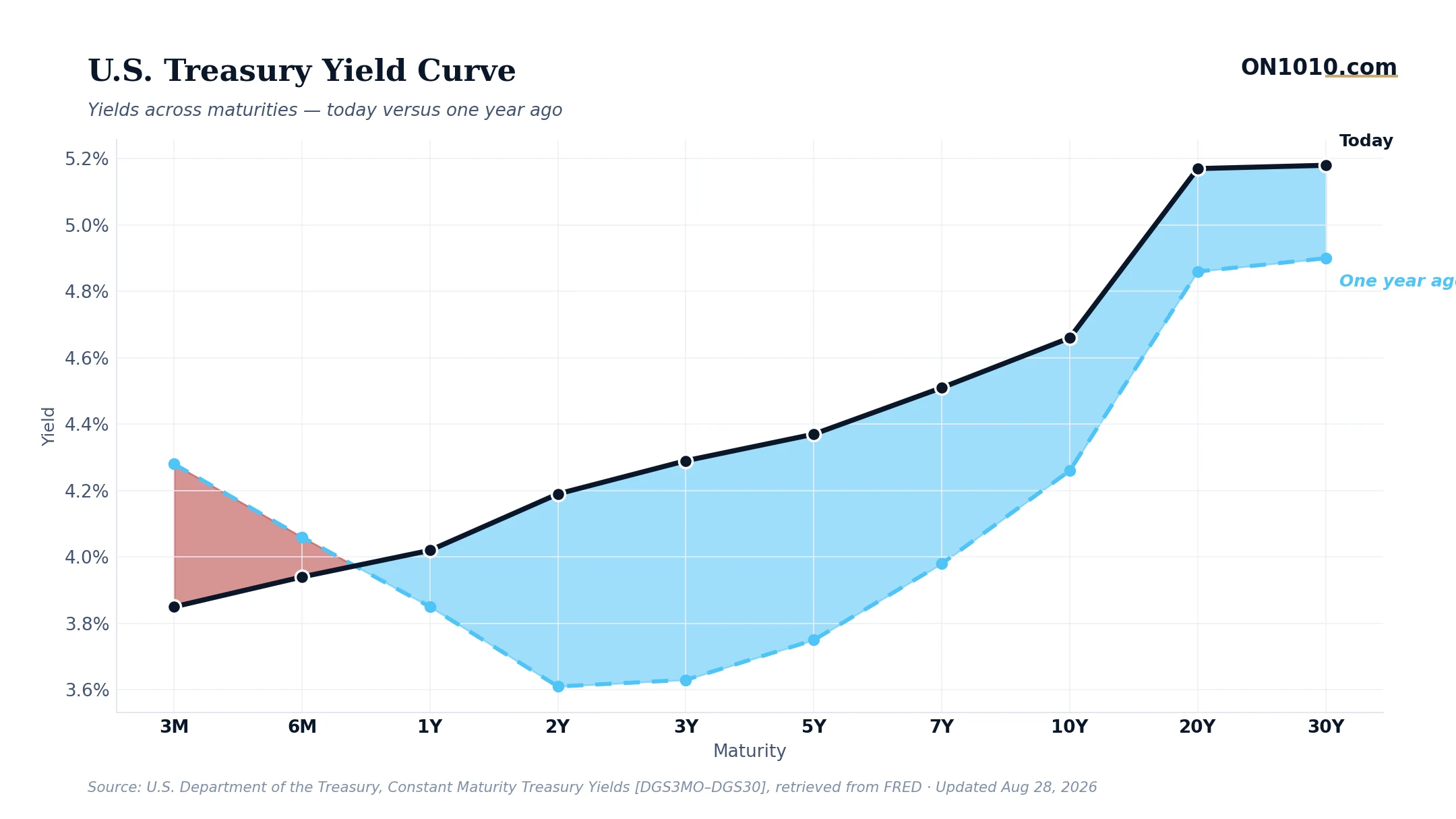
According to CNBC, Treasury yields were little changed heading into Kevin Warsh’s keynote address at Jackson Hole, with the 10-year sitting at 4.66%. That stillness is the story. When the bond market stops moving before a Fed speech, it means traders have decided they genuinely don’t know what’s coming.
Warsh carries more institutional weight than a typical Fed official. As a former Federal Reserve governor and widely discussed candidate for future leadership roles, his public statements get parsed for signals about where the Fed’s intellectual center of gravity is heading. A Jackson Hole keynote from him isn’t background noise. It’s a policy weather vane.
Here’s the tension the bond market is pricing: core inflation is running hot by historical standards, yet monetary policy sits near its historical midpoint. That gap matters. If the Fed is less restrictive than the inflation picture would normally call for, the question becomes whether that’s a deliberate choice or a miscalibration. Warsh’s tone on that question could reprice the long end of the curve quickly. Meanwhile, credit spreads are near the tightest levels in the historical record, suggesting credit markets are entirely relaxed about near-term risk. Bond markets and credit markets are telling slightly different stories, and that kind of divergence is worth watching.
The broader backdrop is constructive. VIX is low, SPY is above both its 50-day and 200-day moving averages, and technology is pulling well ahead of everything else in the market. But historically, when long-term rates are elevated relative to their own history, recession has followed within a year roughly 19% of the time. That is not a prediction. It is a base rate worth knowing as you listen to what Warsh says about the path forward.
Historically, Jackson Hole speeches have functioned as moments when Fed officials use academic cover to signal real policy shifts. Bernanke used it to prep markets for QE2. Powell used it in 2022 to signal that the Fed would be more aggressive on inflation than markets wanted to believe. The question worth sitting with today: is Warsh here to ratify the current stance, or to nudge the conversation?
Bottom Line: The bond market isn’t bored. It’s waiting. At 4.66% on the 10-year, the stakes of what Warsh signals about inflation tolerance and the policy path are higher than the calm surface suggests.
Read more: CNBC Top News
ON1010 Research is an independent publisher of economic education and is not a registered investment adviser, broker-dealer, or investment company. This content is for educational and informational purposes only and is not investment advice or a recommendation to buy, sell, or hold any security. Published under the publisher exemption recognized by Section 202(a)(11)(D) of the Investment Advisers Act of 1940 (Lowe v. SEC). Always consult a qualified financial professional before making any financial decision.
Free Research
The economy moves fast. We make sure you move faster.
Economic data, policy shifts, and market signals — delivered to your inbox.
Subscribe Free