
The Fed Held Rates. The Real Signal Is What Comes Next.
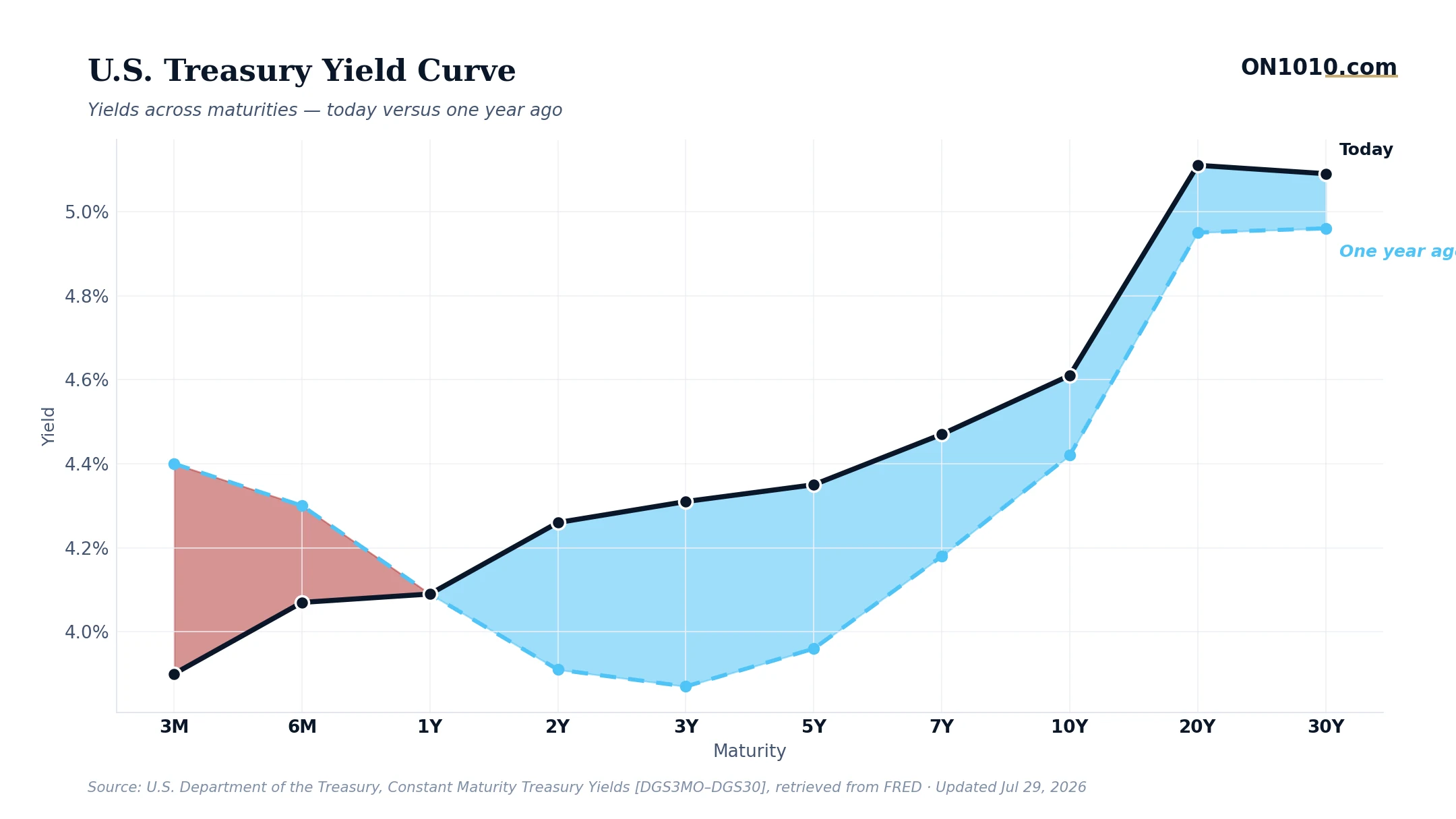
According to CNBC, the Federal Reserve held interest rates steady at its July meeting, exactly as markets expected. The hold itself was the least interesting part of the day.
What deserves more attention is the backdrop the Fed is navigating. Inflation is sitting at the 92nd percentile of its historical range and still rising, while long-term interest rates are elevated at the 72nd percentile. That combination means the Fed is not quietly waiting for conditions to normalize. It is actively managing a tension between keeping rates high enough to cool prices without holding them so long that something breaks. Every “no change” meeting extends that balancing act by another six weeks.
The gauge readings add texture here. Credit spreads are tight, which signals that corporate bond markets are calm and businesses can still borrow without paying a penalty. That is a meaningful counterweight to the inflation concern. When credit is calm, the financial system is not flashing stress, and the Fed has more room to be patient. The constructive case is precisely this: an economy where margins are holding, credit is accessible, and the Fed can afford to wait for the data to move before it does.
The complication is on the demand side. Consumer sentiment is at the zero percentile of its historical range, the weakest reading in the dataset. Historically, when sentiment has been this depressed, a recession within the next 12 months has followed about 0% of the time, and a year later sentiment was typically higher. That is a more reassuring base rate than the headlines suggest, but it does not make the underlying squeeze on lower-income households any less real.
Historically, investors have used Fed pause periods to focus less on the next rate move and more on what the earnings and margin data are saying, since monetary policy operates with a lag and corporate behavior tends to reprice faster than the policy itself.
Bottom Line: The Fed held, but the story is inflation still running hot against a consumer that is already worn down. Whether those two forces resolve gently or roughly is the question the next several months will answer.
Read more: CNBC Top News
ON1010 Research is an independent publisher of economic education and is not a registered investment adviser, broker-dealer, or investment company. This content is for educational and informational purposes only and is not investment advice or a recommendation to buy, sell, or hold any security. Published under the publisher exemption recognized by Section 202(a)(11)(D) of the Investment Advisers Act of 1940 (Lowe v. SEC). Always consult a qualified financial professional before making any financial decision.
Free Research
The economy moves fast. We make sure you move faster.
Economic data, policy shifts, and market signals — delivered to your inbox.
Subscribe Free