
The Fed Is Holding Steady. The Question Is How Much Longer.
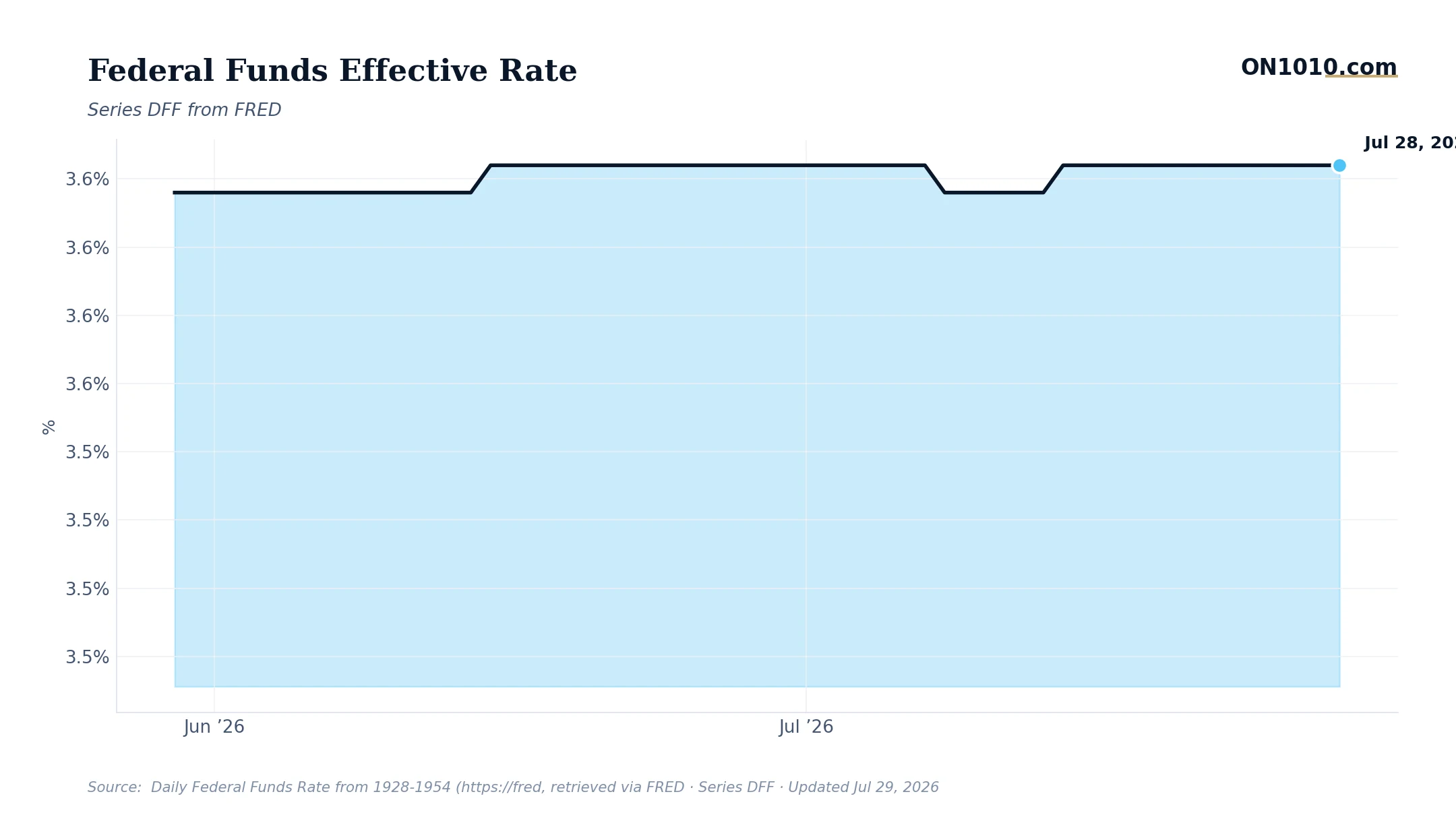
The effective federal funds rate has been parked at 3.63% for six consecutive trading days, and that flatline tells a story worth understanding. The Fed made a decision, the market agreed, and overnight lending rates have gone exactly nowhere.
That kind of stillness is actually unusual in a long-term context. Rates at 3.63% sit at the 56th percentile of historical monetary policy readings, meaning we are at a “neutral” setting by historical standards. But the backdrop around that neutral rate is anything but calm. Core inflation is running at the 92nd percentile of its own historical range, still hot and still rising. Long-term interest rates sit at the 72nd percentile, meaning financial conditions across the economy remain tighter than normal even as the overnight rate holds steady.
Here is the tension worth sitting with: when the policy rate is neutral but inflation is very high relative to history, the Fed has less room to cut than markets might hope. In past cycles, when inflation has run this hot, the Fed typically waited until inflation readings turned lower for several consecutive months before easing. The historical pattern from similar inflation readings shows that inflation was about 0.39 lower a year later, on average. That is not a prediction. It is the base rate worth knowing.
On the credit side, there is a meaningful update. Spreads, which measure how much extra yield corporate borrowers have to pay over Treasuries, have been very tight. That suggests the credit market sees low risk of widespread default right now, which has historically been a constructive backdrop for business investment and hiring. When credit is calm, capital tends to flow more freely.
Historically, businesses and capital allocators have used periods of rate stability to make longer-duration decisions: locking in financing costs, modeling investment returns, and assessing whether borrowing makes sense at current levels. When the rate environment is stable but elevated, the question tends to shift from “will rates change soon?” to “can our return on capital clear this hurdle rate?”
Bottom Line: The overnight rate hasn’t moved in a week, but the real story is whether hot inflation keeps the Fed anchored at today’s levels longer than the market expects. That gap between what the Fed can do and what everyone hopes it will do is where cycles turn.
Source: Federal Reserve Economic Data (FRED)
ON1010 Research is an independent publisher of economic education and is not a registered investment adviser, broker-dealer, or investment company. This content is for educational and informational purposes only and is not investment advice or a recommendation to buy, sell, or hold any security. Published under the publisher exemption recognized by Section 202(a)(11)(D) of the Investment Advisers Act of 1940 (Lowe v. SEC). Always consult a qualified financial professional before making any financial decision.
Free Research
The economy moves fast. We make sure you move faster.
Economic data, policy shifts, and market signals — delivered to your inbox.
Subscribe Free