
The Fed Just Told You Something More Important Than Its Decision
According to CNBC, the Federal Open Market Committee voted 9-3 to hold the federal funds rate in its current range of 3.5%-3.75%. The hold was expected. The three dissenting votes in favor of a hike were not, and that’s the number worth paying attention to.
Three dissents on a hold is a loud signal dressed up in quiet language. The FOMC doesn’t do drama publicly; it does consensus. When three members break from the majority to push for something more aggressive, it means the inflation debate inside the room is sharper than the official statement lets on. And given where our inflation gauge sits, at the 92nd percentile of its historical range and still rising, those dissenters have data on their side.
Here’s the tension the headline misses: the committee chose patience while inflation runs hotter than it has in about nine out of ten months on record. That’s either a sign of genuine confidence that price pressures will resolve, or a sign that the Fed is navigating political and economic crosscurrents that make another hike feel too costly right now. Both readings are legitimate. Credit spreads are tight (22nd percentile, rising), which suggests credit markets aren’t panicking. But consumer sentiment is at its lowest reading in the entire historical record, and consumers who feel poor tend to pull back on spending, which is disinflationary, but also a growth risk. The Fed may be threading a needle between those two realities.
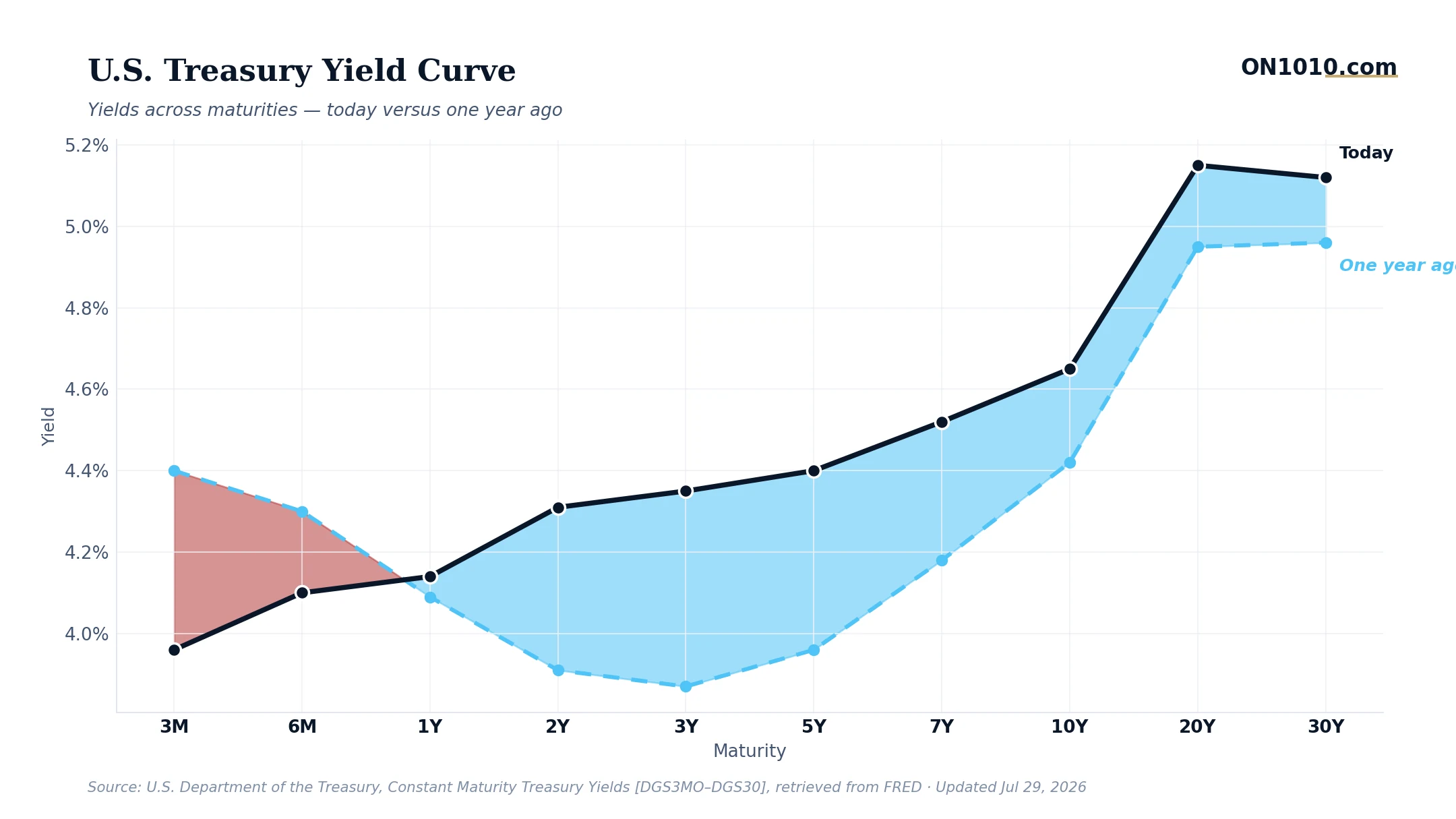
Historically, investors have watched the evolution of dissent votes closely as an early indicator of where policy is heading. One dissent is noise. Three is a signal that the majority’s patience has a shorter shelf life than the current statement implies. Markets that price in “hold indefinitely” after a 9-3 vote may be misreading the room. Long-term interest rates are already at the 72nd percentile of their historical range. From similar readings, a new recession began within 12 months about 18% of the time, not a forecast, but a base rate worth knowing.
Bottom Line: The Fed held rates steady, but three votes for a hike means the path of least resistance may be tilting back toward tightening, not toward cuts.
Read more: CNBC Top News
ON1010 Research is an independent publisher of economic education and is not a registered investment adviser, broker-dealer, or investment company. This content is for educational and informational purposes only and is not investment advice or a recommendation to buy, sell, or hold any security. Published under the publisher exemption recognized by Section 202(a)(11)(D) of the Investment Advisers Act of 1940 (Lowe v. SEC). Always consult a qualified financial professional before making any financial decision.
Free Research
The economy moves fast. We make sure you move faster.
Economic data, policy shifts, and market signals — delivered to your inbox.
Subscribe Free