
The Fed’s Overnight Rate Is Frozen. That’s the Whole Story.
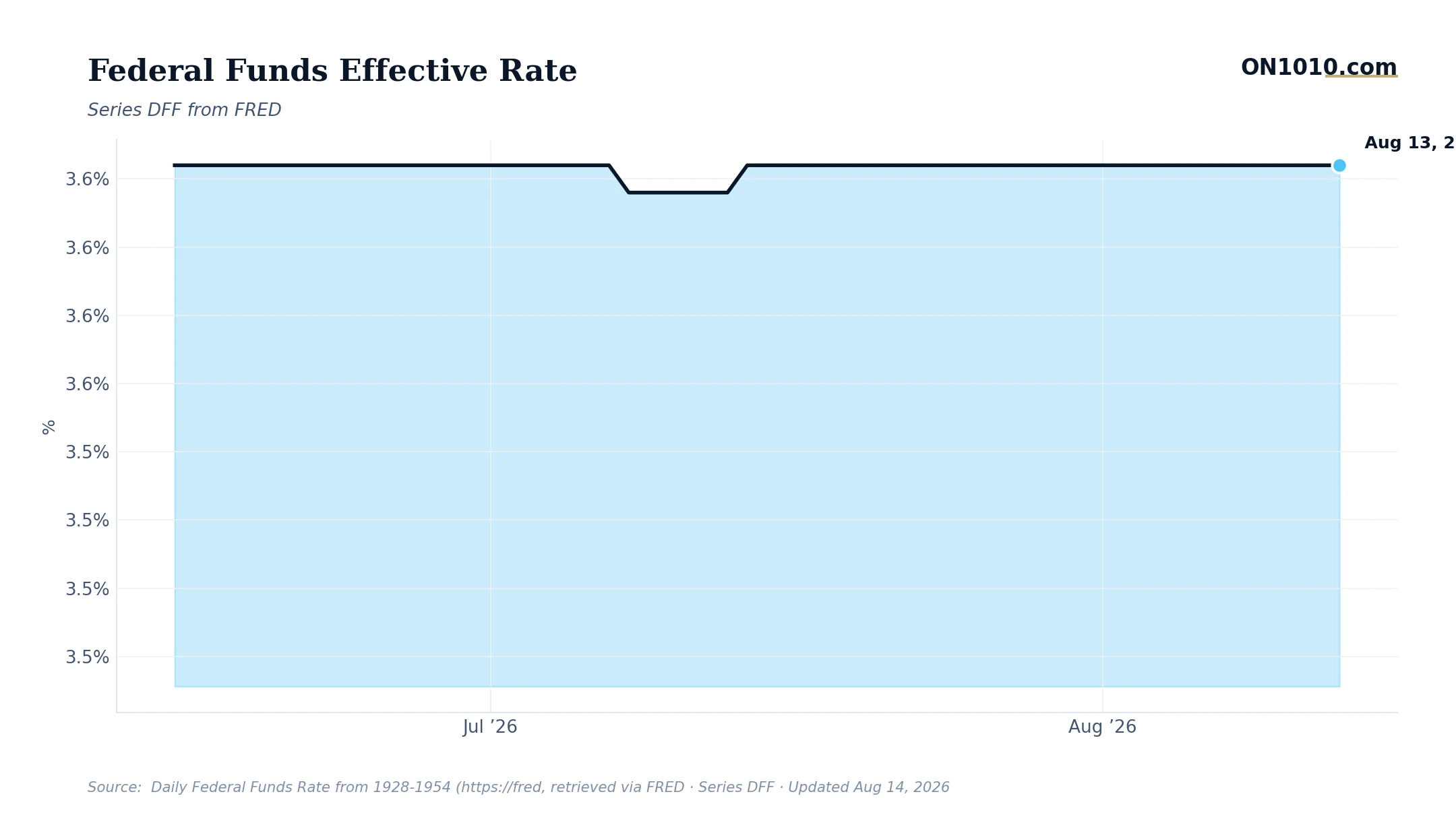
The effective federal funds rate has sat at exactly 3.63% for six straight trading sessions. No drift, no surprise, no drama. The Fed said 3.63%, and 3.63% is exactly what the market delivered.
That precision matters more than it sounds. The effective rate is what banks actually charge each other for overnight loans, not what the Fed announces as a target. When the two track each other this tightly, it tells you the plumbing of the financial system is working exactly as intended. No hidden stress. No liquidity strains forcing rates to deviate. The system is operating cleanly.
Here’s the tension worth sitting with: the rate itself is holding steady, but the broader interest rate environment has quietly shifted. Long-term rates are elevated by historical standards and, according to recent data, still rising. That’s a significant gap. Short rates anchored by the Fed at 3.63% while long rates drift higher means borrowing costs for businesses and households with longer obligations are getting tighter, even with the overnight rate frozen in place. The Fed controls the short end. The bond market controls the long end, and right now those two are telling slightly different stories.
Historically, this kind of setup, where policy rates hold steady while longer-term yields climb, has put pressure on rate-sensitive sectors like commercial real estate, capital-intensive manufacturing, and anything requiring long-duration financing. In past cycles, business operators and capital allocators have watched the spread between short and long rates carefully during these periods, because it changes the cost-of-capital math even when the headline Fed rate appears unchanged.
Credit spreads remain extremely tight by historical standards, which suggests the bond market sees no imminent credit stress. But stretched market valuations and rising long rates is a combination worth examining closely.
Bottom Line: The Fed’s overnight rate is rock-solid. The question is whether rising long-term rates will quietly tighten conditions faster than the headline Fed rate suggests.
Source: Federal Reserve Economic Data (FRED)
ON1010 Research is an independent publisher of economic education and is not a registered investment adviser, broker-dealer, or investment company. This content is for educational and informational purposes only and is not investment advice or a recommendation to buy, sell, or hold any security. Published under the publisher exemption recognized by Section 202(a)(11)(D) of the Investment Advisers Act of 1940 (Lowe v. SEC). Always consult a qualified financial professional before making any financial decision.
Free Research
The economy moves fast. We make sure you move faster.
Economic data, policy shifts, and market signals — delivered to your inbox.
Subscribe Free