
The Fed’s Rate Is Frozen. That’s Not Nothing.
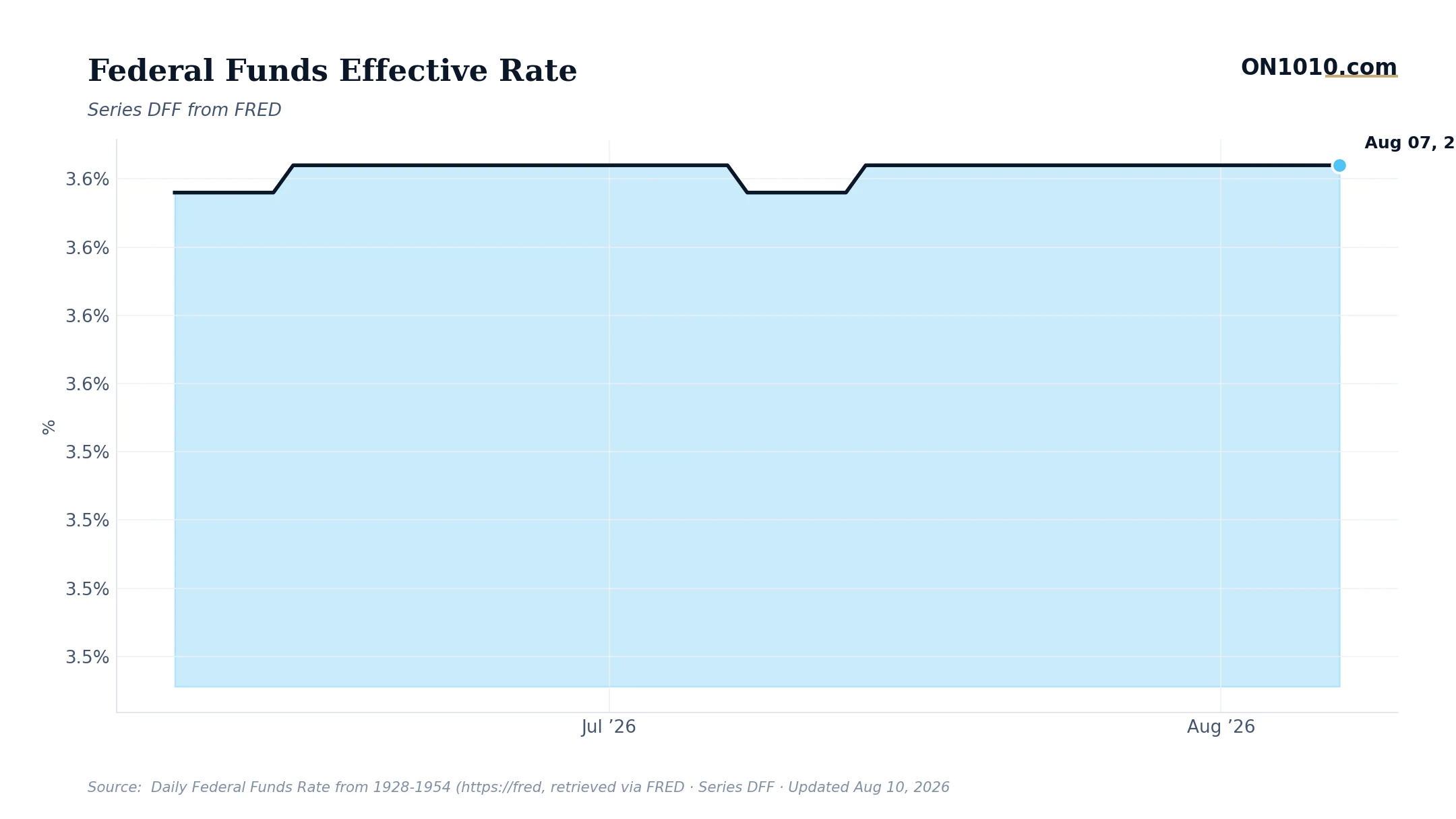
The effective federal funds rate has held at 3.63% for six straight days, sitting still while the rest of the economy wrestles with a genuinely complicated backdrop. Stable doesn’t mean simple.
That 3.63% reading tells you the market is tracking the Fed’s target almost exactly. No surprises, no drift. But here’s what makes it interesting: this is a rate that sits at roughly its historical midpoint, while core inflation remains hotter than roughly nine of every ten months on record. Run the math and the policy rate, in real terms, is doing considerably less work than it appears to be on paper.
That gap matters. The economy’s balance sheet is structured around rates, and long-term rates are still running above their historical average, which means the pressure point is less about the overnight rate and more about what borrowers pay when they go out further on the curve. Credit spreads, meanwhile, are as tight as they’ve been in a long time, meaning corporate borrowers aren’t being punished for risk right now. That’s a constructive signal for business investment, even if consumer sentiment sits near historic lows. These two things can coexist: households feeling squeezed and capital markets functioning smoothly, at the same time.
Historically, when overnight rates have sat near their historical midpoint alongside elevated inflation and tight credit spreads, the economy has tended to continue growing, though the forward path often depends on which of those forces shifts first. From similar setups, a recession within the following year has begun only about 11% of the time. Worth knowing, not worth over-weighting.
For anyone financing a business or thinking about refinancing longer-duration obligations, the relevant question isn’t what the overnight rate is doing. It’s whether long-term rates follow it lower, and when.
Bottom Line: The rate is steady. The real story is the gap between a neutral overnight rate and still-hot inflation, and whether the Fed has the runway to let that gap close without forcing a harder choice.
Source: Federal Reserve Economic Data (FRED)
ON1010 Research is an independent publisher of economic education and is not a registered investment adviser, broker-dealer, or investment company. This content is for educational and informational purposes only and is not investment advice or a recommendation to buy, sell, or hold any security. Published under the publisher exemption recognized by Section 202(a)(11)(D) of the Investment Advisers Act of 1940 (Lowe v. SEC). Always consult a qualified financial professional before making any financial decision.
Free Research
The economy moves fast. We make sure you move faster.
Economic data, policy shifts, and market signals — delivered to your inbox.
Subscribe Free