
The Job Market Just Did Something It Hasn’t Done in Months: Get Better
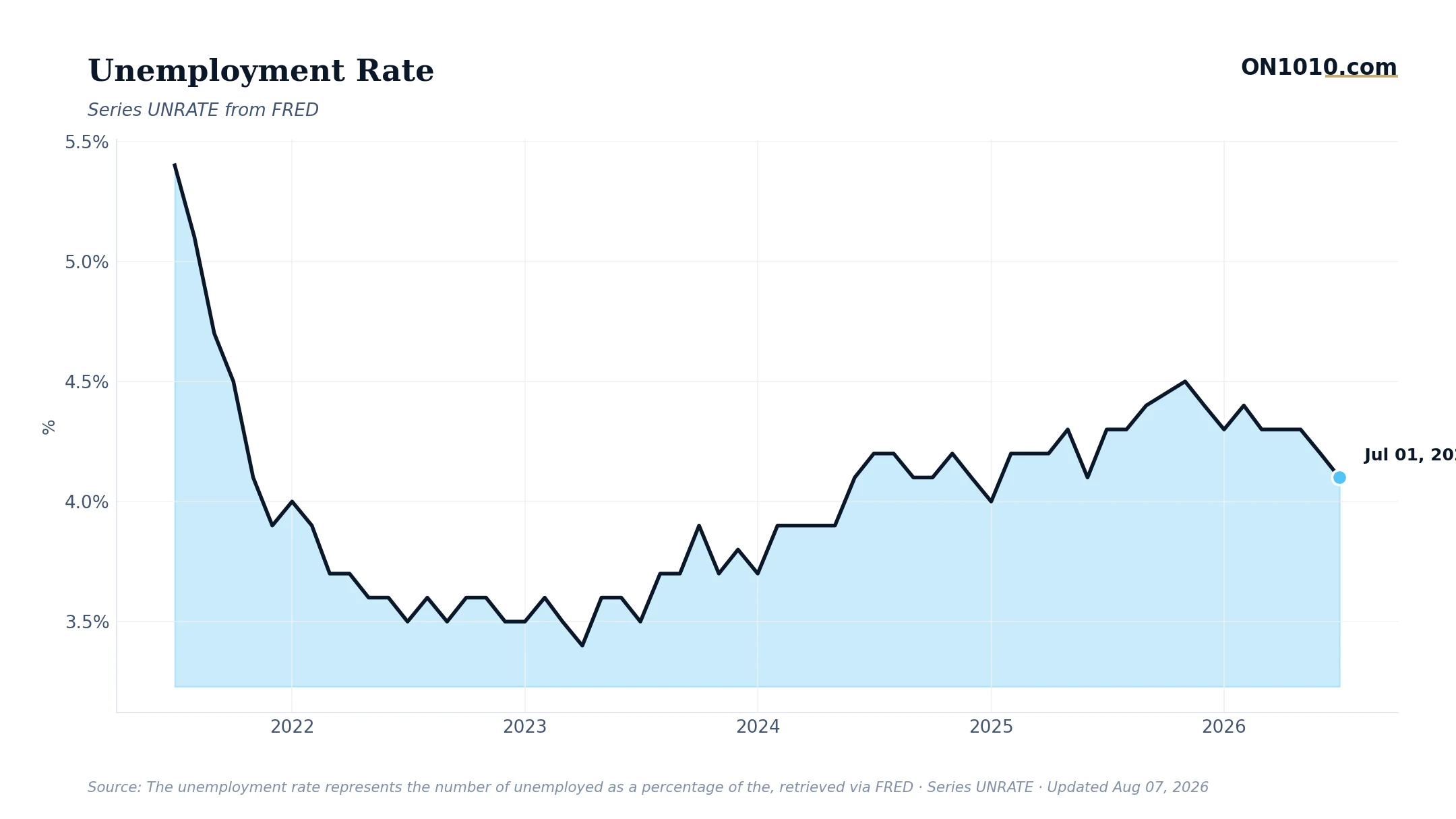
The unemployment rate dropped to 4.1% in July, the third straight month of improvement after stalling at 4.3% for three months earlier this year. That’s a small move in a big number, but the direction matters as much as the level.
What makes this worth pausing on is the trend. From February through April, the rate was stuck or rising, which had some economists quietly penciling in further labor market softening. Instead, the last three months printed 4.3%, 4.2%, 4.1%, a slow but steady grind lower. A year ago, it sat at 4.4%. The headline story of 2026 was supposed to be a cooling labor market. The data keeps refusing to cooperate.
Here’s where the broader picture gets interesting. Consumer sentiment is sitting near historic lows. Credit spreads are tight. Core inflation is running hot relative to history. That combination, worried consumers, hot prices, yet a strengthening job market, is the kind of tension that doesn’t resolve easily. Workers keeping their jobs is what keeps consumer spending alive, and consumer spending is roughly 70% of the U.S. economy. So even if sentiment is sour, the fact that paychecks keep arriving limits the downside.
Historically, when unemployment has been falling from a plateau like this, it has tended to support profit margins by easing wage pressure at the margin, more supply in the labor market, less urgency to bid up wages. In past cycles, business leaders have used periods of labor market stability to plan longer investment horizons, since workforce costs are the largest variable in most operating budgets. The question worth sitting with: if inflation stays elevated and rates stay high, does a tighter labor market help businesses (more confident consumers) or complicate things further (upward wage pressure)?
Bottom Line: The labor market just posted its best three-month run in nearly a year. What that means for the inflation fight, and whether the Fed sees it as a green light or a complication, is the question markets will be wrestling with next.
Source: Federal Reserve Economic Data (FRED)
ON1010 Research is an independent publisher of economic education and is not a registered investment adviser, broker-dealer, or investment company. This content is for educational and informational purposes only and is not investment advice or a recommendation to buy, sell, or hold any security. Published under the publisher exemption recognized by Section 202(a)(11)(D) of the Investment Advisers Act of 1940 (Lowe v. SEC). Always consult a qualified financial professional before making any financial decision.
Free Research
The economy moves fast. We make sure you move faster.
Economic data, policy shifts, and market signals — delivered to your inbox.
Subscribe Free