
The Rate-Hike Threat Is Back. The Consumer Was Already Tired.
According to CNBC, the prospect of higher interest rates is returning to the conversation, and any move upward would pile fresh borrowing costs onto consumers who are already stretched thin on affordability. That much is intuitive. The part worth sitting with is the timing.
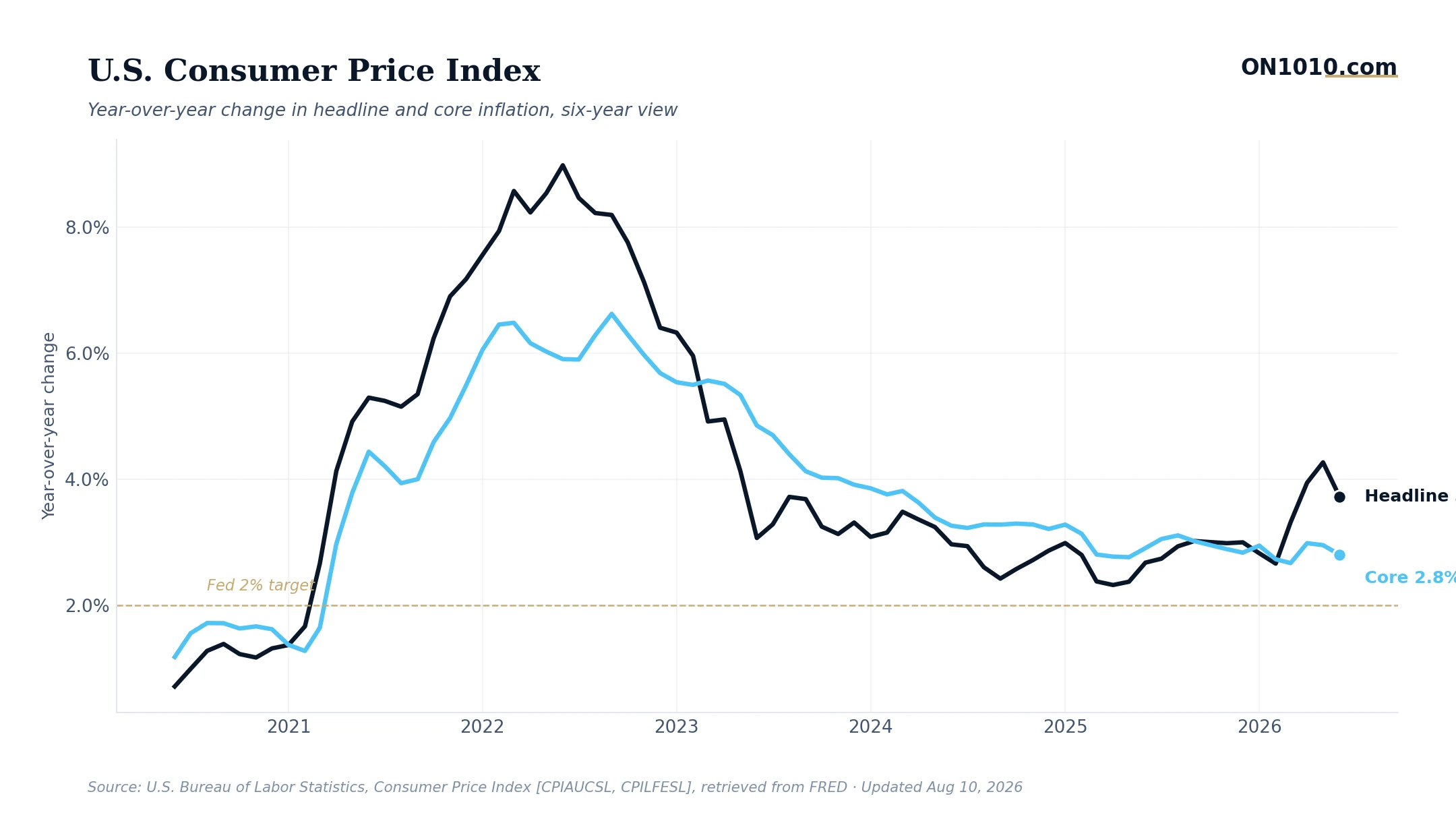
Core inflation is running hotter than roughly nine of every ten months in the historical record. Long-term interest rates are already elevated by historical standards. And consumer sentiment is scraping near the very bottom of its historical range. That is a combination that rarely gets discussed together, because each piece individually sounds manageable. Together, they describe an economy where the cost of borrowing is high, prices haven’t fully retreated, and the people doing the spending are demoralized. The credit market, notably, is still calm: spreads are tight, suggesting institutional lenders aren’t panicking. But calm credit markets and exhausted consumers can coexist for a while before one of them breaks first.
Here is the mechanism that matters most. Higher rates don’t just raise monthly payments. They change behavior upstream. Businesses facing higher financing costs think twice about expansion. Households defer big-ticket purchases. Margin pressure builds in rate-sensitive sectors. Corporate investment decisions, which are the actual engine of growth, slow before the headline numbers catch up. Growth is currently running near its historical midpoint but drifting lower. That drift matters more than the level.
Historically, when long-term rates have sat this high relative to their own history, a new recession followed within twelve months roughly 19% of the time. That means it didn’t happen about four out of five times. But investors and business operators have typically used that kind of setup to ask sharper questions about refinancing exposure, capital spending timing, and which parts of their balance sheet are most sensitive to rate moves. Those are the conversations worth having with a qualified professional who knows your specific situation.
Bottom Line: The real story here isn’t what higher rates do to a mortgage payment. It’s what they do to the investment decisions that drive growth. Watch business spending, not just consumer sentiment.
Read more: CNBC Top News
ON1010 Research is an independent publisher of economic education and is not a registered investment adviser, broker-dealer, or investment company. This content is for educational and informational purposes only and is not investment advice or a recommendation to buy, sell, or hold any security. Published under the publisher exemption recognized by Section 202(a)(11)(D) of the Investment Advisers Act of 1940 (Lowe v. SEC). Always consult a qualified financial professional before making any financial decision.
Free Research
The economy moves fast. We make sure you move faster.
Economic data, policy shifts, and market signals — delivered to your inbox.
Subscribe Free