
The Strait of Hormuz Is Back in the Headlines. Here’s What the Economy Actually Feels.
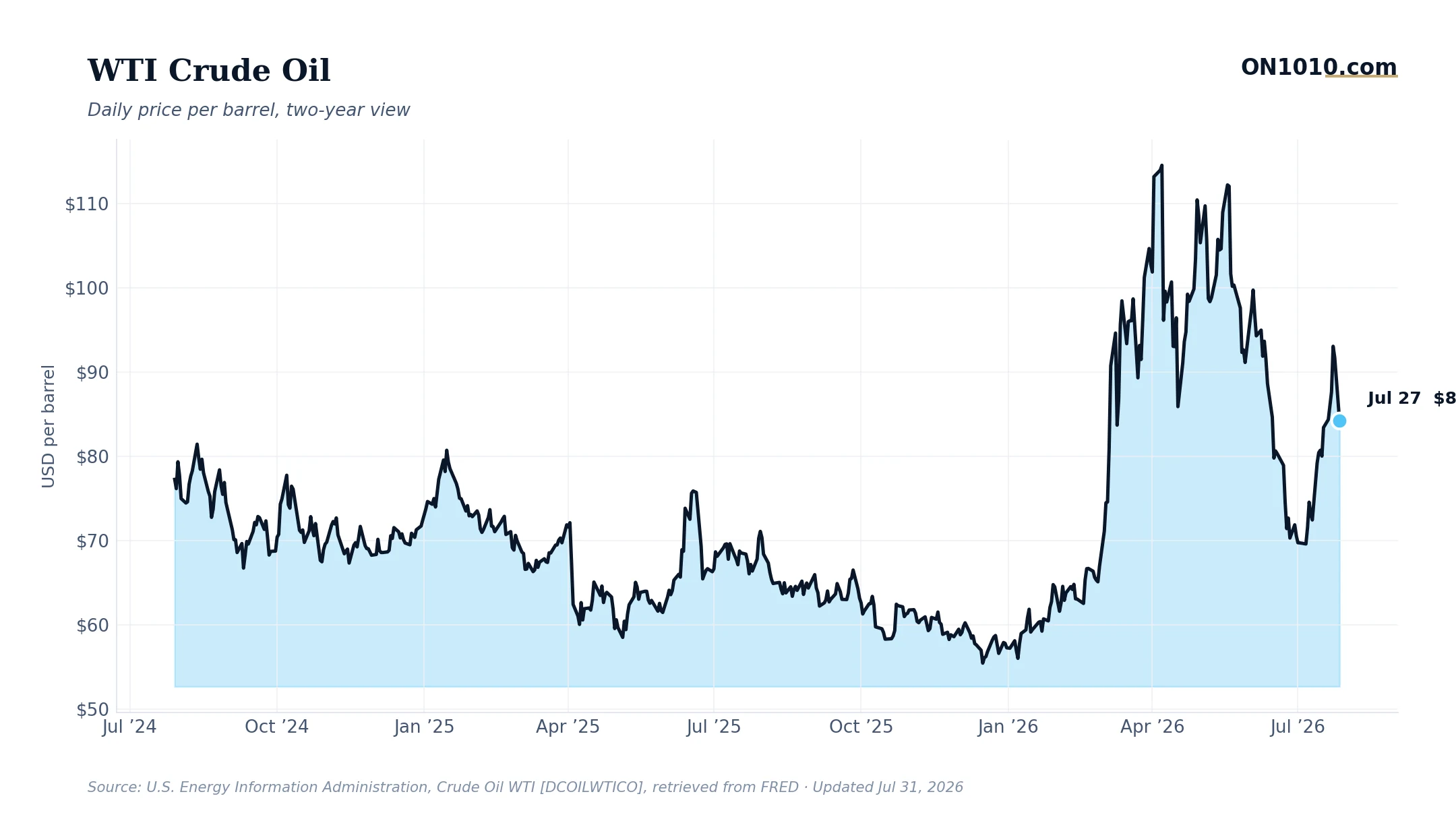
According to CNBC, Iran has attacked two tankers transiting the Strait of Hormuz, with the conflict spreading across the Middle East and hitting energy infrastructure on multiple fronts. Oil prices rose on the news. What the headline won’t tell you is the more important question: how much does this actually move the economic needle?
The Strait of Hormuz is the world’s most consequential energy chokepoint, with roughly 20% of global oil supply passing through it daily. Any credible threat to that corridor gets immediate market attention, and for good reason. But the size of the price response matters as much as the direction. An energy shock that is large enough and sustained enough to push input costs meaningfully higher would compress corporate margins at exactly the wrong moment. Inflation is already running at its 91st historical percentile. Adding an energy shock on top of sticky core inflation hands the Fed a dilemma: hold rates high longer just as growth is softening, or accept a second inflation wave. Neither is comfortable.
The macro backdrop makes this more complicated than a typical geopolitical oil spike. Consumer sentiment is sitting at its weakest recorded level. Credit spreads remain tight, suggesting credit markets are still calm, but market participation is deteriorating and defensive sectors have outperformed offensive ones by 3.2 percentage points over the past month, with consumer staples, health care, and real estate all beating the broader market. That rotation was already underway before today’s news. The institutional money that moved into defense last month may have been seeing this risk building before it broke into headlines.
Historically, investors and operators have distinguished between oil shocks that are brief supply disruptions and those that signal a sustained repricing of energy risk. The 1973 embargo and the 1979 revolution were regime changes in energy markets. A tanker attack, by itself, is not. The question worth sitting with is whether this is a one-off incident or the early signal of a broader closure risk, because those two scenarios have very different consequences for margins, transportation costs, and ultimately, the spending power of an already-cautious consumer.
Bottom Line: An oil price spike on a Hormuz incident is the market doing its job. Whether it matters for the economy depends entirely on how long it lasts and how high it goes. Watch the sustained price level, not the initial pop.
Read more: CNBC Top News
ON1010 Research is an independent publisher of economic education and is not a registered investment adviser, broker-dealer, or investment company. This content is for educational and informational purposes only and is not investment advice or a recommendation to buy, sell, or hold any security. Published under the publisher exemption recognized by Section 202(a)(11)(D) of the Investment Advisers Act of 1940 (Lowe v. SEC). Always consult a qualified financial professional before making any financial decision.
Free Research
The economy moves fast. We make sure you move faster.
Economic data, policy shifts, and market signals — delivered to your inbox.
Subscribe Free