
The Yield Curve Came Back from the Dead. Now What?
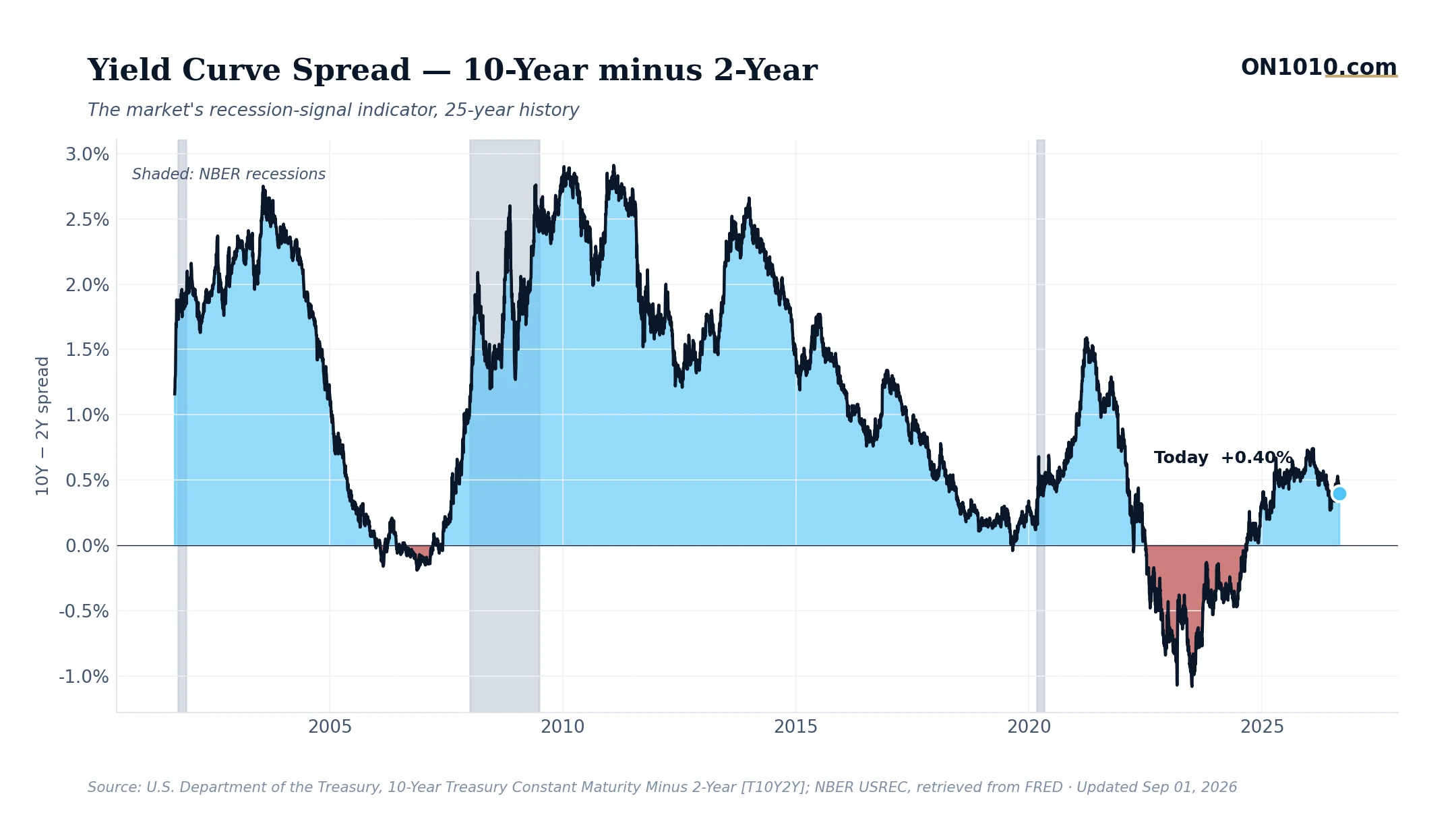
The 10-year/2-year Treasury spread closed at 0.40% on September 1, barely a tick below the prior day’s 0.41%. The number itself is almost boring. The story behind it is anything but.
Just over a year ago, this spread was deeply negative. The curve was inverted, every recession alarm was flashing, and the consensus was building bunkers. Today the spread sits comfortably positive, and the economy hasn’t cracked. That’s the puzzle worth sitting with.
The return to a positive slope is called “re-steepening,” and history offers two very different reasons it happens. Sometimes the economy heals: growth expectations rise, long-term rates lift, and the curve normalizes from strength. Other times, the Fed cuts rates aggressively because something breaks, the short end collapses, and the curve steepens on fear. These two paths look identical on a chart and feel completely different in the real economy. The broader dashboard leans toward the first story. Credit spreads are historically tight, markets are calm, and corporate money is flowing toward technology and growth. That’s not a fear-driven re-steepening.
But there’s a wrinkle. Long-term interest rates sit above their historical midpoint and have recently turned back up, which means longer-dated borrowing costs are climbing even as the curve looks healthier. That’s the thing businesses running capital plans and refinancing decisions need to be thinking about. In past cycles, a positively sloped curve with rising long-end rates has meant lenders are beginning to price in either stronger growth or stickier inflation. Core inflation still runs hotter than roughly nine of every ten months in the historical record. Both explanations are live.
Historically, a return to a positive yield curve has often preceded a period of stronger nominal growth. That’s the base rate. It has also sometimes preceded rising credit costs that caught borrowers off guard. Which story this re-steepening is telling won’t be clear from one data point. The direction of long rates over the next 60 days will do a lot of the talking.
Bottom Line: The yield curve’s return to positive territory is genuinely good news on one read, but long-term rates are back on the move upward. The question worth sitting with: is the bond market celebrating growth, or starting to demand a premium for inflation that hasn’t fully resolved?
Source: Federal Reserve Economic Data (FRED)
ON1010 Research is an independent publisher of economic education and is not a registered investment adviser, broker-dealer, or investment company. This content is for educational and informational purposes only and is not investment advice or a recommendation to buy, sell, or hold any security. Published under the publisher exemption recognized by Section 202(a)(11)(D) of the Investment Advisers Act of 1940 (Lowe v. SEC). Always consult a qualified financial professional before making any financial decision.
Free Research
The economy moves fast. We make sure you move faster.
Economic data, policy shifts, and market signals — delivered to your inbox.
Subscribe Free