
The Yield Curve Just Turned Positive Again. What Does That Actually Mean?
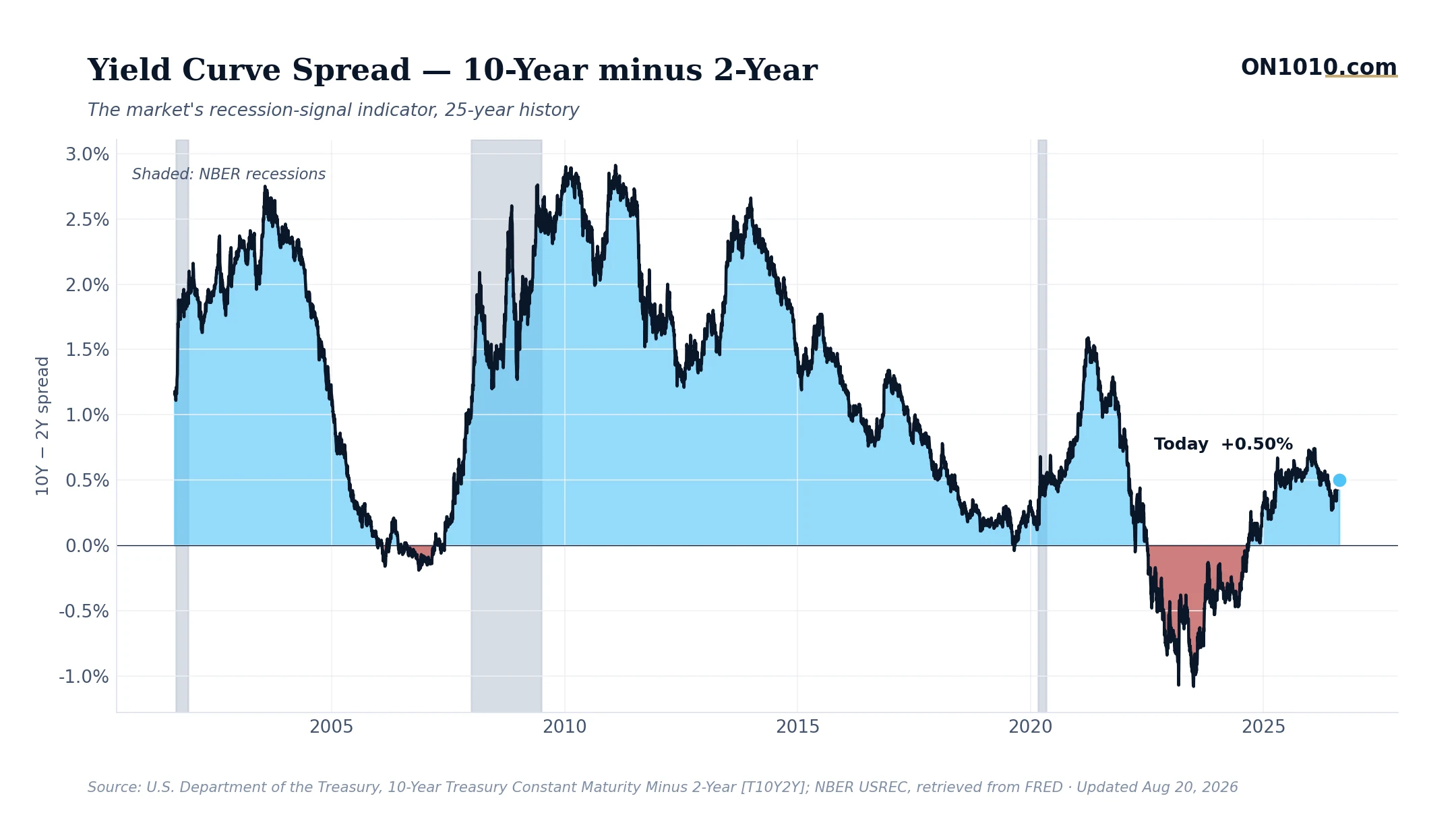
The gap between 10-year and 2-year Treasury yields hit +0.50% on August 20, the widest positive spread in recent weeks, after holding in a tight range between +0.46% and +0.53% all month. For bond watchers, the direction matters as much as the number: the curve has been quietly, steadily un-inverting after spending much of 2023 and 2024 deeply negative.
The Bigger Picture
The yield curve inverted back when the Fed was hiking rates aggressively, and that inversion became the most-discussed recession signal in a generation. The recession never arrived on schedule, which is a useful reminder that the curve tells you about probabilities, not certainties. What we’re watching now is the re-steepening, and historically that phase carries its own set of implications. Re-steepening can happen two ways: short rates fall (the Fed cuts, signaling easier policy ahead) or long rates rise (bond investors demand more compensation for inflation or fiscal risk). Right now, with long-term interest rates sitting high by historical standards and core inflation still running hot, the latter dynamic is worth watching closely.
Why It Matters
In past cycles, a re-steepening yield curve after a deep inversion has often coincided with a turning point in credit and lending conditions. Historically, banks watch this spread carefully because it approximates their basic business model: borrow short, lend long. A steeper curve improves the incentive to lend. Credit spreads are already near historic lows, suggesting bond markets see limited default risk right now. What investors and business operators have tracked in similar setups is whether the steepening signals recovery or simply the bond market pricing in persistent inflation and higher-for-longer rates. Those two stories look similar early on and diverge meaningfully later.
Bottom Line: The yield curve is no longer sending a recession alarm, but a +0.50% spread with inflation still running high raises a different question worth sitting with: are long rates telling us the economy is healthy, or that the price of money is staying elevated for longer than expected?
Source: Federal Reserve Economic Data (FRED)
ON1010 Research is an independent publisher of economic education and is not a registered investment adviser, broker-dealer, or investment company. This content is for educational and informational purposes only and is not investment advice or a recommendation to buy, sell, or hold any security. Published under the publisher exemption recognized by Section 202(a)(11)(D) of the Investment Advisers Act of 1940 (Lowe v. SEC). Always consult a qualified financial professional before making any financial decision.
Free Research
The economy moves fast. We make sure you move faster.
Economic data, policy shifts, and market signals — delivered to your inbox.
Subscribe Free