
When Oil Falls on War News, Pay Attention to What the Market Is Telling You
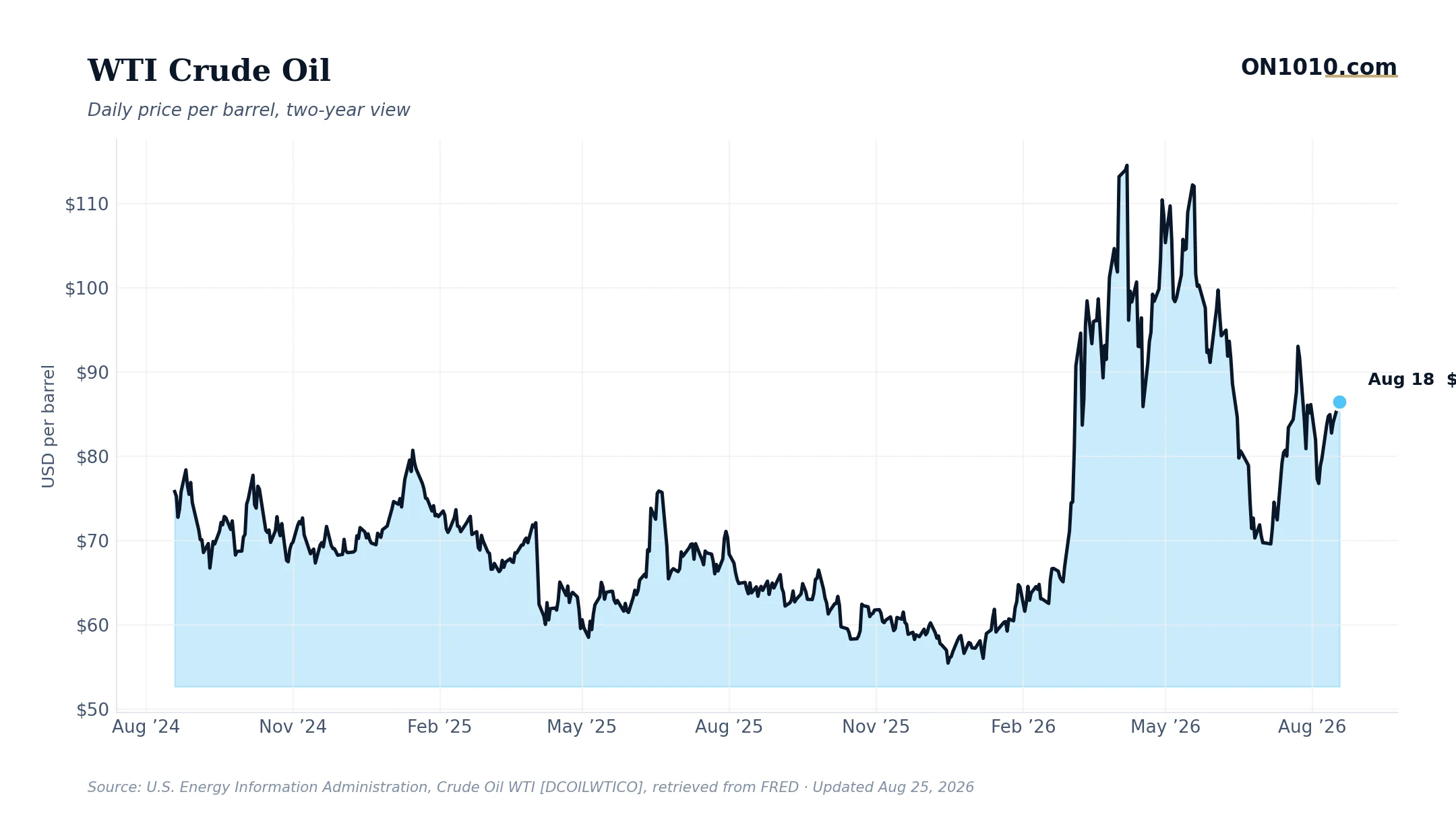
According to CNBC, oil prices dropped roughly 3% to a 12-day low on Monday after Iran announced a two-year economic plan designed to absorb the pressure of U.S. sanctions, which the Iranian government publicly branded “economic D-Day.” The headline sounds alarming. The market’s reaction was the opposite.
That gap is the story.
When oil falls on geopolitical escalation, it usually means one of two things: the market has already priced the risk, or it has decided the risk isn’t as dangerous as the headlines suggest. Here, it appears to be both. Iran’s announcement of a “coping plan” is essentially a public admission that sanctions are working, but markets read it as a signal that Tehran wants to manage down, not escalate up. A country announcing a two-year plan to endure pressure is a country signaling it won’t be flipping the chess board. The Strait of Hormuz remains open. Supply chains remain intact. And that changes the energy calculus entirely.
This matters for the broader economic picture because energy is one of the few inputs that touches every margin in the economy simultaneously. When oil falls, transportation costs ease, manufacturing input costs dip, and consumer purchasing power gets a quiet boost. For an economy where core inflation is running historically hot and long-term interest rates are elevated, a softening energy price is genuinely useful. It won’t solve the inflation problem on its own, but it removes one source of upward pressure at a moment when the Fed needs relief from any direction it can find.
Historically, investors have distinguished sharply between geopolitical noise and geopolitical disruption. When a conflict generates headlines but doesn’t actually choke physical supply, commodity markets tend to give back their fear premium quickly. The question worth sitting with is whether today’s calm is durable or whether a single incident in the Persian Gulf could reverse it overnight. That tail risk hasn’t disappeared; the market is simply choosing not to pay for it today.
Bottom Line: Oil falling on war headlines is the market’s way of saying it sees management, not escalation. When energy prices tell a calmer story than the news cycle, pay attention to the prices.
Read more: CNBC Top News
ON1010 Research is an independent publisher of economic education and is not a registered investment adviser, broker-dealer, or investment company. This content is for educational and informational purposes only and is not investment advice or a recommendation to buy, sell, or hold any security. Published under the publisher exemption recognized by Section 202(a)(11)(D) of the Investment Advisers Act of 1940 (Lowe v. SEC). Always consult a qualified financial professional before making any financial decision.
Free Research
The economy moves fast. We make sure you move faster.
Economic data, policy shifts, and market signals — delivered to your inbox.
Subscribe Free