
Bond Markets Are Telling a Calmer Inflation Story. Is Anyone Listening?
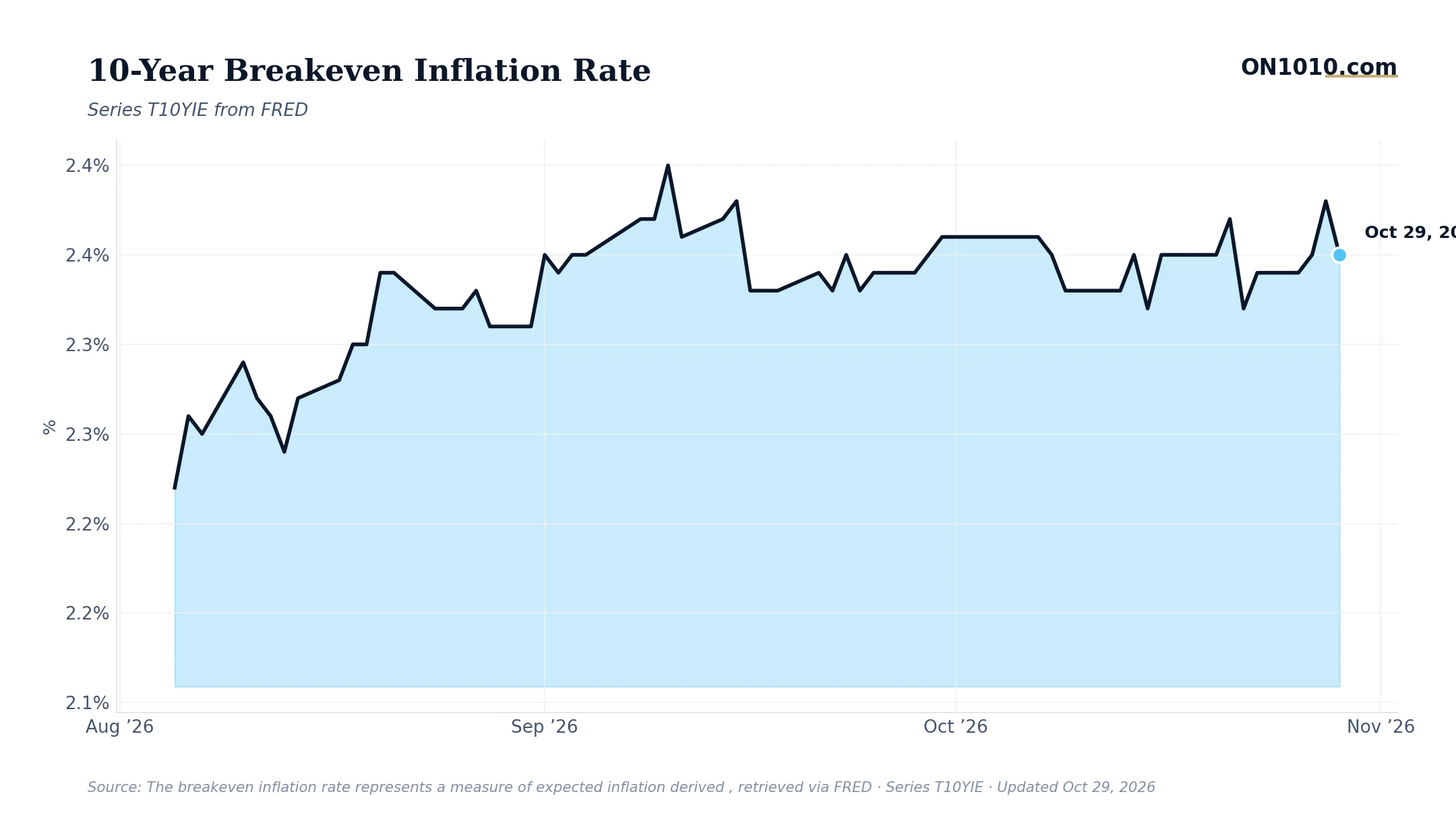
The 10-year breakeven inflation rate slipped to 2.35% on October 29, down from 2.38% the day before and holding near the low end of a tight range that has defined the past week. That’s the bond market’s best estimate of where average inflation lands over the next decade, and right now, that estimate is quietly drifting lower.
What makes this worth watching is the context. Core inflation is still running hot by historical standards, and the Fed’s real policy rate sits above its historical midpoint, meaning monetary policy is genuinely restrictive. Yet the bond market is pricing a 10-year inflation average that looks almost tame: 2.35% is close to where the Fed wants inflation to be, not where it currently is. The market is essentially saying it believes the Fed wins this fight over the long run, even as the near-term data stays uncomfortable.
That belief could be tested. Long-term interest rates have recently shifted from falling to rising, credit spreads remain wide relative to history, and sector rotation over the past month shows institutional money moving out of technology and communication services and into utilities, consumer staples, and health care. That is not the behavior of a market pricing a smooth soft landing with full confidence.
Historically, breakeven rates in this range have appeared during periods when the Fed was actively tightening and the market expected the cycle to eventually break inflation without breaking the economy. In past cycles, investors and business operators watched breakevens closely because they price the inflation assumption embedded in long-term borrowing costs. A falling breakeven, all else equal, has historically meant lower expected financing costs over long horizons, which changes the math on long-duration capital commitments. Whether this drift lower holds or reverses depends heavily on what happens to oil prices, wage growth, and whether the Fed has actually finished tightening.
Bottom Line: The bond market’s inflation forecast is cooling even as today’s inflation data runs hot. The question worth watching is whether that gap between the market’s long-run optimism and the economy’s short-run reality closes because inflation actually falls, or because inflation proves stickier than the market currently expects.
Source: Federal Reserve Economic Data (FRED)
ON1010 Research is an independent publisher of economic education and is not a registered investment adviser, broker-dealer, or investment company. This content is for educational and informational purposes only and is not investment advice or a recommendation to buy, sell, or hold any security. Published under the publisher exemption recognized by Section 202(a)(11)(D) of the Investment Advisers Act of 1940 (Lowe v. SEC). Always consult a qualified financial professional before making any financial decision.
Free Research
The economy moves fast. We make sure you move faster.
Economic data, policy shifts, and market signals — delivered to your inbox.
Subscribe Free