
Economic Wire: Tankers defy sharp escalation of Iranian attacks to keep cru
When Getting Paid Enough Makes Danger Feel Optional
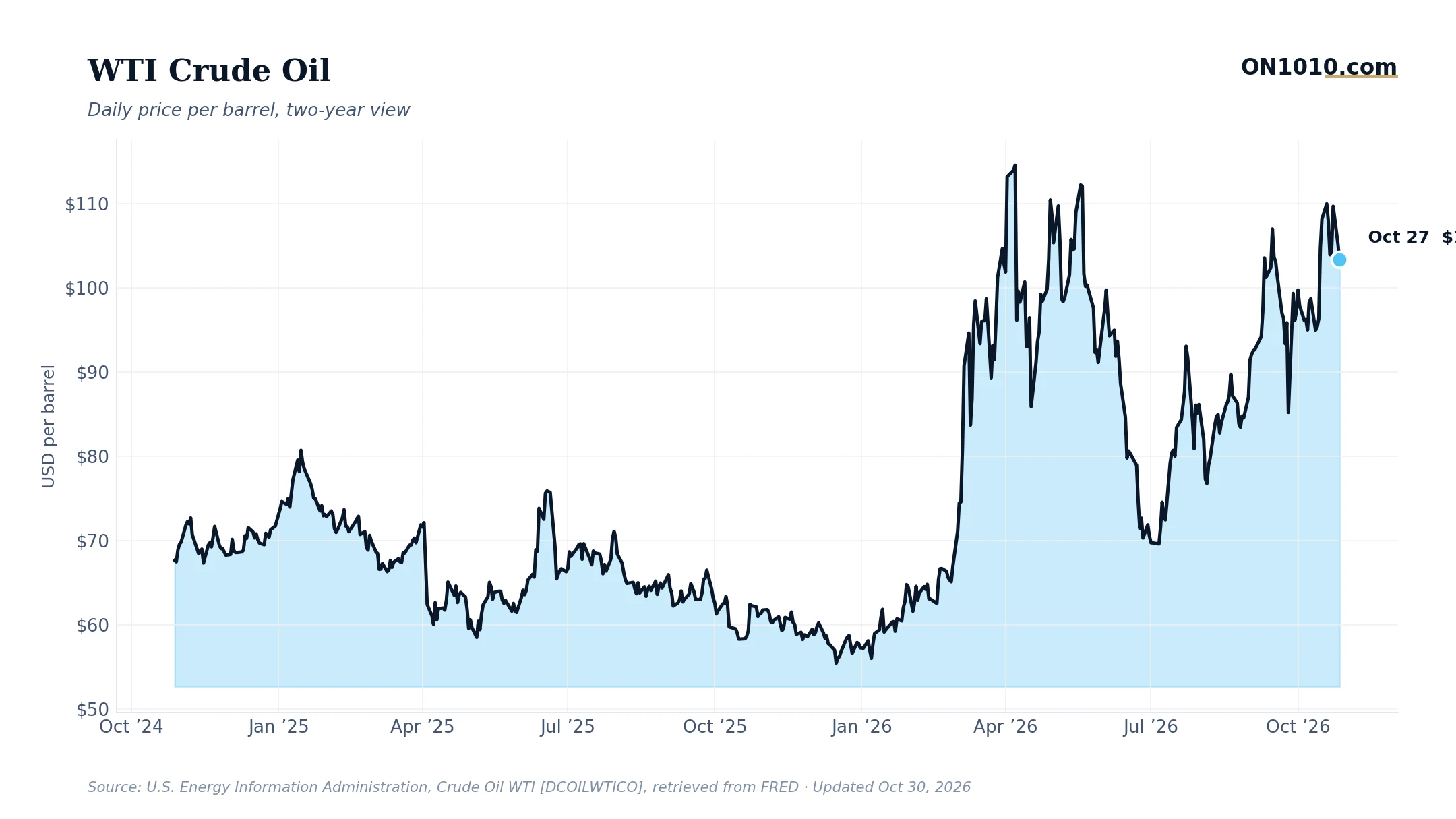
According to CNBC, tankers are continuing to transit the Strait of Hormuz despite a sharp escalation in Iranian attacks, driven by soaring freight rates that make the financial reward worth the physical risk. The real story is not the geopolitics. It is a live demonstration of how price signals work in practice: raise the payoff high enough, and capital will go exactly where you think it never would.
This is the incentive mechanism at its most naked. Freight rates are not just numbers on a screen, they are the economy’s way of recruiting risk-takers. When they spike, shipping companies run the math: expected revenue against expected loss, factoring in insurance premiums, war-risk surcharges, and the probability of an actual hit. Enough captains and owners are still taking that bet, which means the crude is still moving. For now, the Strait remains open for business, and global oil supply has not been disrupted in the way a sustained blockade would imply.
But there is a second-order cost that does not show up in a freight rate. Every dollar added to shipping costs is a dollar added to the landed price of a barrel. In an environment where core inflation is already running hotter than roughly nine of every ten months on record, and where the Fed’s real policy rate is already restrictive, even a modest persistent uplift in energy costs has outsized consequences. It does not need to be a crisis. A persistent 10%-to-15% increase in tanker insurance and freight premiums is enough to grease an already sticky inflation reading, which would complicate any path toward easier monetary policy.
Historically, investors and operators have treated geopolitical oil shocks as temporary until proven otherwise. The classic framework is to look at physical supply continuity: if barrels keep moving, the shock stays in freight and insurance, and does not pass fully into crude spot prices. The question worth watching is how long shipping companies can absorb rising war-risk premiums before those costs begin closing the economic gap, at which point the incentive calculation flips.
Bottom Line: The Strait of Hormuz is open because freight rates made running the risk profitable. When that math changes, so does the oil supply picture, and with inflation already running hot, this is one of the narrower margins for error in the current macro environment.
Read more: CNBC Top News
ON1010 Research is an independent publisher of economic education and is not a registered investment adviser, broker-dealer, or investment company. This content is for educational and informational purposes only and is not investment advice or a recommendation to buy, sell, or hold any security. Published under the publisher exemption recognized by Section 202(a)(11)(D) of the Investment Advisers Act of 1940 (Lowe v. SEC). Always consult a qualified financial professional before making any financial decision.
Free Research
The economy moves fast. We make sure you move faster.
Economic data, policy shifts, and market signals — delivered to your inbox.
Subscribe Free