
Tech Sells Off Hard While Defensive Sectors Rally. The Bond Market Has a Theory.
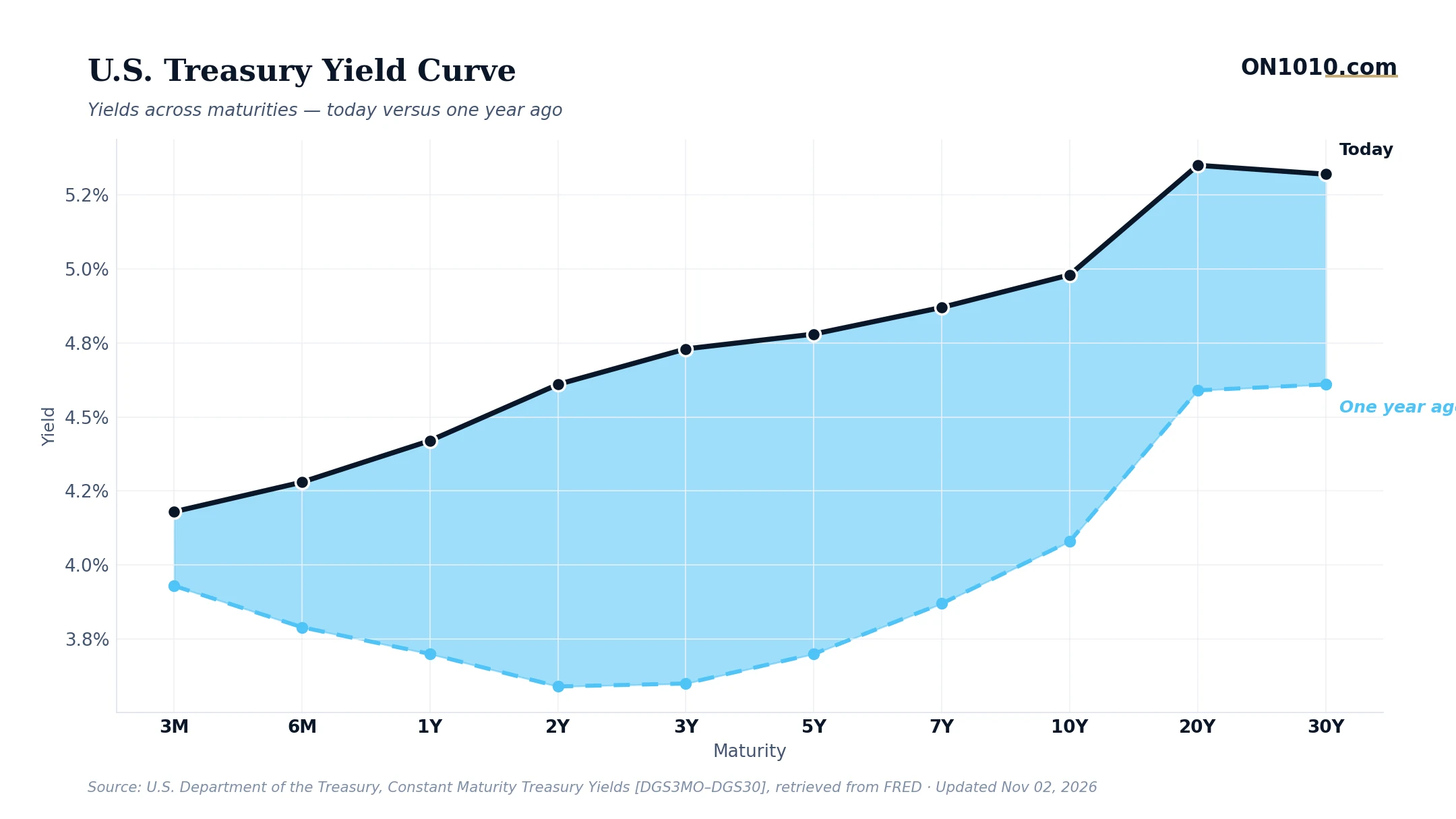
The Nasdaq dropped 2.86% on Friday, shedding 747 points, while Consumer Staples and Health Care each outperformed the S&P 500 by more than 12 percentage points over the past month. That rotation is not random noise. Institutional money is moving with conviction, and the direction it is moving tells a story about what professionals think is coming.
Here is what makes Friday’s session interesting. The VIX sits at 18.92, which is near its historical midpoint. That is “worried but not panicking” territory. Meanwhile, the 10-year Treasury yield is at 4.98% against a Fed funds ceiling of 4.0%, a nearly 100 basis point gap. The bond market is pricing in something: that inflation does not come down fast enough for the Fed to cut meaningfully, and that rates stay elevated long enough to squeeze margins.
The 10-year breakeven inflation rate sits at 2.34%, which means the bond market does not actually expect runaway inflation. It expects stubborn inflation. Persistently above target, just not spiraling. That is a harder environment for growth stocks than an outright inflation scare, because it makes the “rates will fall soon” story harder to believe.
On deck today: ISM Manufacturing prints this morning. A soft reading would add to the case that higher rates are starting to bite the real economy. A strong one reopens the “higher for longer” debate.
Why it matters: When credit spreads are wide, long rates are elevated, and sector rotation favors defense, the cost of capital is working. Whether growth can absorb that cost is the question every business owner and investor should be tracking right now.
The deeper read on how corporate margins hold up inside this rate environment lands Sunday in The Long View, and it is free.
ON1010 Research is an independent publisher of economic education and is not a registered investment adviser, broker-dealer, or investment company. This content is for educational and informational purposes only and is not investment advice or a recommendation to buy, sell, or hold any security. Published under the publisher exemption recognized by Section 202(a)(11)(D) of the Investment Advisers Act of 1940 (Lowe v. SEC). Always consult a qualified financial professional before making any financial decision.
Free Research
The economy moves fast. We make sure you move faster.
Economic data, policy shifts, and market signals — delivered to your inbox.
Subscribe Free