
The Market Is Sending Two Different Messages at Once
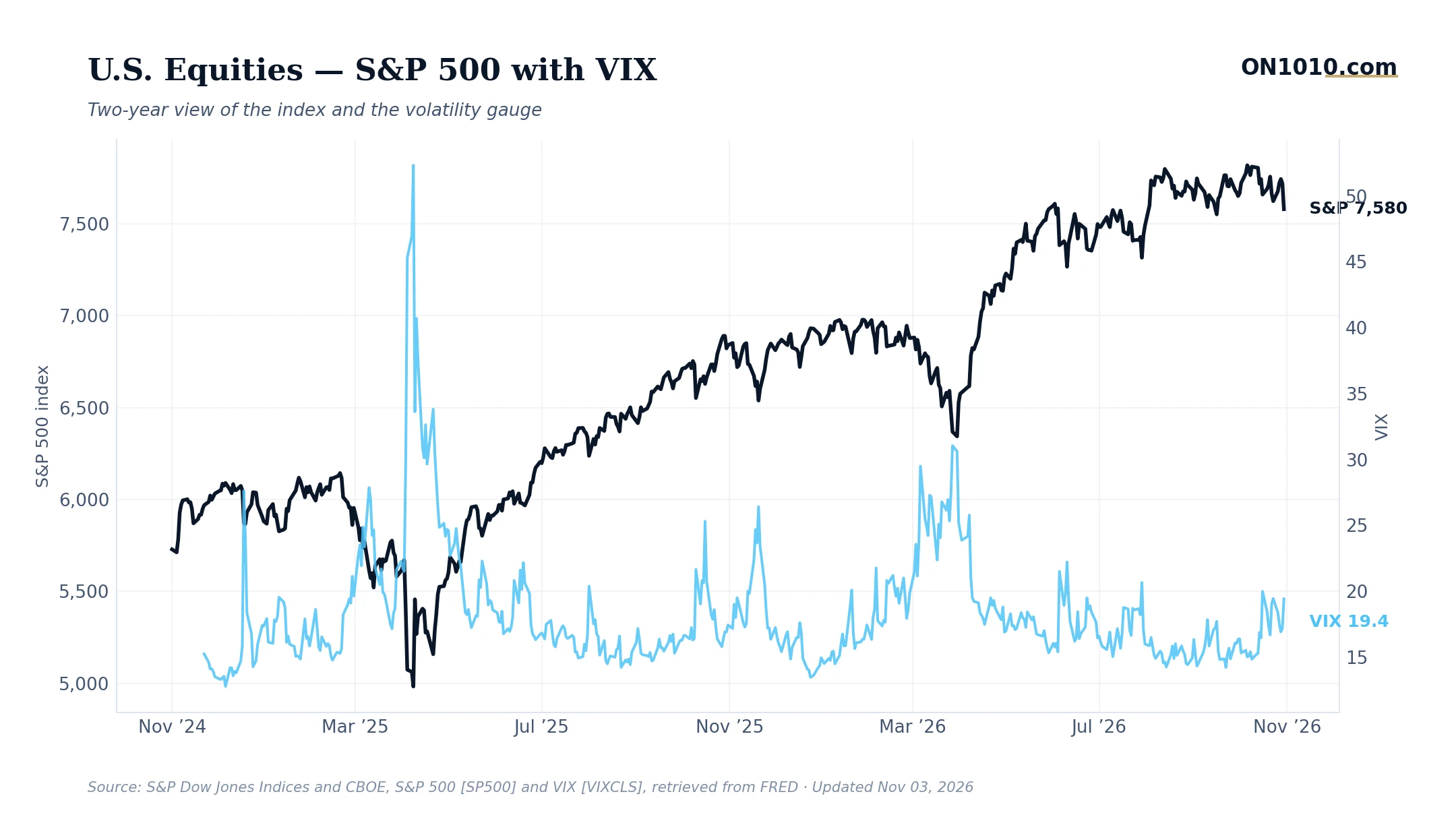
The headline indexes look almost calm. The S&P 500 slipped 0.51% Monday, the Dow actually gained 0.41%, and the Russell 2000 barely moved. But underneath that surface, defensive sectors have been outperforming offensive sectors by 13.7 percentage points over the past month, with Consumer Staples up 15.1% versus SPY and Health Care up 13.4%.
That kind of rotation is worth paying attention to, because institutional money tends to move with a thesis. Investors rotating out of Technology (down 10.5% versus SPY) and into Utilities and Staples are not just diversifying. They are making a statement about what they expect from earnings and growth conditions ahead.
What moved: The Nasdaq fell another 272 points Monday, landing at 25,164. The 10-year Treasury yield sits at 4.94%, with the 2-year at 4.56%, leaving a 32-basis-point spread between them. The 10-year breakeven inflation rate is at 2.29%, meaning the bond market is pricing in just over 2% inflation long term. Credit spreads have moved into historically stressed territory and are rising. Oil settled at $97.74.
On deck today: Midterm election results will begin coming in Tuesday evening and could shift the policy landscape for business investment, regulation, and fiscal direction through 2028.
Why it matters: When credit conditions tighten and sector rotation tilts heavily defensive, the economy’s financing costs and business investment incentives both face pressure at the same time. Historically, when monetary policy is restrictive and credit spreads are wide, the margin between growth and contraction narrows.
Sunday’s Long View goes deeper on exactly this: how corporate margins hold up inside a high-rate environment. It is free, and it is the right place to work through what this week is setting up.
ON1010 Research is an independent publisher of economic education and is not a registered investment adviser, broker-dealer, or investment company. This content is for educational and informational purposes only and is not investment advice or a recommendation to buy, sell, or hold any security. Published under the publisher exemption recognized by Section 202(a)(11)(D) of the Investment Advisers Act of 1940 (Lowe v. SEC). Always consult a qualified financial professional before making any financial decision.
Free Research
The economy moves fast. We make sure you move faster.
Economic data, policy shifts, and market signals — delivered to your inbox.
Subscribe Free