
What Congress Could Actually Do to Your Portfolio, and What It Probably Can’t
According to CNBC, Wall Street is starting to price in what a Democratic sweep of Congress in the 2026 midterms could mean for stocks, Treasury yields, AI policy, energy, banks, defense, and healthcare. The analysis is useful. But there’s a trap buried in it that most coverage misses: markets usually move before the election, not after, and they often move in the wrong direction.
Here’s the mechanism worth understanding. Policy creates incentives, and incentives change business behavior. But the chain from “Congress flips” to “margins change” to “hiring and investment follow” is long and slow. Regulatory rewrites take years. Tax changes get phased in. The businesses most exposed, banks, energy companies, defense contractors, all have lobbyists and lawyers whose entire job is to soften the edges of political transitions. The economy doesn’t reset on election night.
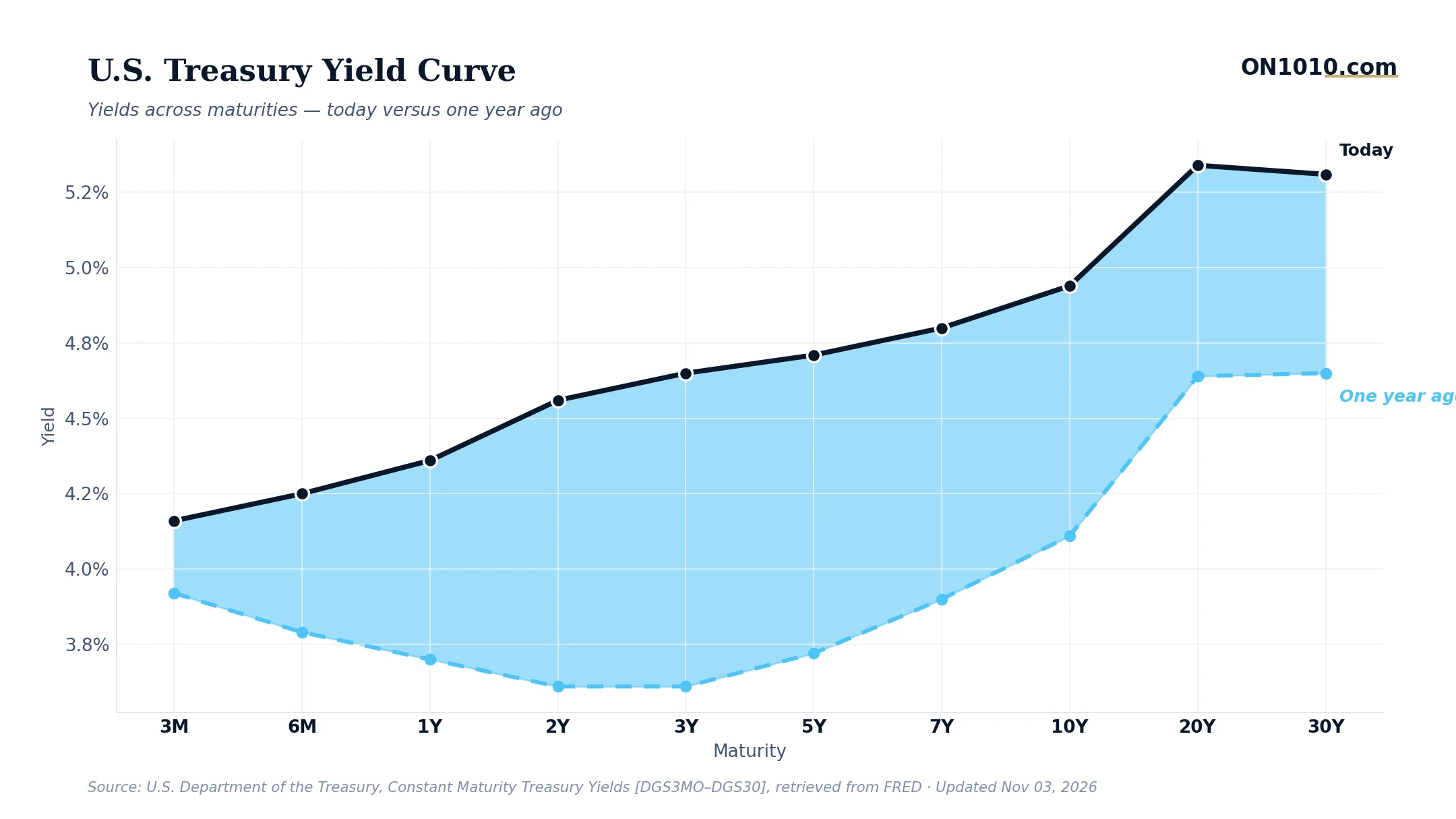
What does move fast is capital allocation. The sector rotation already underway shows institutional money moving toward cash flows that look durable and predictable regardless of who controls the Ways and Means Committee: consumer staples, healthcare, real estate, and utilities are all sharply outperforming the broader market over the past month, while technology and communication services are lagging badly. The 10-year Treasury yield at 4.94% is the backdrop: with rates high and credit spreads widening, investors are rewarding certainty and penalizing growth stories that depend on cheap capital or favorable regulation.
Historically, investors have found that midterm election years produce outsized moves in sectors with the most direct policy exposure. Healthcare and energy have been especially volatile around election cycles, though the direction depends less on which party wins than on what specific legislation actually passes afterward. The question worth tracking is: which sectors have fundamental earnings support independent of the policy outcome, and which are priced mostly on regulatory hope?
Bottom Line: Congress can shift the incentive structure. It can’t change the math on interest rates, inflation, or credit conditions, and right now, those three things are doing more heavy lifting on markets than any ballot result will.
Read more: CNBC Top News
ON1010 Research is an independent publisher of economic education and is not a registered investment adviser, broker-dealer, or investment company. This content is for educational and informational purposes only and is not investment advice or a recommendation to buy, sell, or hold any security. Published under the publisher exemption recognized by Section 202(a)(11)(D) of the Investment Advisers Act of 1940 (Lowe v. SEC). Always consult a qualified financial professional before making any financial decision.
Free Research
The economy moves fast. We make sure you move faster.
Economic data, policy shifts, and market signals — delivered to your inbox.
Subscribe Free