
When the War Premium Deflates, the Real Story Is What’s Underneath
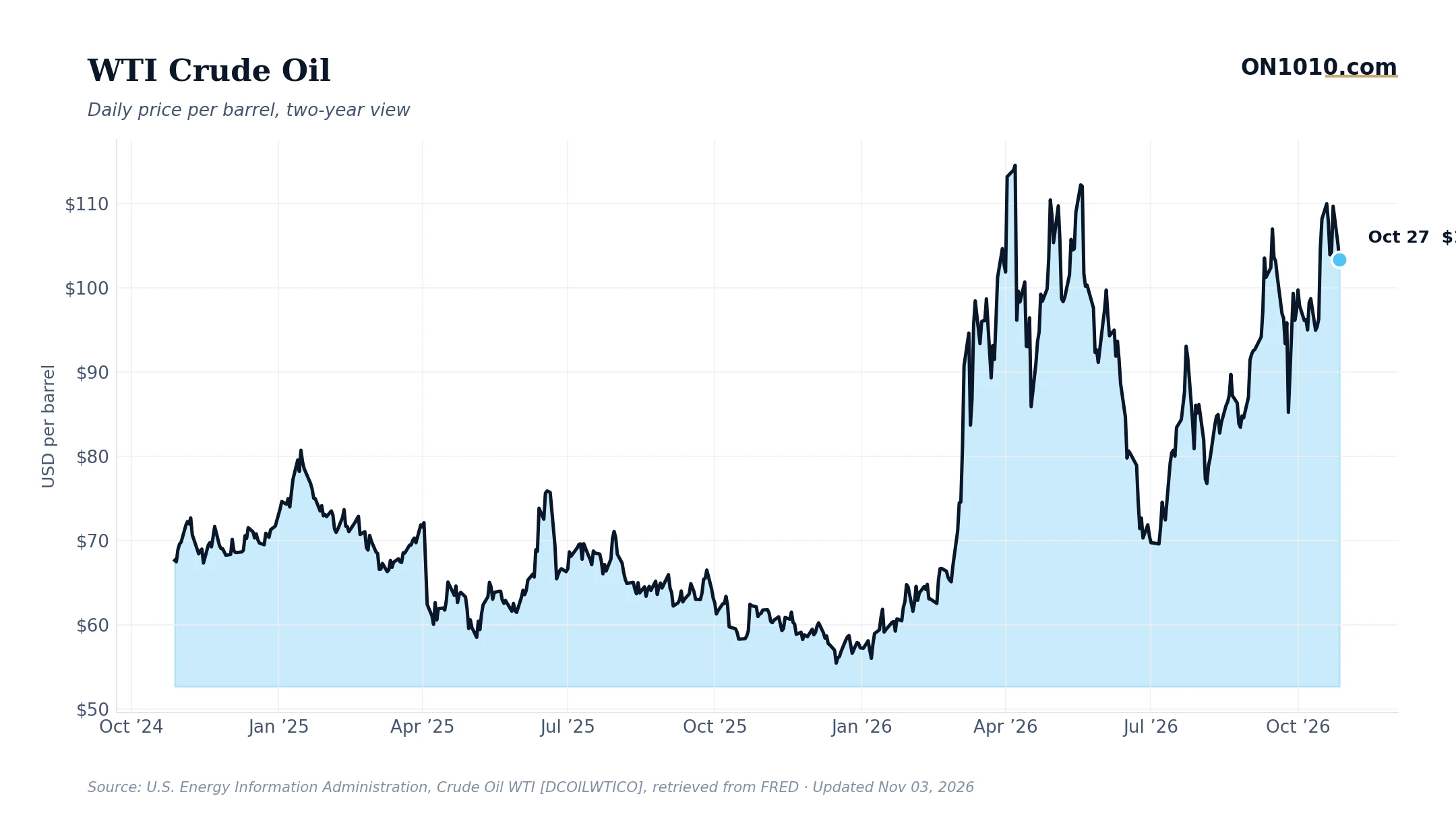
According to CNBC, crude oil prices fell for a second consecutive day after both the U.S. and Iranian presidents signaled openness to a diplomatic resolution to the ongoing conflict. The market read “diplomacy” and immediately started unwinding the war premium built into prices. That reflex makes sense. The more interesting question is what oil prices look like once the geopolitical noise clears.
War premiums in energy markets are essentially a fear tax. They reflect the worst-case scenario being priced into every barrel, and when that scenario recedes, prices fall even before a single additional drop of supply hits the market. That is purely a sentiment adjustment, not a fundamental one. The underlying supply-demand picture has not changed because two leaders exchanged diplomatic signals.
Here is the economic tension worth watching: the broader backdrop is not friendly to a smooth, low-volatility oil market even without a war. Core inflation is running hot by historical standards, the real policy rate is restrictive, credit spreads have recently widened further into stress territory, and sector rotation data shows institutional money rotating heavily into defensive names like consumer staples and utilities and out of technology and communications. That is not how markets behave when participants are confident in the growth outlook. Cheaper oil would provide some relief to margins across transportation, manufacturing, and consumer spending, but the relief only holds if the diplomatic progress is real and durable rather than a negotiating posture.
Historically, investors have found that geopolitical risk premiums in commodity markets can unwind faster than they build, and that the unwind often overshoots on the downside before prices find a floor based on actual supply fundamentals. The question this raises: is the current price reflecting the diplomatic optimism too generously, and what happens to that optimism if talks stall?
Bottom Line: A falling war premium is a sentiment story. When the headlines quiet down, the tape will tell you what the fundamentals actually say.
Read more: CNBC Top News
ON1010 Research is an independent publisher of economic education and is not a registered investment adviser, broker-dealer, or investment company. This content is for educational and informational purposes only and is not investment advice or a recommendation to buy, sell, or hold any security. Published under the publisher exemption recognized by Section 202(a)(11)(D) of the Investment Advisers Act of 1940 (Lowe v. SEC). Always consult a qualified financial professional before making any financial decision.
Free Research
The economy moves fast. We make sure you move faster.
Economic data, policy shifts, and market signals — delivered to your inbox.
Subscribe Free