
When a War Becomes a Political Liability, Markets Pay Attention Fast
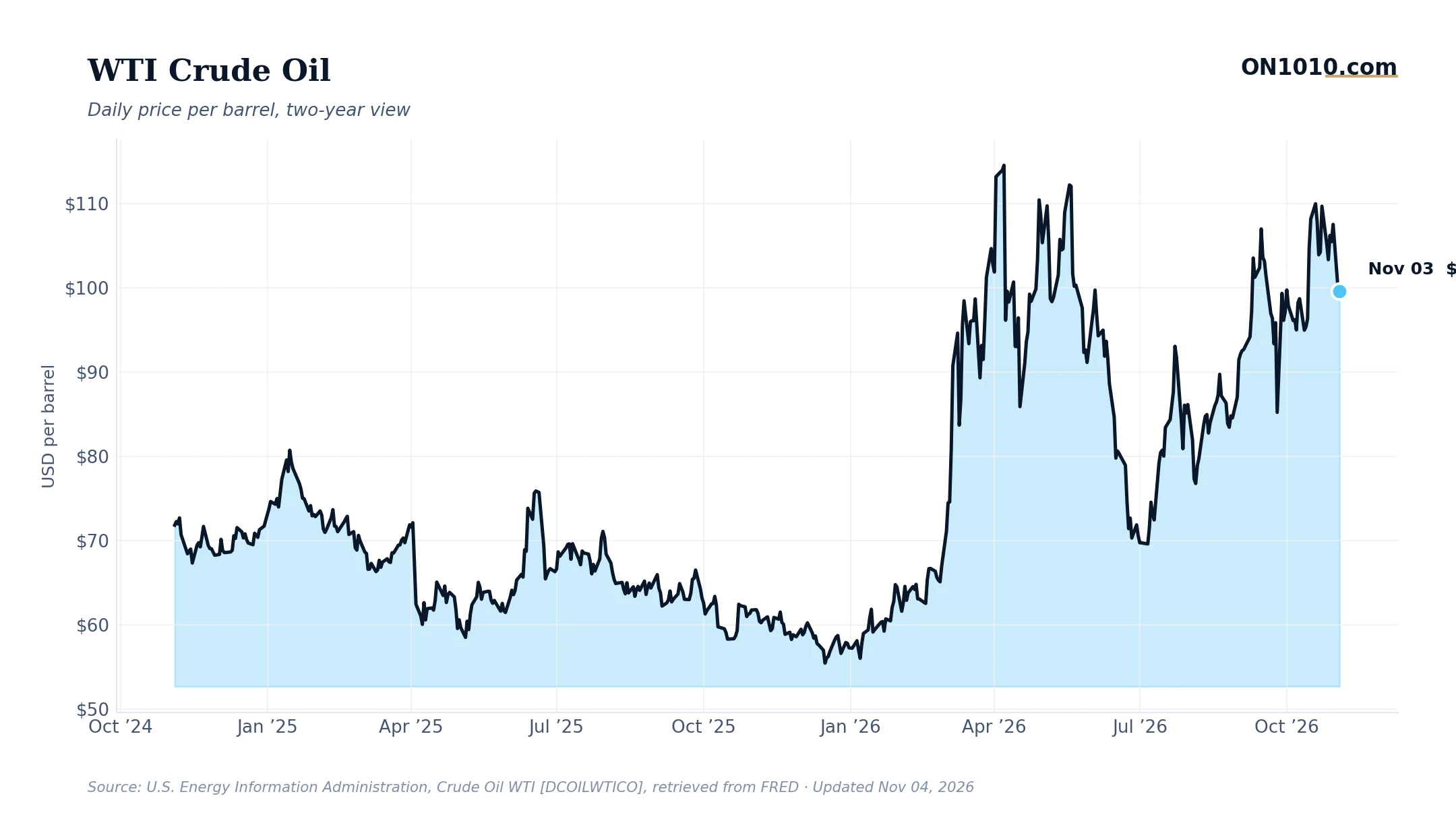
According to CNBC, crude oil prices fell below $90 a barrel Wednesday after Vice President JD Vance publicly blamed Republican midterm losses on the Iran war. A single political statement moved energy markets. The speed of that move tells you something important about how fragile the geopolitical premium in oil prices had become.
Oil prices don’t just reflect supply and demand today. They reflect expectations about future supply, and war in a region that controls the Strait of Hormuz, through which roughly 20% of the world’s traded oil flows, commands a risk premium baked into every barrel. When a sitting vice president signals that the political appetite for that war is collapsing, markets read it as a potential off-ramp. Less conflict risk means less supply disruption risk, and that premium deflates quickly. Global capital moves fast; domestic politics does not, so when politics suddenly accelerates toward an exit, the gap between the two closes in hours, not weeks.
Here’s the economic consequence that matters beyond the headline: oil is an input cost for almost everything. When crude falls, fuel costs drop, transportation margins widen, and consumer-facing businesses see a little breathing room. In an environment where core inflation is running near historical highs and the Fed’s real policy rate is already restrictive, cheaper energy is one of the few disinflationary forces that can arrive without policy action.
Historically, investors have treated sharp, geopolitically driven oil declines differently from demand-driven declines. A demand-driven oil drop often signals economic slowdown. A geopolitical-driven drop, like this one, can be unambiguously positive for margins across energy-intensive industries. The question worth asking is whether the political signals here are durable, or whether one vice president’s statement marks a genuine policy pivot or just a moment of public frustration.
Bottom Line: Oil below $90 is an economic data point, not just an energy story. If the geopolitical premium keeps unwinding, it could be one of the more meaningful disinflationary developments of the year for businesses watching their input costs.
Read more: CNBC Top News
ON1010 Research is an independent publisher of economic education and is not a registered investment adviser, broker-dealer, or investment company. This content is for educational and informational purposes only and is not investment advice or a recommendation to buy, sell, or hold any security. Published under the publisher exemption recognized by Section 202(a)(11)(D) of the Investment Advisers Act of 1940 (Lowe v. SEC). Always consult a qualified financial professional before making any financial decision.
Free Research
The economy moves fast. We make sure you move faster.
Economic data, policy shifts, and market signals — delivered to your inbox.
Subscribe Free