
Bond Markets Are Pricing Cooler Inflation, But the Broader Picture Complicates the Story
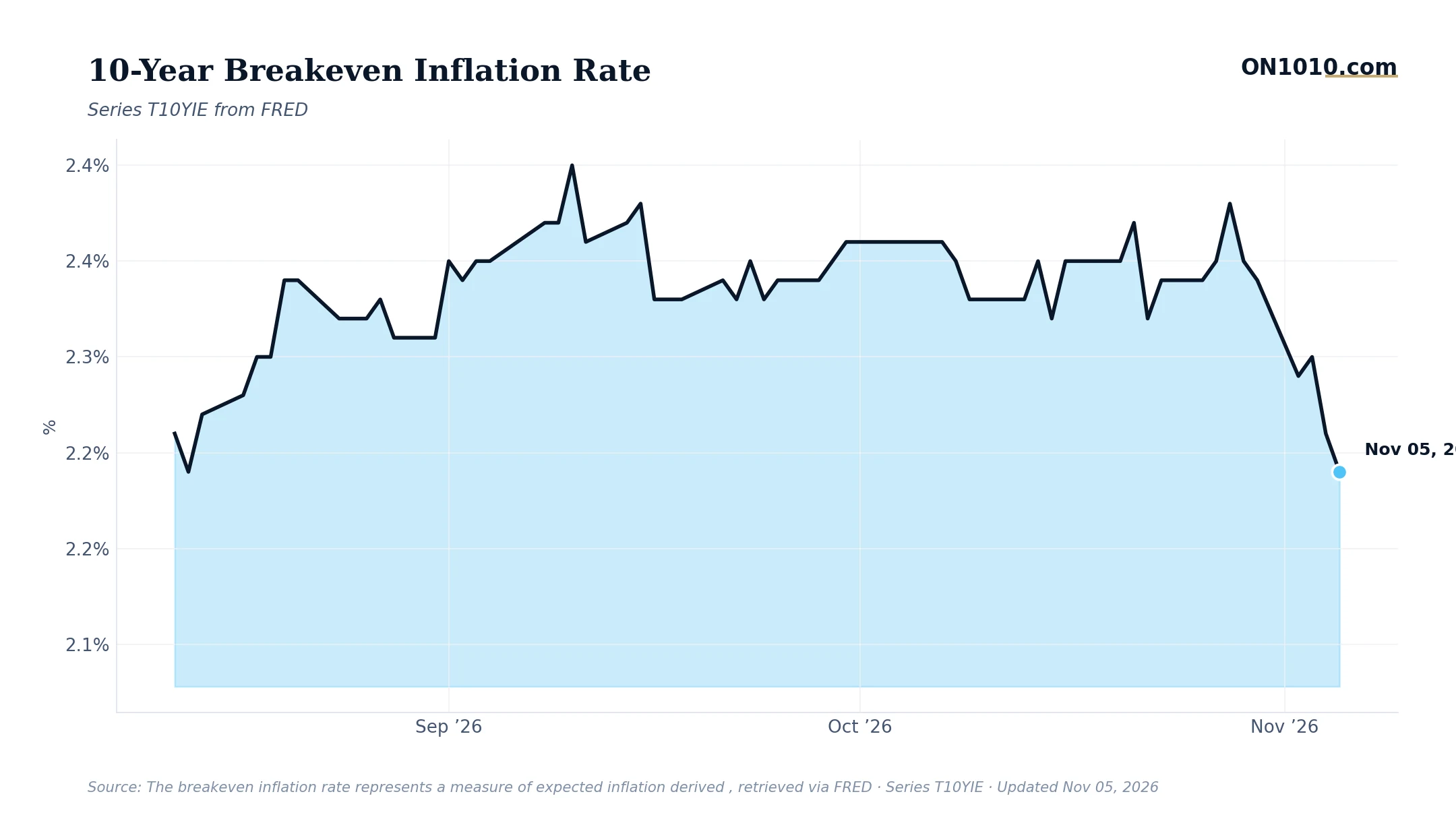
The bond market’s inflation forecast just quietly slipped to 2.24%, down from 2.35% a week ago. That’s the lowest reading in this recent stretch, and it represents a steady five-day drift lower that’s worth paying attention to.
The 10-year breakeven rate is derived from the gap between standard Treasury yields and TIPS (Treasury Inflation-Protected Securities) yields. When that gap narrows, it means bond investors, collectively, are expecting less inflation over the next decade. A reading of 2.24% sits just above the Fed’s 2% target, which on its surface looks encouraging.
Here’s the tension, though. The economic gauges around this reading don’t tell a clean story. Core inflation remains historically very high, running hotter than roughly nine of every ten months on record. Monetary policy is still restrictive, with the real policy rate elevated by historical standards. Credit spreads are wide and rising, signaling stress in credit markets. Meanwhile, sector rotation in equities shows a clear flight from growth into defensives, with health care, consumer staples, and real estate all outperforming meaningfully over the past month. Bond markets are saying inflation is cooling. Other markets are pricing something more cautious.
In past cycles, a falling breakeven has often reflected one of two things: genuine progress on inflation, or a growth scare that pushes investors toward safety and suppresses their long-run inflation outlook. Those two stories carry very different implications. When credit spreads are wide and equities are rotating defensively while breakevens fall, history suggests the market may be pricing in softening demand rather than simply celebrating a job well done on inflation. Businesses watching their financing costs and capital expenditure decisions have historically used the breakeven as one input alongside credit conditions and earnings trends, not in isolation.
Bottom Line: The bond market’s inflation forecast is drifting toward target, but the broader signal from credit and equity markets raises a reasonable question: is this the calm after the inflation storm, or the bond market starting to worry more about growth than prices?
Source: Federal Reserve Economic Data (FRED)
ON1010 Research is an independent publisher of economic education and is not a registered investment adviser, broker-dealer, or investment company. This content is for educational and informational purposes only and is not investment advice or a recommendation to buy, sell, or hold any security. Published under the publisher exemption recognized by Section 202(a)(11)(D) of the Investment Advisers Act of 1940 (Lowe v. SEC). Always consult a qualified financial professional before making any financial decision.
Free Research
The economy moves fast. We make sure you move faster.
Economic data, policy shifts, and market signals — delivered to your inbox.
Subscribe Free