
The Strait Nobody Is Pricing
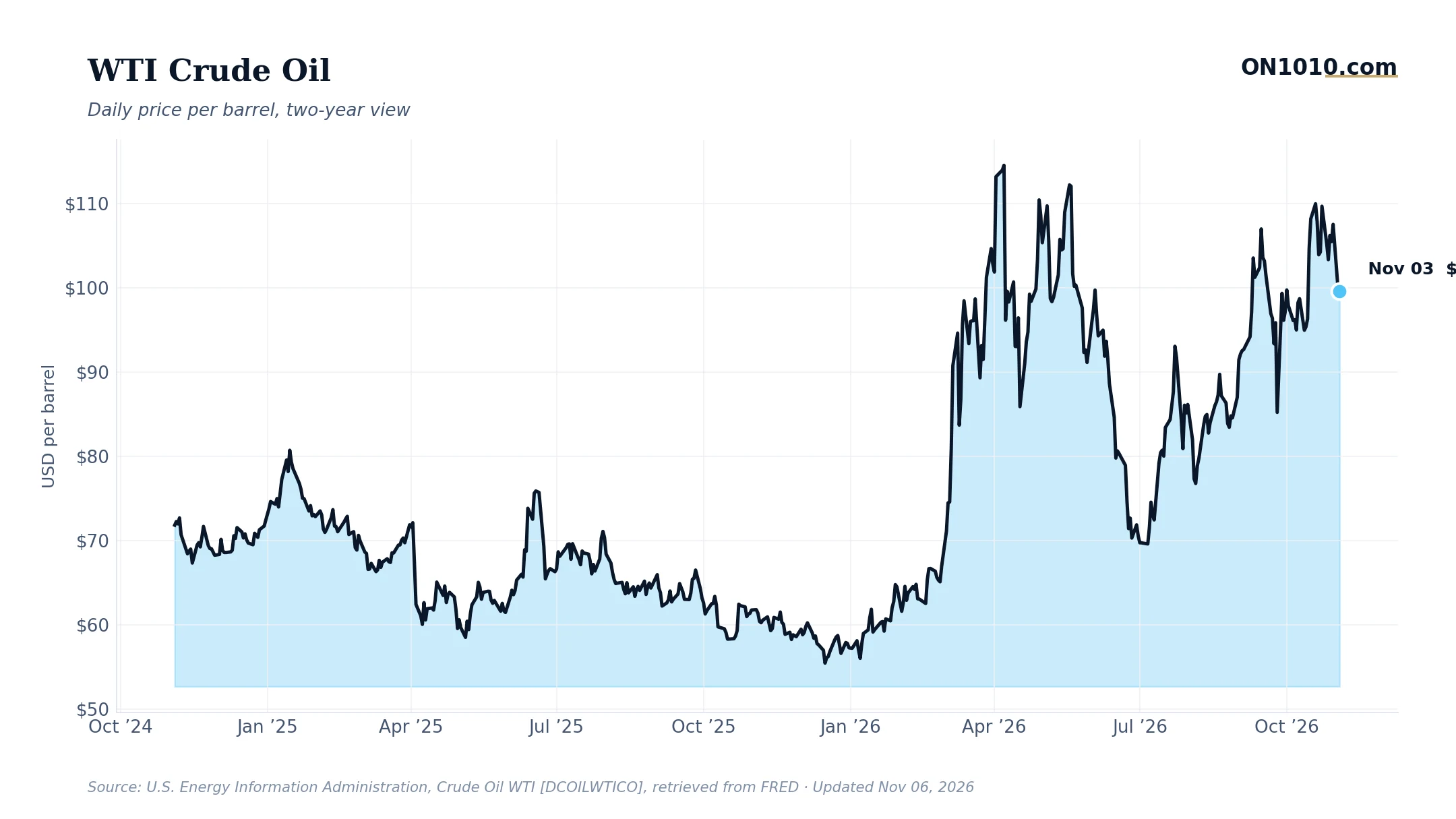
According to CNBC, energy analyst Bob McNally of Rapidan Energy is warning that renewed U.S.-Iran tensions could push both Brent and WTI crude above $100 a barrel, a level oil hasn’t touched in years. The headline sounds like geopolitical boilerplate. The economic setup underneath it is anything but.
Here’s what makes this moment different from the usual Middle East risk premium flare-up. The macro backdrop is already under pressure: core inflation is running hotter than roughly nine out of every ten months on record, the real policy rate is restrictive, credit spreads are wide, and consumer sentiment is near historic lows. Drop a $100 oil print into that environment, and the feedback loop gets uncomfortable fast. Higher energy costs hit profit margins directly, raise input costs across transportation, manufacturing, and agriculture, and act as a tax on every household that fills a tank. When margins are already absorbing restrictive borrowing costs, an external commodity shock doesn’t need to be enormous to cause meaningful damage to corporate earnings.
The Strait of Hormuz is the chokepoint that makes this specific. Roughly 20% of the world’s traded oil moves through that 21-mile passage. Iran has demonstrated before, in 2019, that even credible threats to Hormuz shipping, without a single barrel actually blocked, are enough to move markets sharply. A genuine disruption would be a different order of magnitude entirely. The question McNally is raising is whether markets are adequately pricing that tail risk, or whether geopolitical uncertainty has been discounted away by other headlines.
Historically, investors and capital allocators have treated oil price spikes as important inputs to margin analysis, particularly in energy-intensive industries like airlines, shipping, trucking, and chemicals. They have also watched whether the Fed would look through a supply shock or treat it as an inflation signal requiring further tightening, a distinction that changes the math considerably for rate-sensitive assets. With monetary policy already restrictive and long-term rates in the upper range of their historical record, a fresh inflationary impulse from energy would arrive at a moment when the system has limited room to absorb it.
Bottom Line: An oil shock is never just an oil story. In this environment, $100 crude would hit margins, complicate the Fed’s path, and pressure an already stretched consumer, which is why the Strait of Hormuz deserves more attention than it’s currently getting.
Read more: CNBC Top News
ON1010 Research is an independent publisher of economic education and is not a registered investment adviser, broker-dealer, or investment company. This content is for educational and informational purposes only and is not investment advice or a recommendation to buy, sell, or hold any security. Published under the publisher exemption recognized by Section 202(a)(11)(D) of the Investment Advisers Act of 1940 (Lowe v. SEC). Always consult a qualified financial professional before making any financial decision.
Free Research
The economy moves fast. We make sure you move faster.
Economic data, policy shifts, and market signals — delivered to your inbox.
Subscribe Free