
Three Forces Could Change the Rate Story. None Are Guaranteed.
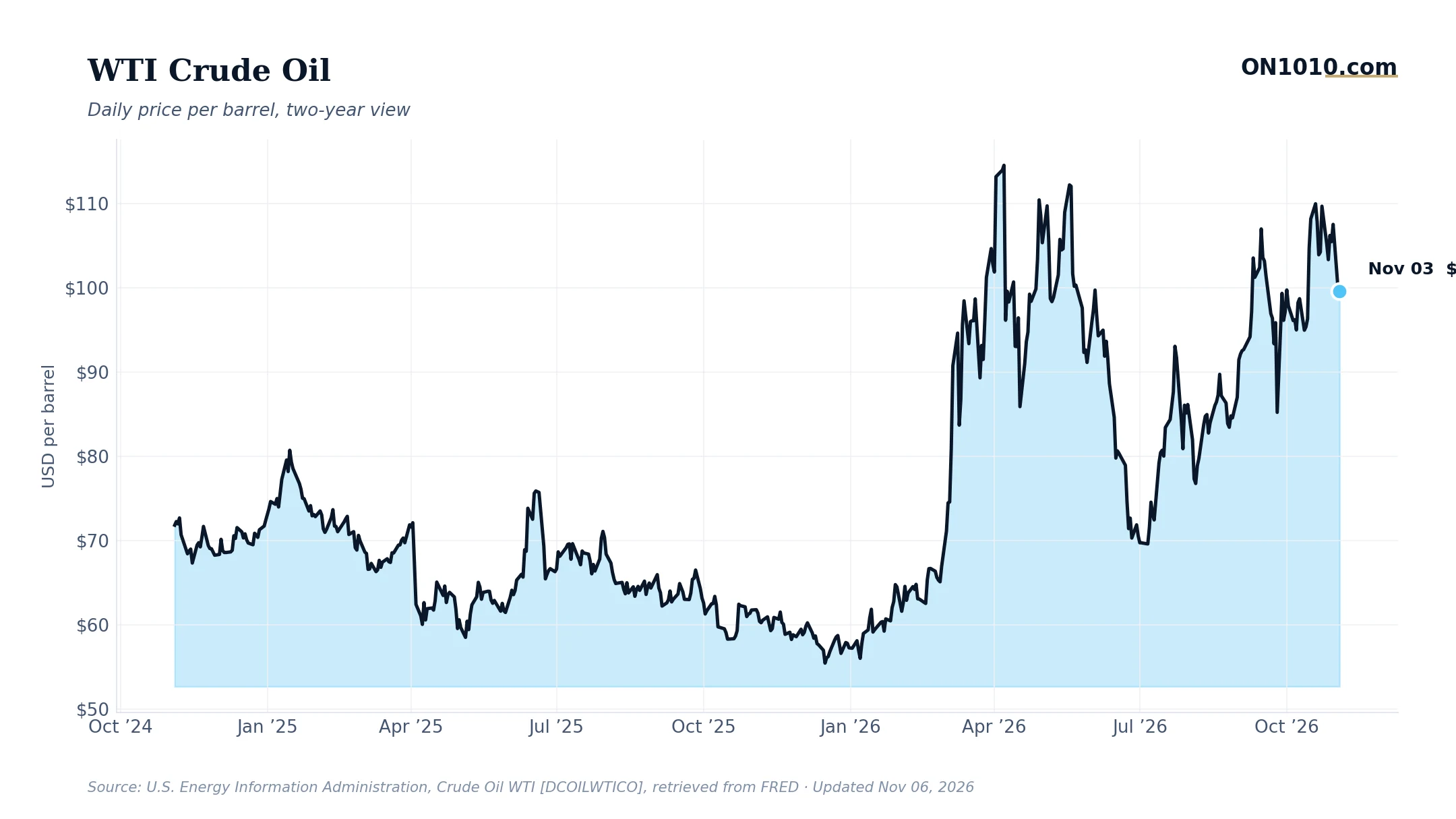
According to CNBC, a Democratic sweep in the midterms has markets repricing the path of interest rates, with three potential catalysts doing the work: a possible Iran war resolution that could ease oil prices, slower U.S. growth under a divided policy environment, and new fiscal measures that might shift the inflation trajectory. The operative phrase is “might.”
What’s worth unpacking is the mechanism each scenario runs through. Lower oil prices would reduce headline inflation directly, taking pressure off the Fed to keep hiking. Slower growth would cool the labor market and ease wage pressure, the stickiest part of the inflation problem. Fiscal changes could swing either way depending on whether they add to demand or pull it back. Each path runs through the Fed’s reaction function differently, and they don’t all point in the same direction at the same time.
The backdrop makes this more complicated than a typical post-election repricing. Core inflation is running very high by historical standards. The real policy rate is above its historical midpoint. Long-term interest rates are in the upper quarter of their historical range and have been falling recently, which suggests the bond market is already leaning toward slower growth rather than a fresh inflation surge. Credit spreads, wide just recently, have also started to narrow. These are small but real shifts in the financial plumbing worth watching.
What they reveal is a market starting to bet on relief before that relief is confirmed. Historically, when long rates are elevated and growth is near its historical middle, the economy has often stayed out of recession for a year or more. But the monetary policy gauge sits restrictively high, and that combination has preceded a recession about one in five times over the past several decades. That is not a forecast. It is the base rate.
Consumer sentiment is near historic lows, and institutional money has rotated hard into defensives, with consumer staples, health care, and real estate each outpacing the broader market by double digits over the past month. The market is behaving like it expects a slowdown even if the top-line growth numbers haven’t confirmed one yet. The question for anyone tracking this environment is whether the rate relief the bond market is pricing is a soft-landing outcome or something less comfortable.
Bottom Line: Three plausible paths could ease rate pressure, but they require three separate things to go right, and the financial conditions data suggests the market is already pricing in the relief before the evidence arrives.
Read more: CNBC Top News
ON1010 Research is an independent publisher of economic education and is not a registered investment adviser, broker-dealer, or investment company. This content is for educational and informational purposes only and is not investment advice or a recommendation to buy, sell, or hold any security. Published under the publisher exemption recognized by Section 202(a)(11)(D) of the Investment Advisers Act of 1940 (Lowe v. SEC). Always consult a qualified financial professional before making any financial decision.
Free Research
The economy moves fast. We make sure you move faster.
Economic data, policy shifts, and market signals — delivered to your inbox.
Subscribe Free