
The Fed’s Target Is in Sight. The Path There Isn’t.
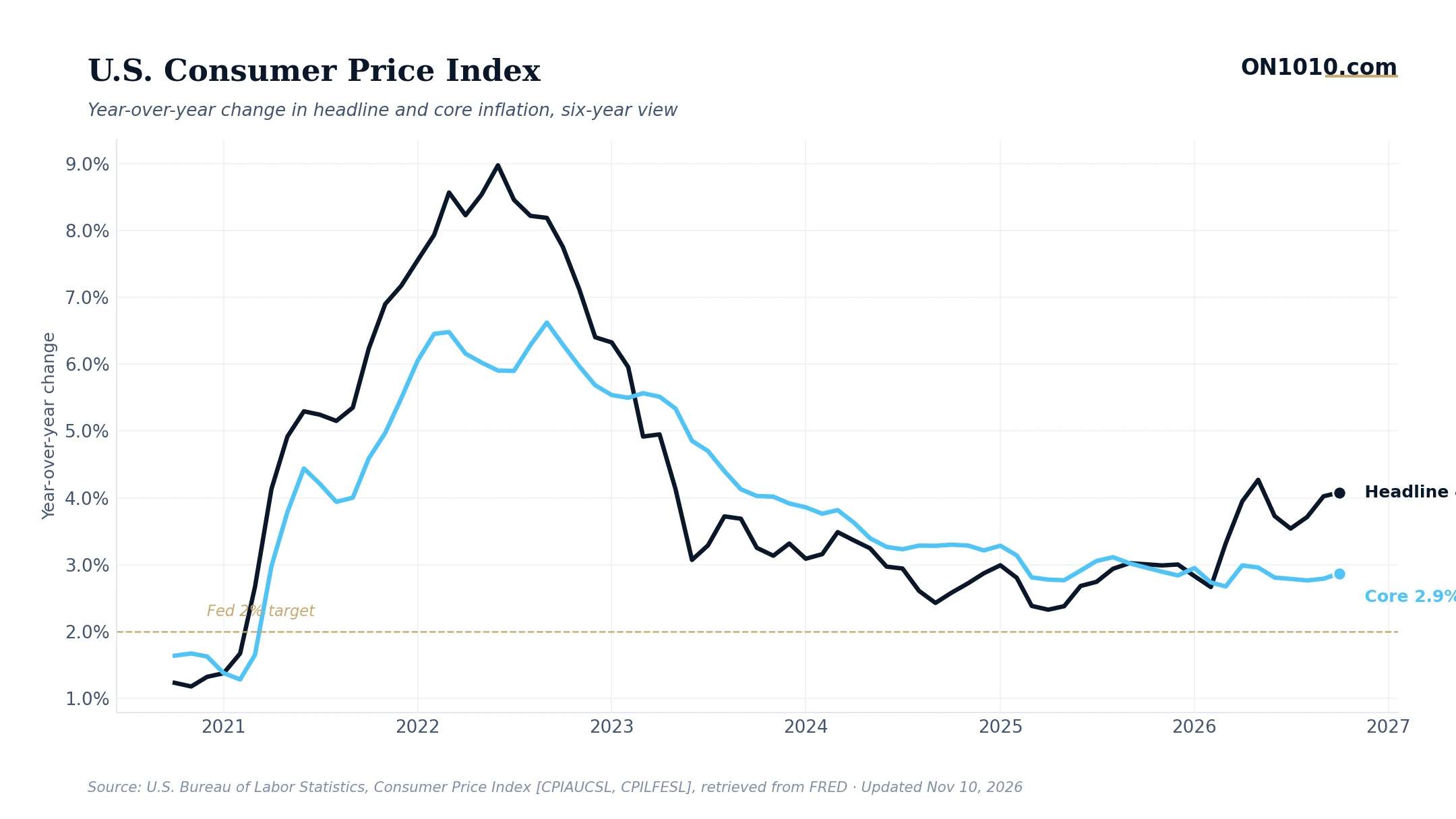
Core inflation rose 0.3% in October, pushing the year-over-year rate to 2.44%. On paper, that’s the closest the Fed’s preferred underlying price gauge has come to the 2% target in years. The puzzle is why almost nothing else in the economy is behaving like inflation is nearly solved.
Look at the last six months of data. Core CPI has been running in a tight band between 336 and 340 on the index, with monthly gains of roughly 0.2% to 0.3% each time. That’s a stubborn plateau, not a clean descent. The year-over-year rate has been grinding lower, but the monthly momentum hasn’t broken convincingly below 0.2%. At the current monthly pace, getting from 2.44% to 2.0% takes longer than the headline number implies.
The surrounding backdrop makes that plateau harder to dismiss. The real policy rate (the Fed funds rate minus inflation) sits high by historical standards, meaning monetary policy is already pressing down on the economy. Credit spreads are wide, a signal that lenders are demanding more compensation for risk. Consumer sentiment is near historic lows. And yet inflation hasn’t broken. That combination, tight policy plus sticky prices plus stressed credit, is not the textbook soft landing setup.
Historically, when core inflation ran this high relative to its own history while monetary policy was also restrictive, the tension resolved one of two ways: inflation eventually cracked as demand weakened, or the Fed held rates longer than markets expected, raising the cost of that delay. In past cycles, businesses watching this setup focused on their refinancing timelines and pricing power, specifically on whether they could hold margins if demand softened before inflation fully cleared.
Bottom Line: 2.44% sounds like almost there, but the monthly trend says the last half-point may be the hardest. The question worth watching is whether the economy can sustain restrictive policy long enough to finish the job without credit stress turning into something bigger.
Source: Federal Reserve Economic Data (FRED)
ON1010 Research is an independent publisher of economic education and is not a registered investment adviser, broker-dealer, or investment company. This content is for educational and informational purposes only and is not investment advice or a recommendation to buy, sell, or hold any security. Published under the publisher exemption recognized by Section 202(a)(11)(D) of the Investment Advisers Act of 1940 (Lowe v. SEC). Always consult a qualified financial professional before making any financial decision.
Free Research
The economy moves fast. We make sure you move faster.
Economic data, policy shifts, and market signals — delivered to your inbox.
Subscribe Free