
The Fed Is on Hold. The Rest of the Economy Isn’t.
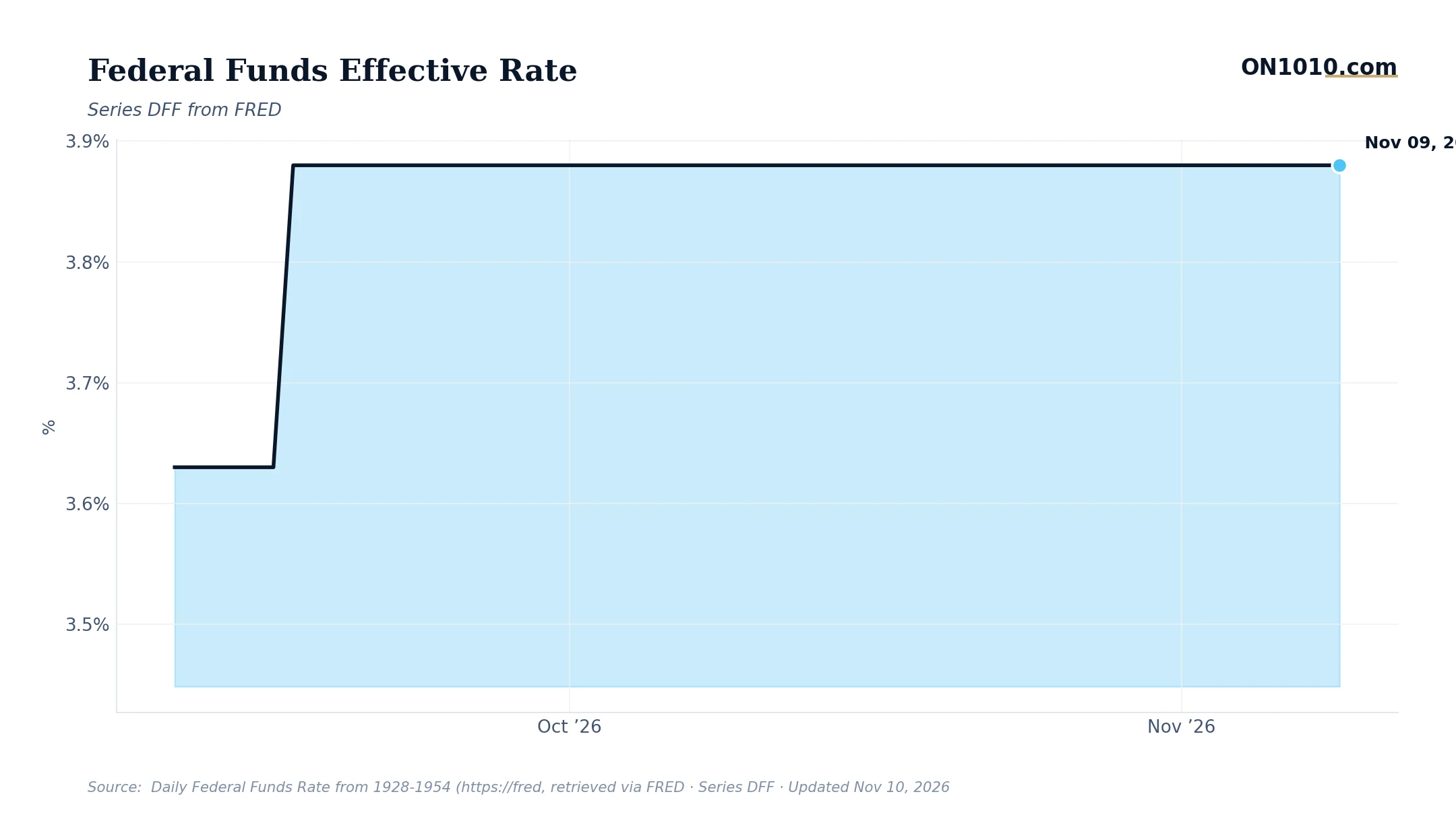
The effective federal funds rate has sat at 3.88% for six consecutive days, and the quiet is almost deceptive. The overnight rate is pinned exactly where the Fed wants it. But look one layer deeper and the picture is considerably less calm.
Here is the tension worth understanding. The Fed holds its policy rate steady, but monetary policy tightness is not just about the number itself. It is about that number relative to inflation. Core inflation is running very hot by historical standards, which means the real policy rate (the Fed’s rate minus inflation) is high, but perhaps not as high as it looks at first glance. At the same time, long-term rates remain elevated, credit spreads are wide, and market uncertainty is rising. That combination puts real pressure on the balance sheets of companies that need to refinance debt, and on households carrying variable-rate obligations.
The sector rotation signal underscores this. Consumer staples, health care, real estate, and utilities are all outperforming the broader market by double digits over the past month, while technology is trailing sharply. When defensive sectors pull that far ahead, institutional capital is sending a signal that it wants durability over growth.
Historically, when the real policy rate has stayed elevated for an extended period, the lag effects on credit conditions and business investment can be significant. From similar monetary environments in the historical record, a new recession began within the following 12 months roughly 18% of the time. That is a minority outcome. It is also not trivial. Business leaders evaluating capital commitments and financing decisions should understand what a prolonged tight-money environment has tended to do to margins and credit availability in past cycles.
Bottom Line: The fed funds rate has not moved, but the conditions surrounding it are shifting. Wide credit spreads, elevated volatility, and a defensive rotation in markets all suggest the economy may be absorbing the cumulative weight of this rate environment. The question is whether the Fed will read that stress as a reason to cut, or hold the line because inflation remains too high to ignore.
Source: Federal Reserve Economic Data (FRED)
ON1010 Research is an independent publisher of economic education and is not a registered investment adviser, broker-dealer, or investment company. This content is for educational and informational purposes only and is not investment advice or a recommendation to buy, sell, or hold any security. Published under the publisher exemption recognized by Section 202(a)(11)(D) of the Investment Advisers Act of 1940 (Lowe v. SEC). Always consult a qualified financial professional before making any financial decision.
Free Research
The economy moves fast. We make sure you move faster.
Economic data, policy shifts, and market signals — delivered to your inbox.
Subscribe Free