
Bond Markets Are Pricing Cooler Inflation. The Rest of the Dashboard Isn’t So Sure.
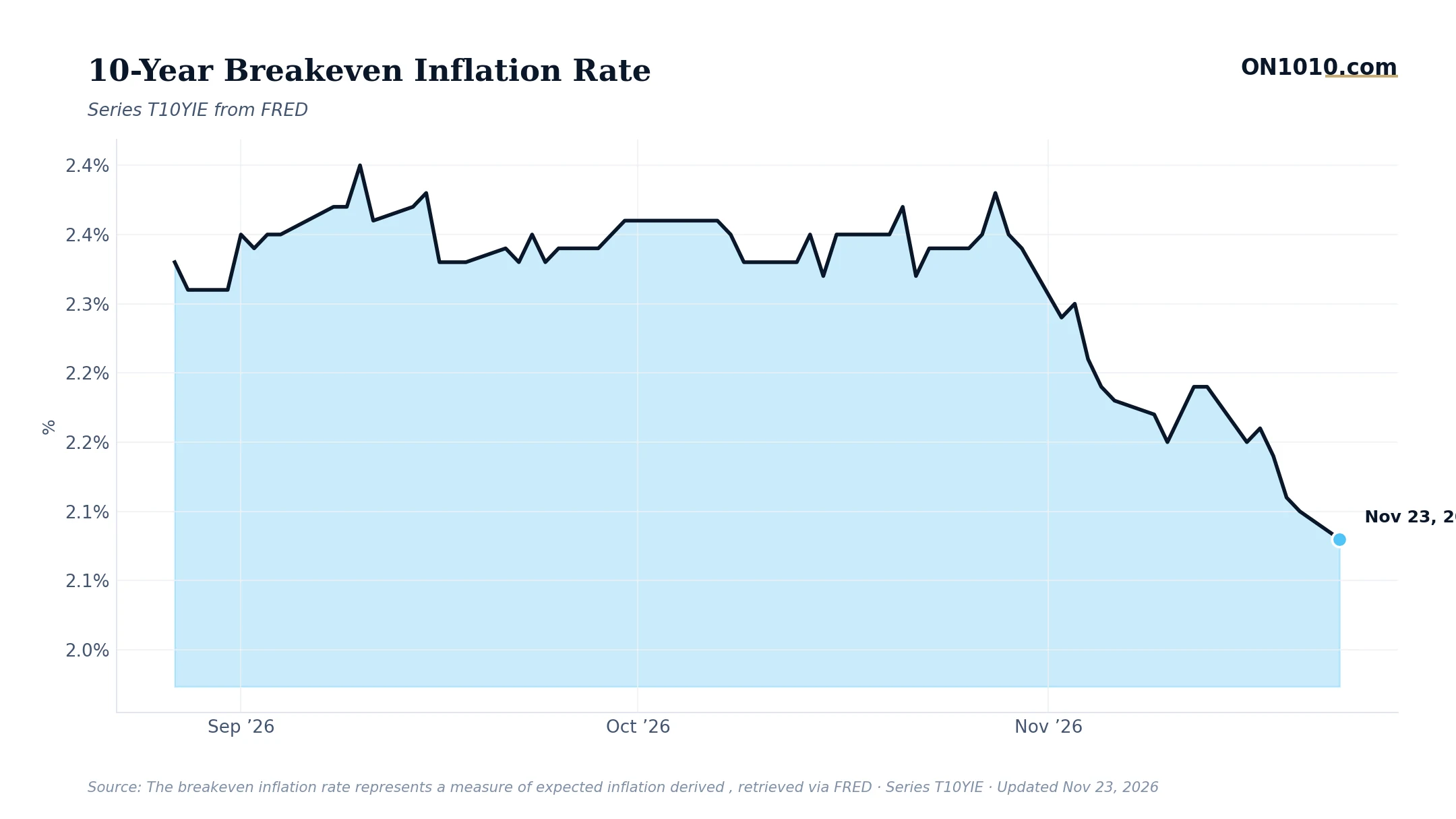
The 10-year breakeven inflation rate slipped to 2.13% on November 23, down from 2.21% just one week earlier. That’s a steady, six-day slide that says bond market participants, as a group, now expect average inflation over the next decade to settle just above the Fed’s 2% target.
On the surface, that sounds reassuring. But the context around it deserves attention.
The breakeven rate is derived by subtracting the yield on inflation-protected Treasuries from the yield on regular Treasuries. When it falls, it means bond investors are collectively willing to accept less compensation for inflation risk. That can happen for two reasons: either inflation expectations are genuinely cooling, or investors are rushing into the safety of regular Treasuries for other reasons, compressing the spread mechanically. Right now, with credit spreads near historical extremes, consumer sentiment at historic lows, and the VIX above 30 signaling elevated market stress, there is real reason to ask which force is driving this move. Defensive sectors, including consumer staples, real estate, utilities, and health care, have all outpaced the broader market by wide margins over the past month. That is a flight-to-safety rotation, and flight-to-safety rotations can push Treasury yields in ways that have nothing to do with the actual inflation outlook.
Historically, when long-term rates sit in the upper quarter of their historical range while breakevens drift lower, it has sometimes reflected a growth scare rather than a genuine inflation victory. In past cycles, analysts and capital allocators have used the gap between what inflation expectations imply and what real economic conditions suggest to gauge whether the market is pricing a soft landing or something harder. The question this reading raises: is the bond market calling the inflation fight over, or is it quietly pricing slower growth ahead?
Bottom Line: A 2.13% breakeven is close enough to 2% to look like a win for inflation hawks, but with credit stress elevated and money rotating hard into defensive safety, the more important question may be what the bond market thinks is coming for growth.
Source: Federal Reserve Economic Data (FRED)
ON1010 Research is an independent publisher of economic education and is not a registered investment adviser, broker-dealer, or investment company. This content is for educational and informational purposes only and is not investment advice or a recommendation to buy, sell, or hold any security. Published under the publisher exemption recognized by Section 202(a)(11)(D) of the Investment Advisers Act of 1940 (Lowe v. SEC). Always consult a qualified financial professional before making any financial decision.
Free Research
The economy moves fast. We make sure you move faster.
Economic data, policy shifts, and market signals — delivered to your inbox.
Subscribe Free