
Bond Markets Are Saying Something About Inflation That Most People Are Missing
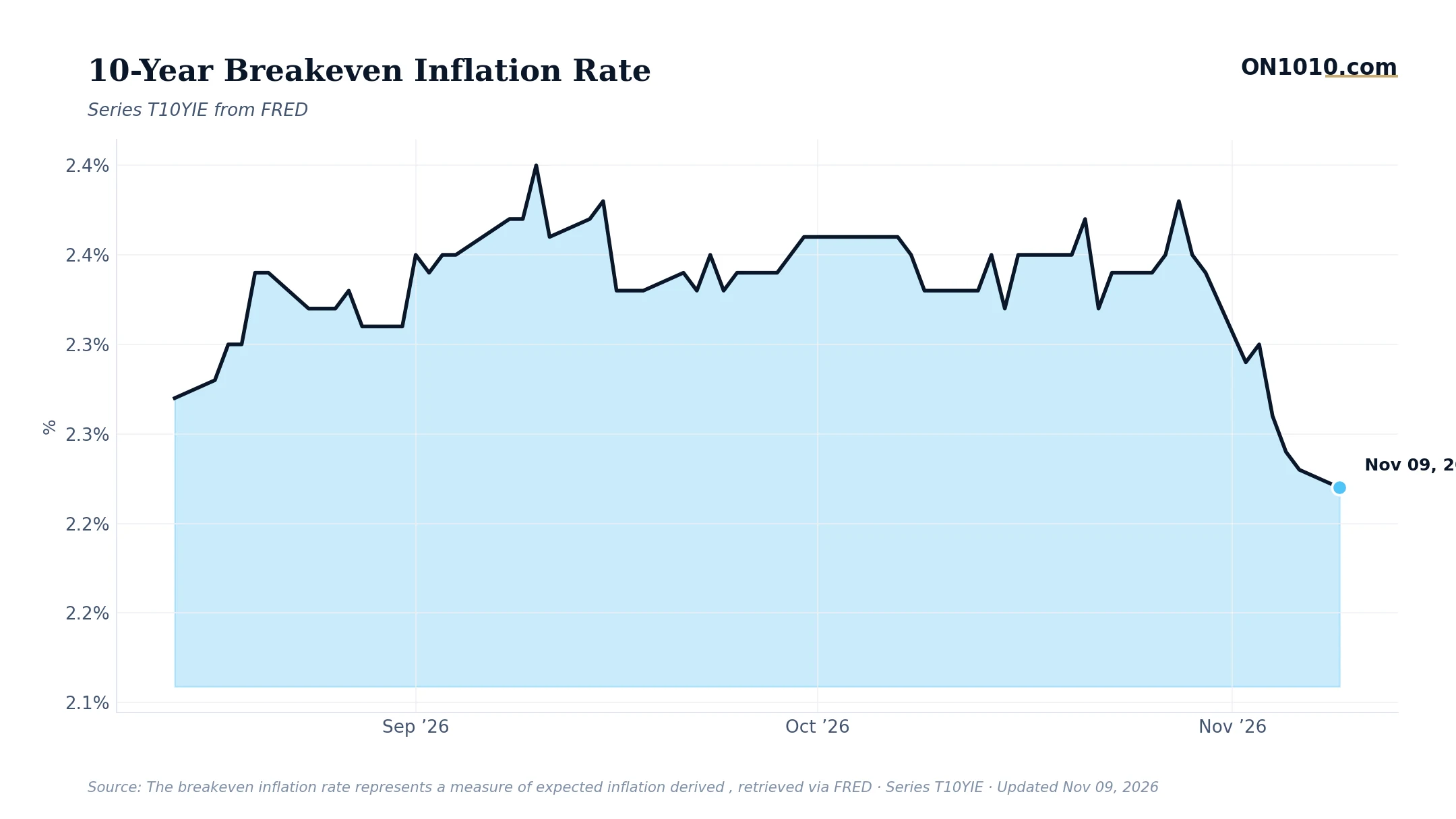
The 10-year breakeven inflation rate has quietly slipped to 2.22% as of November 9, dropping eight consecutive basis points since November 3. That is a small move in absolute terms, but the direction is striking given the backdrop.
Here is the puzzle. Core inflation is running hotter than roughly nine of every ten months in the historical record. The Fed’s real policy rate is high relative to history. Credit spreads are wide and widening. And yet bond investors, who price TIPS and Treasuries against each other every day, are marking down their inflation expectations. The market is not screaming “inflation emergency.” It is quietly whispering “slowdown.”
That tension deserves attention. When inflation expectations fall while actual inflation stays hot, it often signals that bond markets are beginning to price in demand destruction, not a soft landing. The market is essentially saying that something, whether it is tighter credit, weaker consumer spending, or the lagged bite of elevated rates, will do the Fed’s work for it. Sector rotation reinforces that read: defensive sectors (Consumer Staples, Health Care, Real Estate, Utilities) are collectively outperforming offensive sectors by nearly 13 percentage points over the past month. Money is rotating away from growth and toward safety at a meaningful clip.
Historically, when breakevens drift lower while real policy rates remain elevated, it has often meant the bond market was pricing in slower nominal growth before the economic data confirmed it. For anyone planning capital investments, pricing multi-year contracts, or thinking about fixed versus floating rate financing, the gap between what CPI is printing today and what bond markets expect over the next decade is the number to watch closely, not just the headline inflation release. Those two figures are starting to diverge. Qualified financial professionals can help translate that divergence into decisions that fit a specific situation.
Bottom Line: Actual inflation remains high by historical standards, but the market’s forward expectation is drifting down toward 2.2%. The question now is whether bond markets are early or wrong about what comes next.
Source: Federal Reserve Economic Data (FRED)
ON1010 Research is an independent publisher of economic education and is not a registered investment adviser, broker-dealer, or investment company. This content is for educational and informational purposes only and is not investment advice or a recommendation to buy, sell, or hold any security. Published under the publisher exemption recognized by Section 202(a)(11)(D) of the Investment Advisers Act of 1940 (Lowe v. SEC). Always consult a qualified financial professional before making any financial decision.
Free Research
The economy moves fast. We make sure you move faster.
Economic data, policy shifts, and market signals — delivered to your inbox.
Subscribe Free