
Inflation Is Stuck Above 3%, And the Fed Has Very Little Room
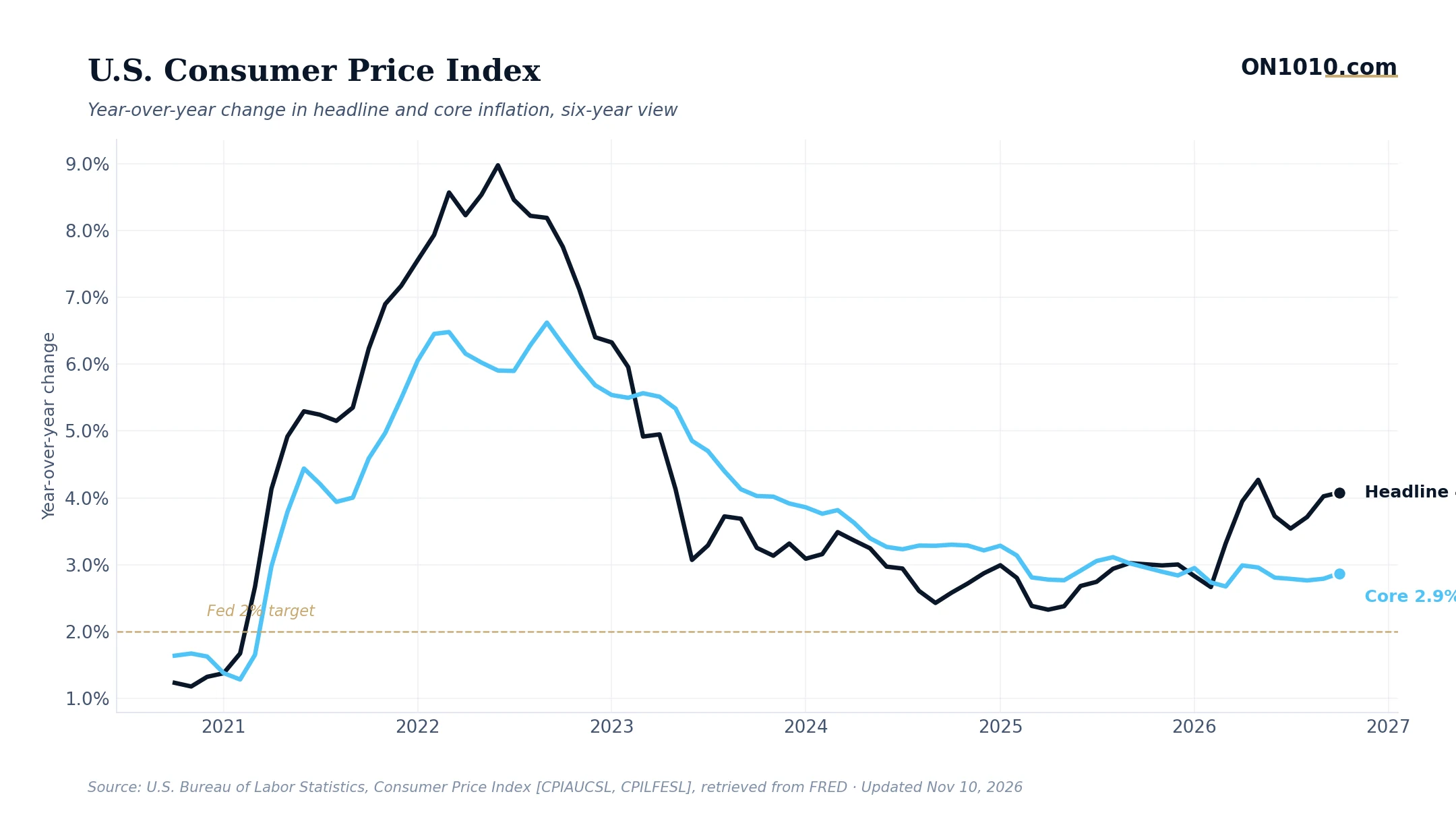
Consumer prices rose 0.35% in October, pushing the year-over-year inflation rate to 3.51%. That number is not dramatic on its own. The story is what it looks like in context: six months into this data window, inflation has refused to break below 3%, and the brief dip in May and June now looks less like progress and more like a pause.
Look at the trend closely. Prices fell from May to June, then climbed every single month from July through October. That is four consecutive monthly increases. The year-over-year rate is heading in the wrong direction.
This matters because of where monetary policy sits right now. The real policy rate, meaning the Fed funds rate minus inflation, is high by historical standards. That should be doing work. When restrictive policy coexists with inflation that keeps drifting higher, one of two things is true: either the economy is running hot enough to absorb that pressure, or structural forces are keeping prices elevated in ways that rate policy alone cannot fix. Neither answer is comfortable. Credit spreads are wide, consumer sentiment is near historical lows, and equity markets are rotating hard into defensive sectors like health care and consumer staples, while technology has dropped sharply relative to the broader market. The bond market and the equity market are both flashing caution.
Historically, when inflation sits this high relative to its own long-run history while monetary policy is simultaneously restrictive, the combination has preceded economic slowdowns in a meaningful share of cases. That does not mean a slowdown is coming. But it does mean businesses and capital allocators are navigating an environment where the Fed has limited flexibility to ease without risking inflation credibility, and limited flexibility to stay tight without eventually pressuring margins and employment. In past cycles, the question investors and operators have focused on in this setup is not whether growth can survive tight policy for another quarter, but whether it can survive it for several more.
Bottom Line: Inflation’s refusal to cooperate with restrictive policy is forcing a harder question than markets may be pricing: if the Fed cannot cut without reigniting price pressure, and cannot hold without eventually breaking something, what does the exit actually look like?
Source: Federal Reserve Economic Data (FRED)
ON1010 Research is an independent publisher of economic education and is not a registered investment adviser, broker-dealer, or investment company. This content is for educational and informational purposes only and is not investment advice or a recommendation to buy, sell, or hold any security. Published under the publisher exemption recognized by Section 202(a)(11)(D) of the Investment Advisers Act of 1940 (Lowe v. SEC). Always consult a qualified financial professional before making any financial decision.
Free Research
The economy moves fast. We make sure you move faster.
Economic data, policy shifts, and market signals — delivered to your inbox.
Subscribe Free