
The 10-Year Yield Is Pulling Back. The Bigger Story Is Where It’s Coming From.
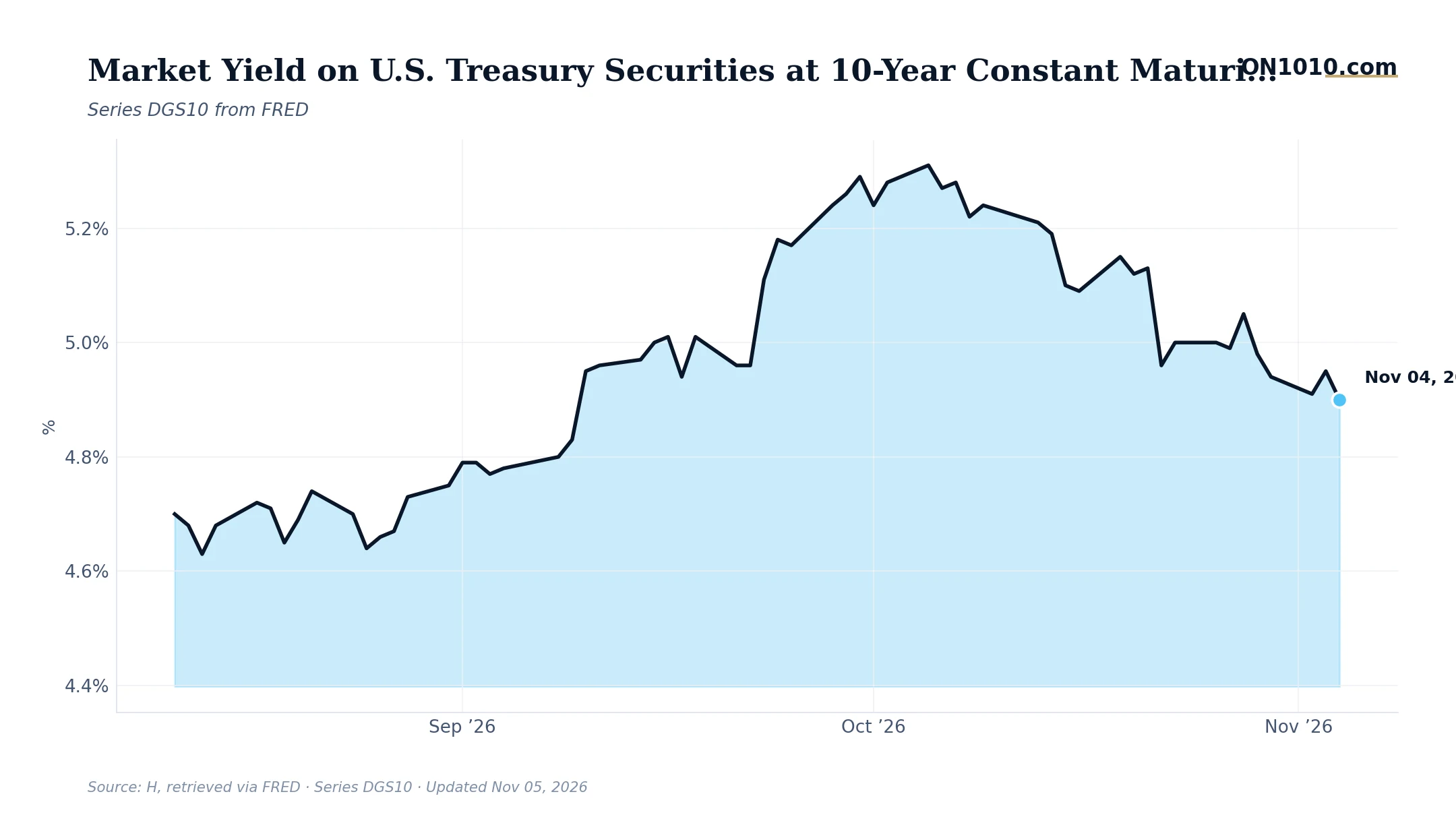
The 10-year Treasury yield slipped to 4.9% on November 4, down from 4.95% the day before and retreating from a recent high of 5.05% on October 28. That’s a small move in absolute terms. The context makes it more interesting.
This yield has been sitting near the upper end of its historical range for months. At 4.9%, long-term borrowing costs remain meaningfully elevated compared to most of the post-2000 era. And the broader backdrop is not one that suggests easy relief: core inflation is running hotter than roughly nine of every ten months on record, and the real policy rate (the Fed funds rate minus inflation) is restrictive by historical standards. That combination puts the 10-year in a stubborn spot. It can drift, but the forces holding it elevated haven’t changed.
What makes this week’s move worth watching is what’s happening alongside it. Credit spreads are wide and rising, sector rotation has tilted sharply defensive (health care and consumer staples leading, technology trailing badly), and consumer sentiment is near multi-decade lows. Bond markets and equity markets are telling the same cautious story from different angles.
Historically, when long-term rates have been this elevated while credit stress was also rising, the squeeze on corporate borrowing costs became the story. Companies carrying floating-rate debt or facing near-term refinancing found margin pressure building even before revenues softened. In past cycles, investors and operators have watched the spread between the 10-year yield and earnings yields on equities as a measure of whether stocks were pricing in that pressure adequately. Historically, when both long rates and credit spreads are elevated simultaneously, that combination has preceded softer economic conditions within 12 to 18 months more often than not. Past performance does not predict future results, but the pattern has shown up enough times to take seriously.
Bottom Line: The 5-basis-point decline in the 10-year yield is less important than the level itself. At 4.9% with credit stress rising and inflation still hot, the question isn’t whether rates are coming down. It’s whether the economy can sustain this level long enough for something to break.
Source: Federal Reserve Economic Data (FRED)
ON1010 Research is an independent publisher of economic education and is not a registered investment adviser, broker-dealer, or investment company. This content is for educational and informational purposes only and is not investment advice or a recommendation to buy, sell, or hold any security. Published under the publisher exemption recognized by Section 202(a)(11)(D) of the Investment Advisers Act of 1940 (Lowe v. SEC). Always consult a qualified financial professional before making any financial decision.
Free Research
The economy moves fast. We make sure you move faster.
Economic data, policy shifts, and market signals — delivered to your inbox.
Subscribe Free