
THE DEBT CEILING IS FLIPPING SCRIPTS. BOND MARKETS ARE ALREADY WATCHING.
According to CNBC, the next debt-ceiling fight could hand Democrats an unusual amount of leverage over a Republican president, with their willingness to allow a default giving them rare negotiating power to extract spending concessions from the Trump administration.
The role reversal inverts decades of predictable script: the opposition party withholds votes, rattles markets, extracts concessions, then ultimately blinks. What’s different this time is the incentive structure. When the minority party has little to lose politically and faces a White House pushing aggressive fiscal expansion, the calculus on “who blinks first” gets genuinely murky. And murky calculus around the full faith and credit of the U.S. government is precisely the kind of thing bond markets hate.
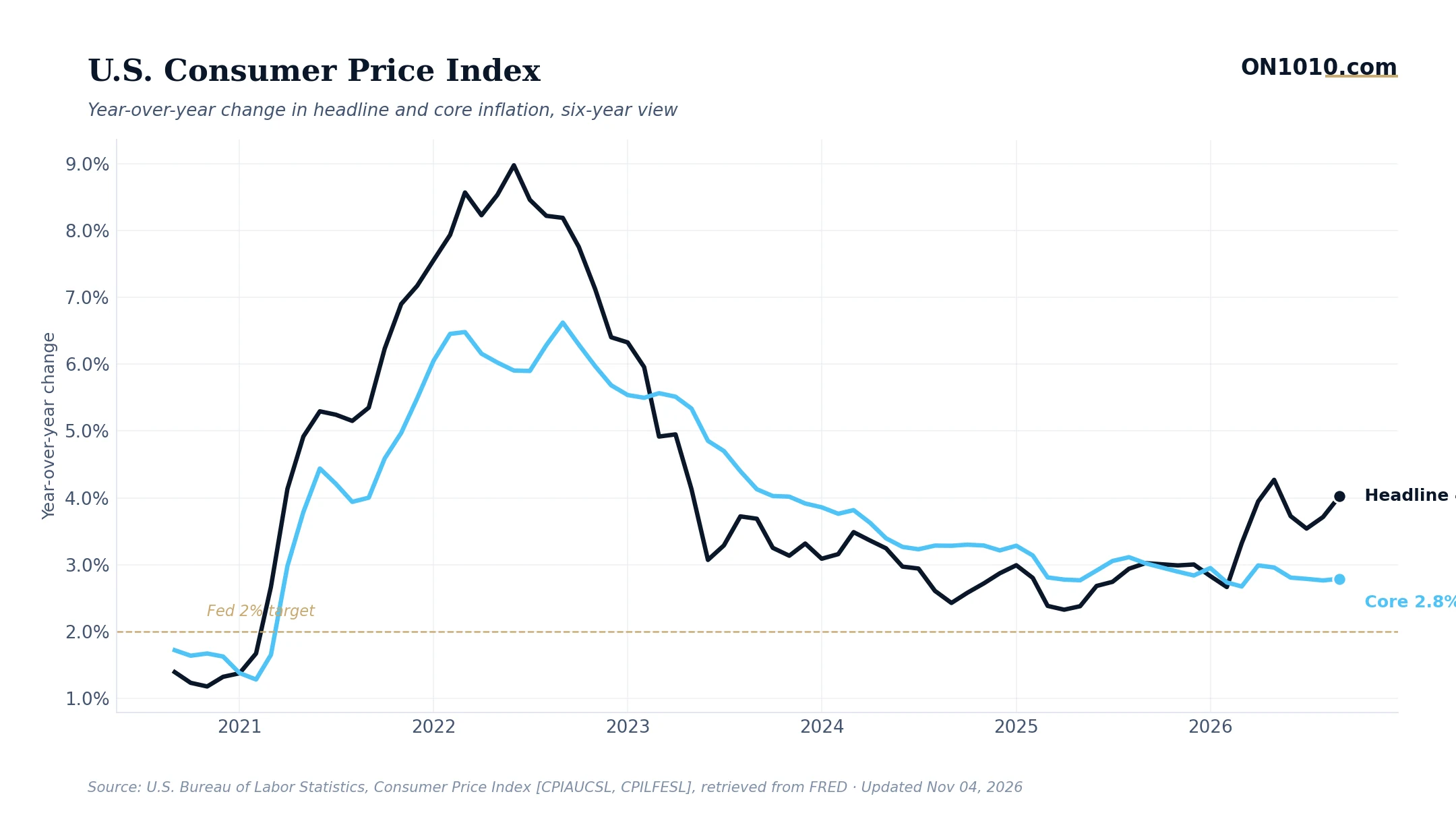
Here’s the economic mechanism that matters. A technical default, or even a prolonged scare that gets close to one, would push Treasury yields higher as investors demand more compensation for holding what is supposed to be the world’s risk-free asset. Higher yields ripple immediately into mortgage rates, corporate borrowing costs, and discount rates on equities. The backdrop makes this particularly uncomfortable: credit spreads are already wide and rising, long-term rates are sitting in the upper range of their historical record, and consumer sentiment is near historic lows. The economy does not have a lot of shock absorbers right now.
Historically, investors have treated debt-ceiling standoffs as noise that resolves at the last minute, and in every past instance, it has resolved. The 2011 episode is the cautionary tale: even with resolution, the near-miss was enough to trigger a U.S. credit rating downgrade, a sharp equity selloff, and a flight to Treasuries that paradoxically pushed yields lower. The pattern is consistent enough to teach, but not reliable enough to bet on.
The sector rotation data is already showing defensive sectors pulling well ahead of growth names over the past month. That is a tell worth noting.
Bottom Line: When the two parties swap their usual roles on the debt ceiling, the historical playbook loses some of its predictive power, and uncertainty itself becomes the market risk.
Read more: CNBC Economy
ON1010 Research is an independent publisher of economic education and is not a registered investment adviser, broker-dealer, or investment company. This content is for educational and informational purposes only and is not investment advice or a recommendation to buy, sell, or hold any security. Published under the publisher exemption recognized by Section 202(a)(11)(D) of the Investment Advisers Act of 1940 (Lowe v. SEC). Always consult a qualified financial professional before making any financial decision.
Free Research
The economy moves fast. We make sure you move faster.
Economic data, policy shifts, and market signals — delivered to your inbox.
Subscribe Free