
The Fed Hasn’t Moved. That Itself Is a Decision.
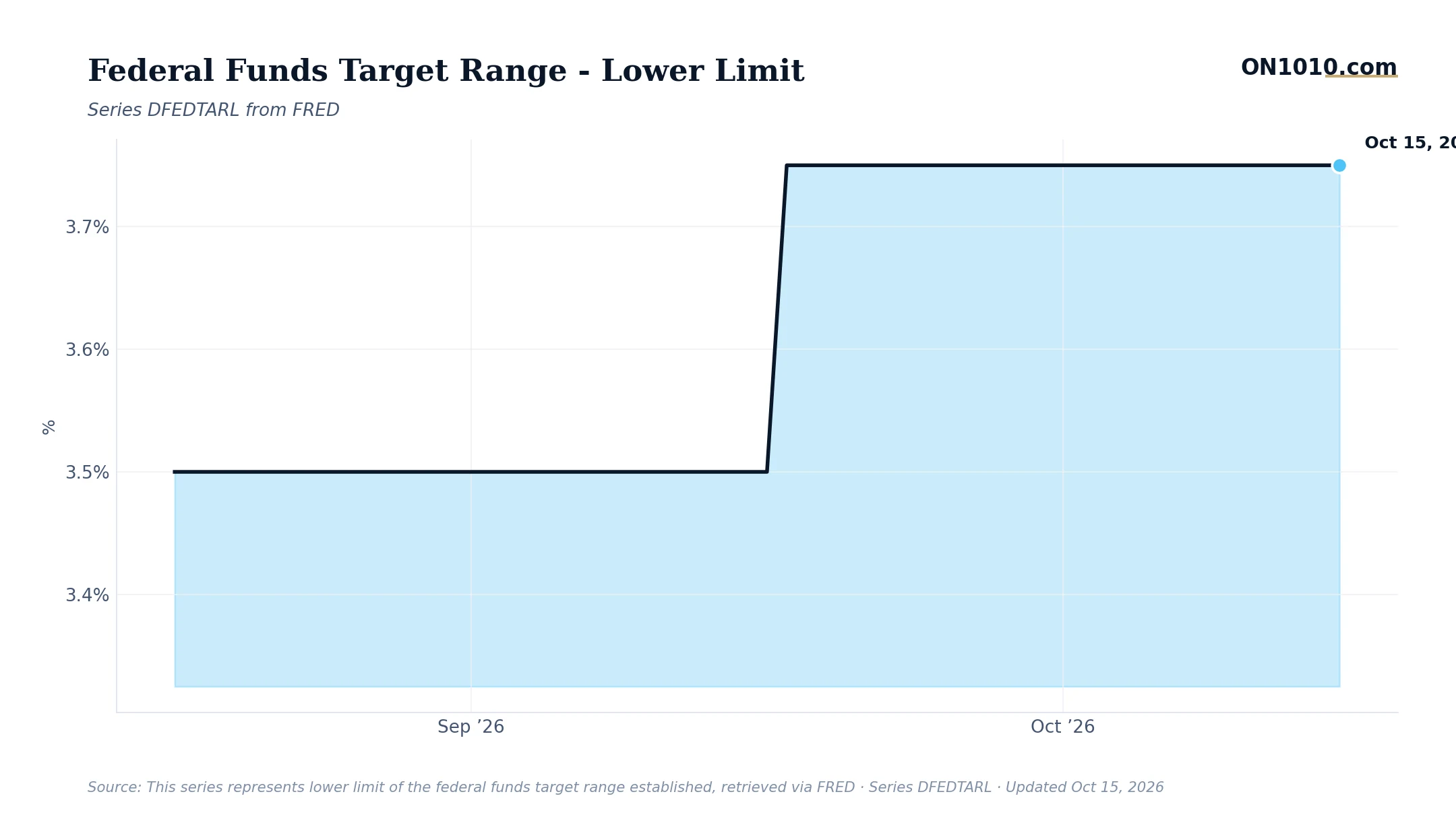
The federal funds rate target sits at 3.75%, unchanged, and unchanged for every session in the data going back through mid-October. No cut. No hike. In monetary policy, holding still is an active choice, and right now that choice is doing real work in the economy.
Here’s the tension: inflation is still running hot relative to its long-term history, and the policy rate is sitting well above its historical midpoint. That combination means the real policy rate (the fed funds rate minus inflation) is genuinely restrictive. The Fed is deliberately keeping money expensive, and borrowers, from small businesses to homeowners to corporations refinancing debt, are feeling it.
The broader picture sharpens the story. Long-term interest rates are historically elevated and only now beginning to ease. Credit spreads have recently widened, moving from neutral to elevated territory, signaling that lenders are pricing in more risk. Consumer sentiment sits near historic lows. Those three things together describe an economy where the cost of money is biting, confidence is soft, and the credit market is getting cautious. Growth remains near its historical midpoint and recession risk, by base rates, remains low, historically, setups like this have produced a new recession within 12 months only about 18% of the time. But that number is worth knowing.
In past cycles, extended holds at restrictive real rates have created pressure that shows up unevenly: firms with floating-rate debt feel it first, then capital-intensive businesses, then hiring plans. Historically, investors and business operators have watched whether credit spreads continue to widen and whether long-term rates stay elevated or fall faster, because those two signals together often tell you whether the hold is working or whether it’s starting to cost more than intended.
Bottom Line: The Fed holding at 3.75% isn’t a non-event, it’s a sustained squeeze on borrowing costs in an economy where credit is already tightening and consumers are already cautious. The question isn’t whether the rate will eventually come down. It’s whether the economy’s margins can hold until it does.
Source: Federal Reserve Economic Data (FRED)
ON1010 Research is an independent publisher of economic education and is not a registered investment adviser, broker-dealer, or investment company. This content is for educational and informational purposes only and is not investment advice or a recommendation to buy, sell, or hold any security. Published under the publisher exemption recognized by Section 202(a)(11)(D) of the Investment Advisers Act of 1940 (Lowe v. SEC). Always consult a qualified financial professional before making any financial decision.
Free Research
The economy moves fast. We make sure you move faster.
Economic data, policy shifts, and market signals — delivered to your inbox.
Subscribe Free