
The IMF Is Warning That Growth Alone Won’t Fix a $40 Trillion Problem
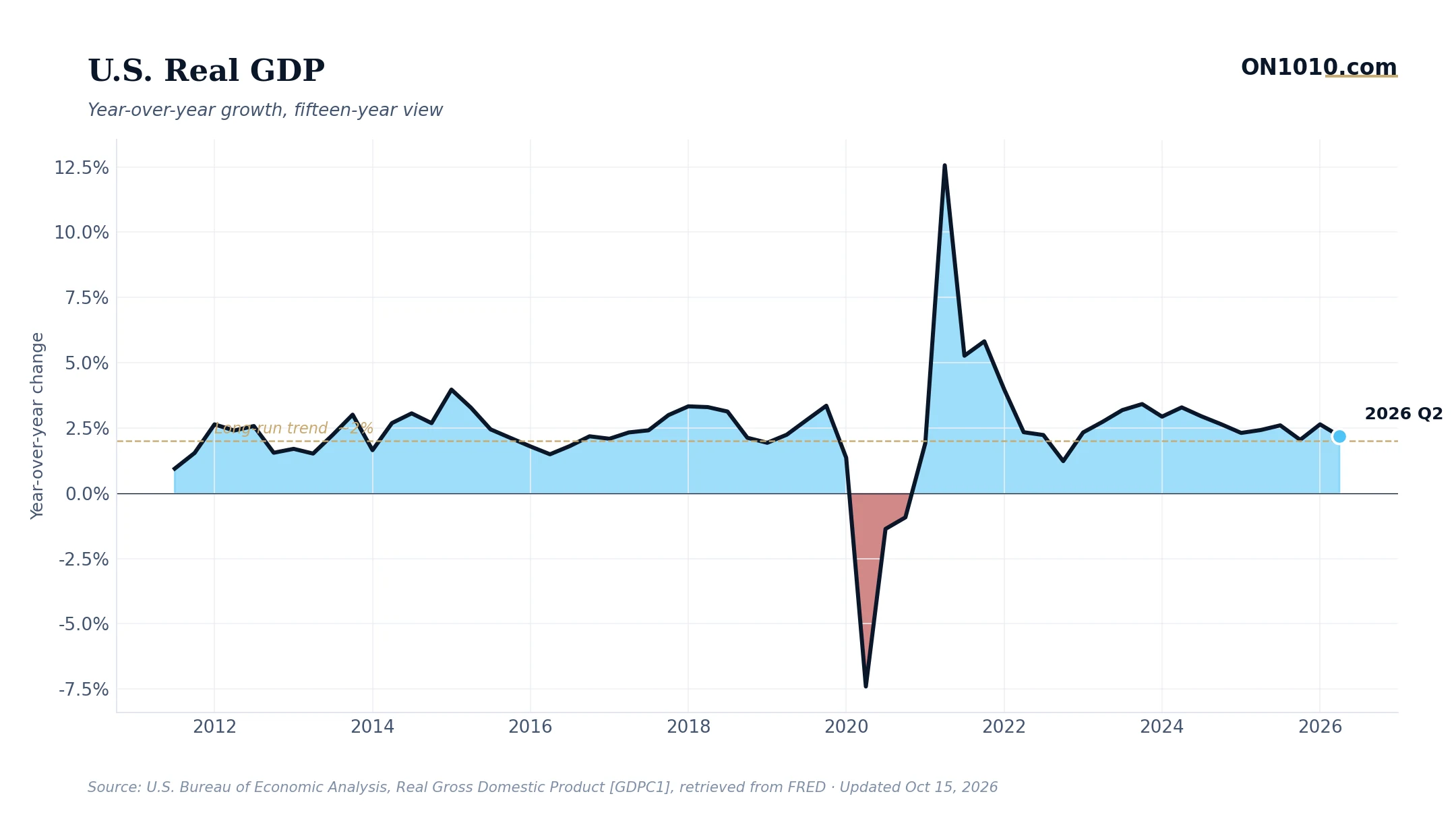
According to CNBC, IMF Managing Director Kristalina Georgieva pushed back directly on Treasury Secretary Scott Bessent’s fiscal strategy, saying that relying on economic growth to close the U.S. deficit is insufficient given the scale of the debt pile. The polite disagreement between a global institution and the U.S. Treasury is worth unpacking, because the math behind it is harder to dismiss than the politics.
The U.S. debt now sits at roughly $40 trillion. The Bessent argument, simplified, is that stronger growth raises tax revenues and shrinks the deficit as a share of GDP without requiring painful spending cuts or tax hikes. It is a coherent theory. The problem is arithmetic. At $40 trillion, even a 1% annual interest rate increase costs the government an additional $400 billion per year in debt service. With long-term interest rates currently running near the upper range of their historical history, the interest bill is compounding faster than growth forecasts can offset it. The IMF’s call for “fiscal consolidation” is essentially a warning that the denominator (GDP) is not growing fast enough to keep pace with the numerator (debt and interest).
This matters because of how bond markets respond to credibility gaps. When investors doubt a government’s fiscal path, they demand higher yields to hold that debt, which raises borrowing costs across the entire economy: mortgages, corporate loans, auto financing. Historically, periods when sovereign debt concerns pushed long-term yields higher have tended to compress corporate profit margins, because the cost of capital rises for everyone. Credit spreads have already moved wider in recent months, a signal that bond investors are pricing in more stress than equity markets are acknowledging.
The deeper tension is one that plays out across every generation of fiscal policymaking. Growth-first strategies work when productivity is accelerating and the debt load is manageable. The question investors and business leaders are quietly asking right now is whether those conditions both hold simultaneously at this scale.
Bottom Line: When the IMF and the bond market start telling the same story about a country’s fiscal path, the story is worth hearing. The spread between what growth can deliver and what the debt requires is the number to watch.
Read more: CNBC Top News
ON1010 Research is an independent publisher of economic education and is not a registered investment adviser, broker-dealer, or investment company. This content is for educational and informational purposes only and is not investment advice or a recommendation to buy, sell, or hold any security. Published under the publisher exemption recognized by Section 202(a)(11)(D) of the Investment Advisers Act of 1940 (Lowe v. SEC). Always consult a qualified financial professional before making any financial decision.
Free Research
The economy moves fast. We make sure you move faster.
Economic data, policy shifts, and market signals — delivered to your inbox.
Subscribe Free