
The IMF Just Named the Flaw in Washington’s Fiscal Math
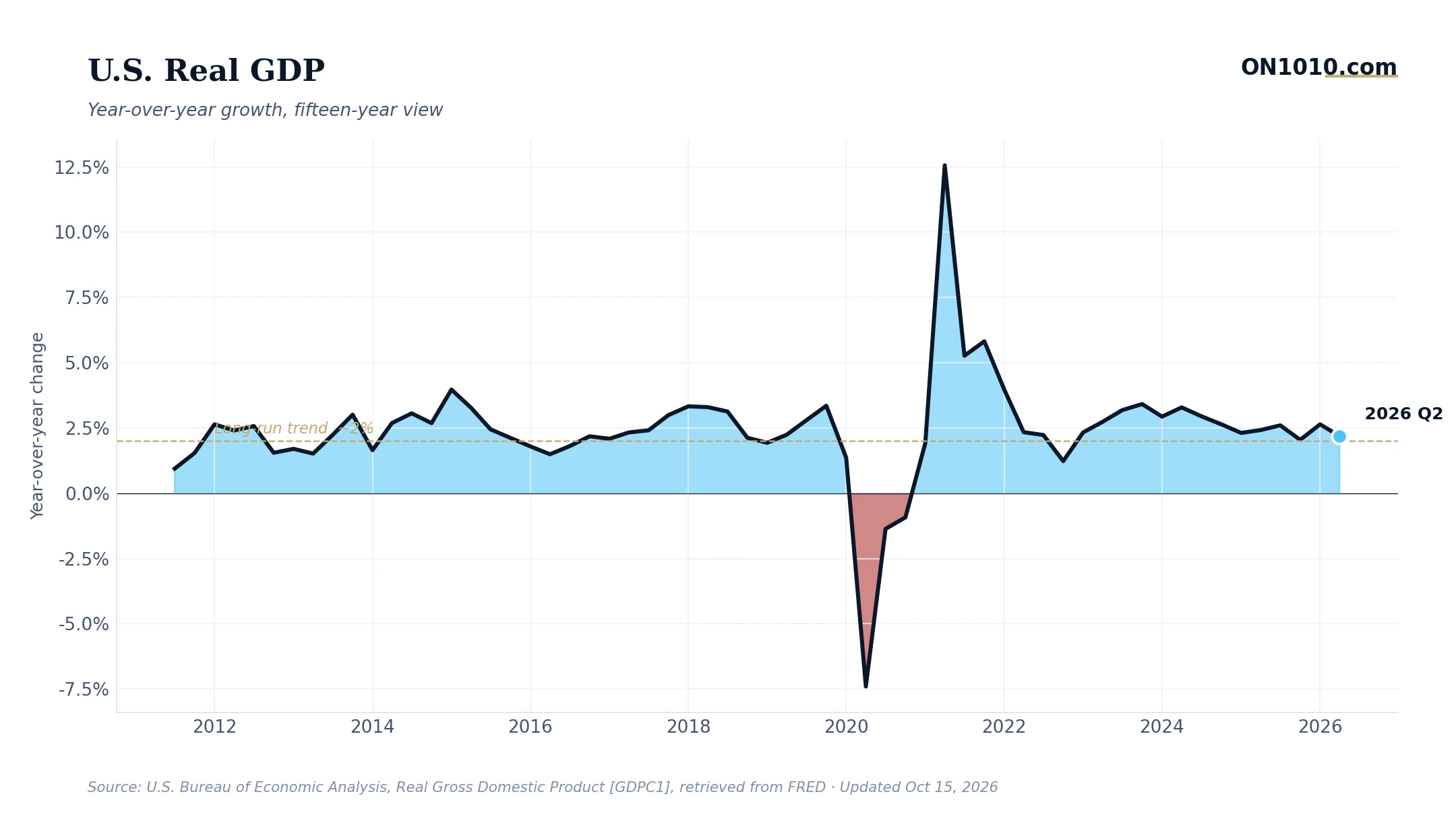
According to CNBC, IMF Managing Director Kristalina Georgieva has pushed back directly on Treasury Secretary Scott Bessent’s argument that economic growth alone can bring the U.S. deficit and $40 trillion debt pile under control, calling instead for active fiscal consolidation. The tension here is worth examining carefully, because one side of this debate is an optimistic assumption and the other is arithmetic.
Bessent’s growth thesis follows a recognizable logic: a faster-growing economy generates more tax revenue without raising rates, which gradually shrinks the deficit as a share of GDP. That mechanism is real. The problem is the math required to make it work. When your debt load is $40 trillion and interest rates are sitting well above their historical midpoint, the interest bill alone is compounding faster than moderate growth can offset it. Growth helps. Growth at the margin, against a structural spending gap of this size, is not enough on its own.
The IMF’s pushback lands at a moment when the economic gauges already tell a complicated story. Long-term interest rates remain historically elevated, even as they have begun drifting lower recently. Credit spreads have widened from neutral to elevated, signaling that the bond market is pricing in more stress than it was a few months ago. Consumer sentiment is historically very weak. Monetary policy remains restrictive. Taken together, these conditions make the “grow your way out” scenario harder to achieve, because high real interest rates act as a drag on the very business investment that would need to accelerate to validate the optimistic revenue projections.
Historically, investors and capital allocators have paid close attention when the IMF issues a direct fiscal warning to a major sovereign, particularly when long-term rates are already high. The concern is not abstract: if markets begin to price in fiscal slippage, bond yields can rise further, which increases the interest burden, which widens the deficit further. That feedback loop has appeared in other developed economies. The question the IMF is raising is whether Washington’s current plan has a credible mechanism to interrupt it before it starts.
Bottom Line: Growth is a tailwind for fiscal math, but at $40 trillion in debt with interest rates historically high, it is not a strategy. The IMF is asking for a plan B, and the bond market’s recent behavior suggests it is asking the same question.
Read more: CNBC Top News
ON1010 Research is an independent publisher of economic education and is not a registered investment adviser, broker-dealer, or investment company. This content is for educational and informational purposes only and is not investment advice or a recommendation to buy, sell, or hold any security. Published under the publisher exemption recognized by Section 202(a)(11)(D) of the Investment Advisers Act of 1940 (Lowe v. SEC). Always consult a qualified financial professional before making any financial decision.
Free Research
The economy moves fast. We make sure you move faster.
Economic data, policy shifts, and market signals — delivered to your inbox.
Subscribe Free