
The Fed Holds at 3.75%: Steady Rates in an Unsteady Environment
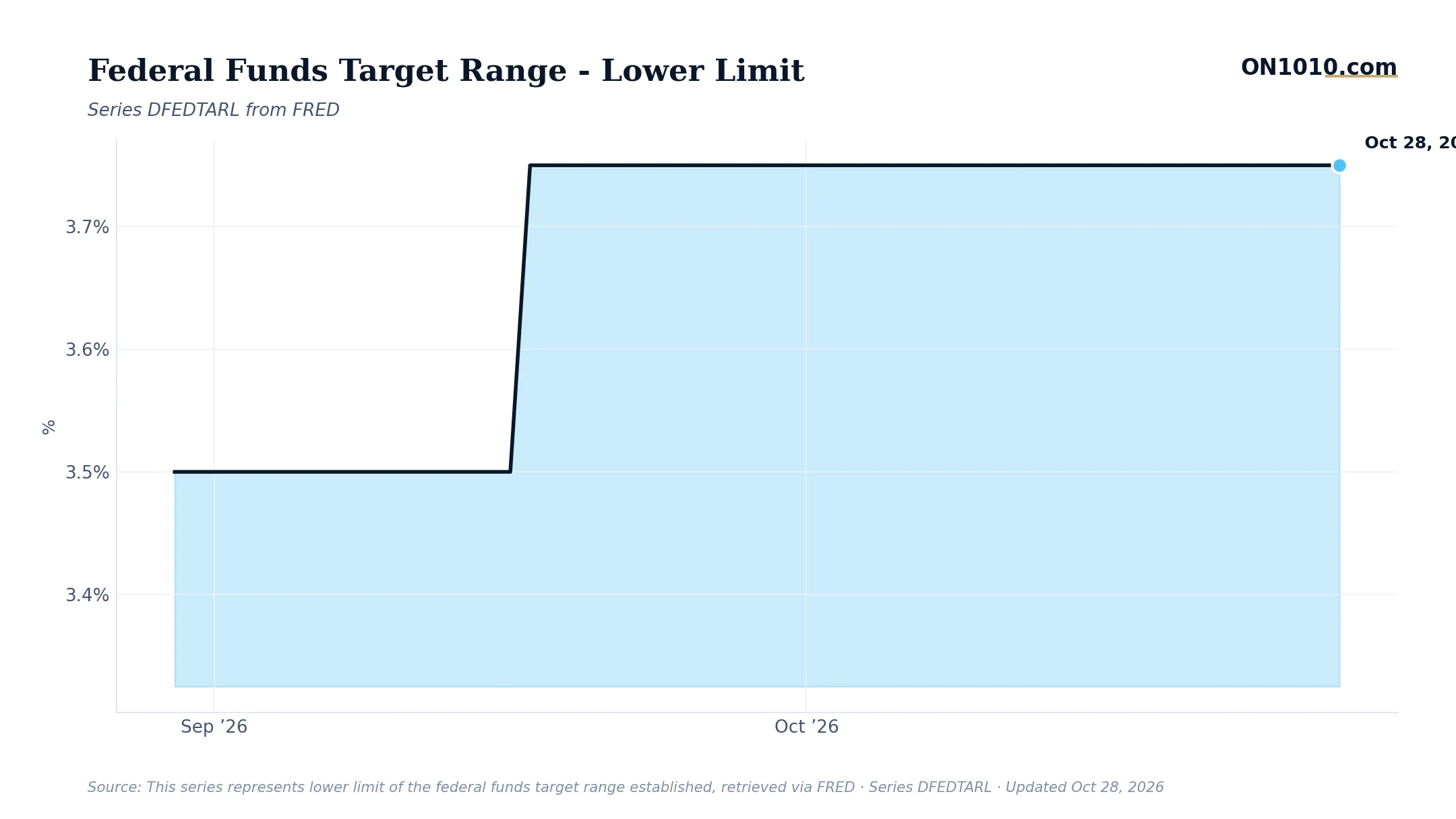
The federal funds rate target (lower bound) sits at 3.75%, unchanged for at least the past six days. The hold itself is expected. What makes it worth examining is everything happening around it.
Inflation is still running hot relative to history, and the real policy rate, what you get when you subtract inflation from the nominal rate, is restrictive by historical standards. The Fed is pressing on the brake. The question is whether the brake is working fast enough, or working too hard.
The Bigger Picture
The economic backdrop around this steady rate is less settled than the number suggests. Credit spreads are wide, a signal that the bond market is pricing in meaningful stress. Consumer sentiment is near historical lows. Long-term interest rates remain elevated relative to history, which tightens conditions for businesses financing equipment, real estate, or expansion plans. When monetary policy sits this restrictive and credit stress runs this high simultaneously, historically that combination has preceded a new recession within 12 months about 18% to 20% of the time. That is not a prediction. It is the base rate worth knowing.
Meanwhile, equity market behavior is sending a separate signal. Defensive sectors, utilities, consumer staples, health care, have been outperforming significantly over the past month, while technology and communication services have sold off. Markets often reprice ahead of the economy, and institutional money rotating toward defense is worth watching alongside the macro data.
Why It Matters
In past tightening cycles, the lag between when rates peaked and when the real economy felt the full impact ranged from 12 to 24 months. Businesses weighing capital commitments or refinancing decisions have historically paid close attention to whether the Fed is holding, cutting, or signaling a shift. A prolonged hold at a restrictive real rate compresses margins for any business carrying floating-rate debt or dependent on consumer borrowing.
Bottom Line: The Fed is not moving, but the environment around that decision is. The question worth tracking: will inflation cool fast enough to give the Fed room to ease before the restrictive rate finishes what it started?
Source: Federal Reserve Economic Data (FRED)
ON1010 Research is an independent publisher of economic education and is not a registered investment adviser, broker-dealer, or investment company. This content is for educational and informational purposes only and is not investment advice or a recommendation to buy, sell, or hold any security. Published under the publisher exemption recognized by Section 202(a)(11)(D) of the Investment Advisers Act of 1940 (Lowe v. SEC). Always consult a qualified financial professional before making any financial decision.
Free Research
The economy moves fast. We make sure you move faster.
Economic data, policy shifts, and market signals — delivered to your inbox.
Subscribe Free