
The Fed Is Almost Certain to Hold. The Question Nobody’s Asking Is Why That’s Not Comforting.
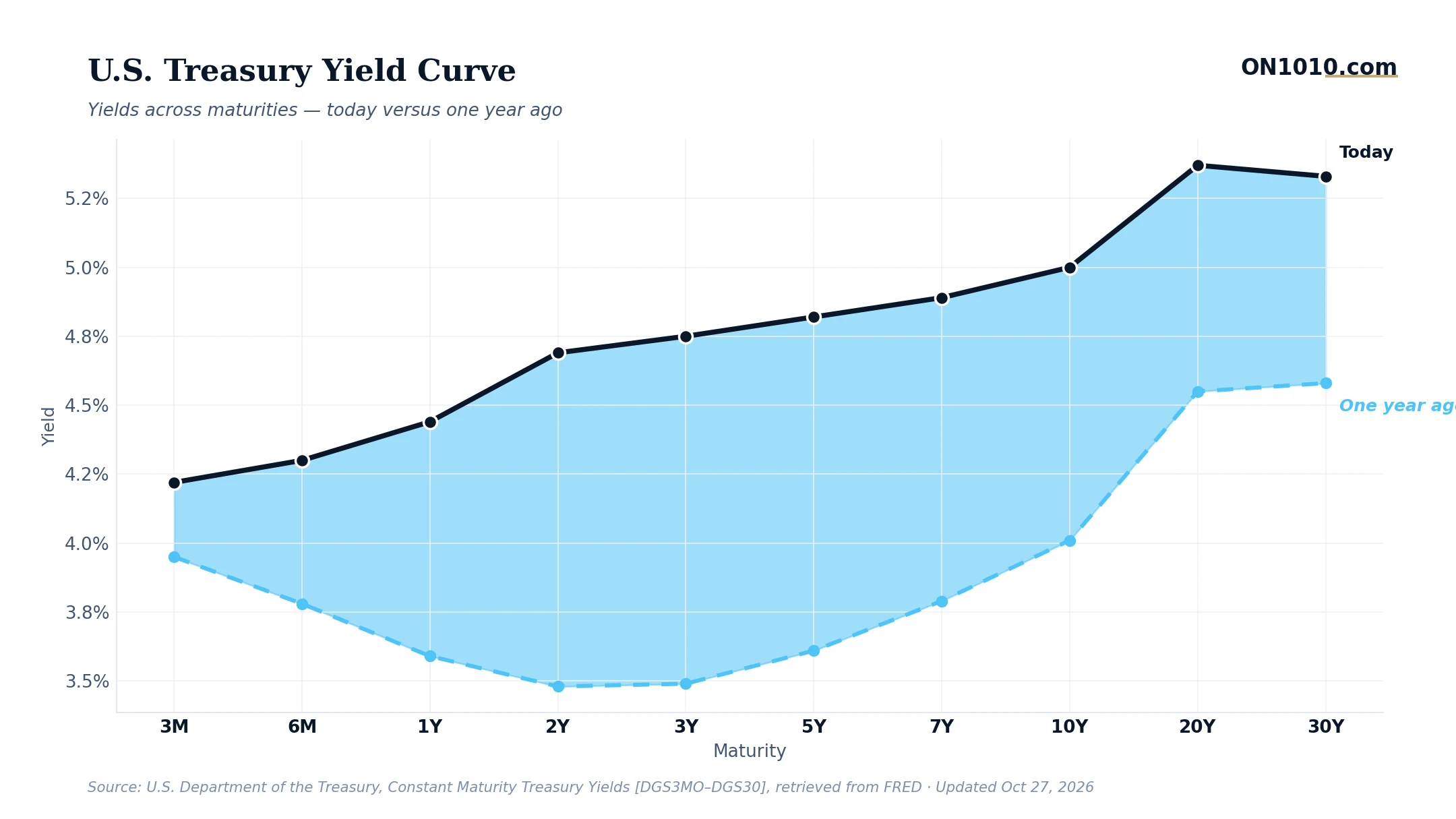
According to a CNBC Fed Survey, 93% of respondents expect the Federal Reserve to leave rates unchanged at this week’s meeting, keeping the federal funds target rate at 3.75%-4.0%. Near-unanimous agreement on the Fed’s next move is actually the easy part of the story. The harder question is what a pause tells us about where we are in this cycle.
A pause is not a pivot. The Fed holding rates steady means restrictive monetary policy stays restrictive. Real rates, which are policy rates minus inflation, remain elevated by historical standards, and that is a brake on business investment that doesn’t release the moment the Fed stops hiking. When the cost of capital is high, marginal projects get shelved. Hiring plans get trimmed. Capital allocation decisions slow down. The economy doesn’t turn on a dime when rate hikes stop.
What makes this pause worth watching is the backdrop it sits inside. Core inflation remains hot relative to its own history. Credit spreads are wide and rising, signaling stress in credit markets that bond investors are already pricing in. Consumer sentiment is near its lowest levels in decades. Meanwhile, defensive sectors like utilities and consumer staples are meaningfully outperforming technology and communication services, which tells you something about where institutional investors are positioning ahead of this meeting. Markets often reprice before the economic data catches up.
Historically, investors have recognized that the period between the last rate hike and the first rate cut carries its own distinct risks, often longer lags, tighter credit conditions, and margin compression in rate-sensitive industries. The question worth examining is whether the accumulated weight of 3.75%-4.0% rates, held for an extended period, is working through the economy faster or slower than expected. When similar monetary policy regimes have appeared historically, a recession began within the following 12 months about 18% of the time. That’s not a prediction. It’s the base rate worth knowing.
Bottom Line: The Fed pausing is the consensus trade. The real story is what 3.75%-4.0% rates do quietly to business investment and credit conditions in the months after the hikes stop.
Read more: CNBC Economy
ON1010 Research is an independent publisher of economic education and is not a registered investment adviser, broker-dealer, or investment company. This content is for educational and informational purposes only and is not investment advice or a recommendation to buy, sell, or hold any security. Published under the publisher exemption recognized by Section 202(a)(11)(D) of the Investment Advisers Act of 1940 (Lowe v. SEC). Always consult a qualified financial professional before making any financial decision.
Free Research
The economy moves fast. We make sure you move faster.
Economic data, policy shifts, and market signals — delivered to your inbox.
Subscribe Free